 中文
中文 English
MOSFET Selection for Compact Power Applications: BUK92150-55A,118, PMPB10XNEZ vs. China Alternatives VBE1695, VBQG7313
Number of views:9999
 Back to previous page
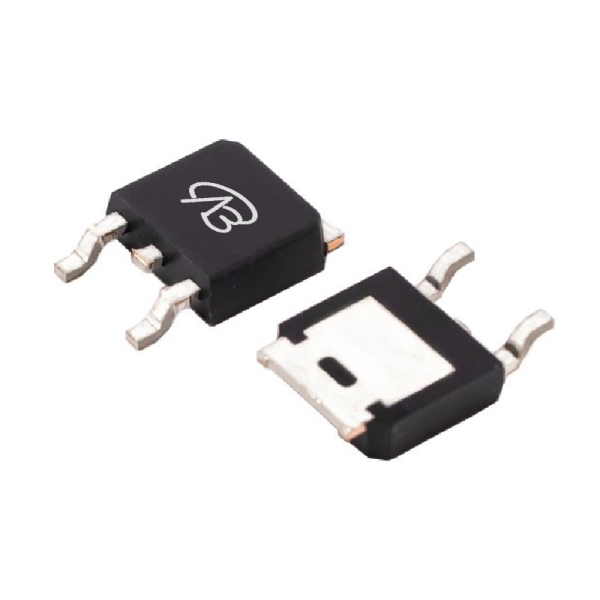
Comparative Analysis: BUK92150-55A,118 (N-channel) vs. VBE1695
Analysis of the Original Model (BUK92150-55A,118) Core:
This is a 55V N-channel MOSFET from Nexperia in a DPAK package. Its design core is to provide robust power switching in a standard package. Key advantages are: a drain-source voltage (Vdss) of 55V, a continuous drain current (Id) of 11A, and an on-resistance (RDS(on)) of 97mΩ at 10V. It offers reliable performance for medium-power applications requiring good voltage tolerance.
Compatibility and Differences of the Domestic Alternative (VBE1695):
VBsemi's VBE1695 uses a TO252 package and serves as a potential alternative. The main differences are in electrical parameters: VBE1695 has a slightly higher voltage rating (60V) and a significantly higher continuous current (18A). Crucially, its on-resistance is lower at 73mΩ (@10V) compared to the original's 97mΩ, indicating potentially better conduction loss.
Key Application Areas:
Original Model BUK92150-55A,118: Suitable for 55V system applications requiring around 11A current, such as power switches, DC-DC converters, or motor drives in industrial controls, automotive subsystems, or power supplies where DPAK package is acceptable.
Alternative Model VBE1695: More suitable for scenarios demanding higher current capability (up to 18A), slightly higher voltage margin (60V), and lower conduction loss. It's a strong candidate for upgraded designs or applications needing more headroom in similar voltage ranges.
Comparative Analysis: PMPB10XNEZ (N-channel) vs. VBQG7313
This comparison focuses on ultra-compact, high-performance N-channel MOSFETs for space-constrained designs.
Analysis of the Original Model (PMPB10XNEZ) Core:
This is a 20V N-channel MOSFET from Nexperia in a miniaturized DFN2020MD-6 package. Its design pursues low on-resistance and good current handling in a tiny footprint. Core advantages are: a very low RDS(on) of 14mΩ at 4.5V, a continuous drain current of 9A, and the compact DFN package ideal for portable devices.
Compatibility and Differences of the Domestic Alternative (VBQG7313):
VBsemi's VBQG7313 also uses a small DFN6(2x2) package and is a pin-to-pin compatible alternative. It shows a performance-enhanced profile: a higher voltage rating (30V), a higher continuous current (12A), and a competitive on-resistance of 20mΩ (@10V) / 24mΩ (@4.5V).
Key Application Areas:
Original Model PMPB10XNEZ: Ideal for space-critical 20V applications requiring up to 9A, such as load switches, power path management, and point-of-load (POL) converters in smartphones, tablets, IoT devices, and other portable electronics.
Alternative Model VBQG7313: Suited for similar compact applications but where higher voltage (30V) or higher current (12A) capability is beneficial. It offers a direct drop-in replacement with potential performance gains for next-generation designs or more demanding compact circuits.
Conclusion:
This analysis reveals two distinct selection paths:
1. For medium-power applications using standard packages (like DPAK), the original BUK92150-55A,118 provides solid 55V/11A performance. Its domestic alternative VBE1695 offers a compelling upgrade with higher current (18A), higher voltage (60V), and lower on-resistance, making it suitable for more demanding or efficiency-focused designs in a similar form factor.
2. For ultra-compact applications using miniaturized packages (like DFN2020), the original PMPB10XNEZ excels with its low 14mΩ on-resistance in a tiny footprint for 20V systems. Its domestic alternative VBQG7313 provides a pin-compatible option with enhanced voltage (30V) and current (12A) ratings, offering designers a powerful upgrade path or more resilient sourcing option.
The core takeaway is that selection hinges on precise requirement matching. Domestic alternatives like VBE1695 and VBQG7313 not only provide viable backup options but also demonstrate parameter advancements in key areas, giving engineers greater flexibility and resilience in design trade-offs and cost control. Understanding each device's design philosophy and parameter implications is essential to leverage its full value in the circuit.

Download PDF document
 Download now


