 中文
中文 English
MOSFET Selection for High-Power and Signal-Level Switching: BUK7606-75B,118, 2N7002PW,115 vs. China Alternatives VBL1806, VBK162K
Number of views:9999
 Back to previous page
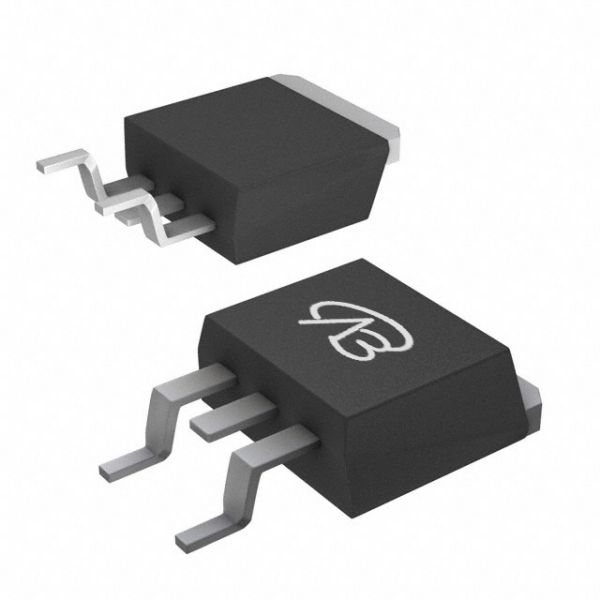
Comparative Analysis: BUK7606-75B,118 (N-channel) vs. VBL1806
Analysis of the Original Model (BUK7606-75B,118) Core:
This is a 75V N-channel MOSFET from Nexperia in a D2PAK (TO-263) package. Its design core is to deliver robust power handling and high efficiency in high-current applications. Key advantages include: a very low on-resistance of 4.8mΩ (typical at 10V, 25°C) and an impressive continuous drain current rating of 75A. This combination ensures minimal conduction loss and high reliability in demanding power circuits.
Compatibility and Differences of the Domestic Alternative (VBL1806):
VBsemi's VBL1806 is offered in a TO-263 package and serves as a functional alternative for high-power applications. The main differences are in electrical parameters: VBL1806 has a slightly higher voltage rating (80V vs. 75V) and a significantly higher continuous current rating (120A vs. 75A). Its on-resistance is competitive at 6mΩ (@10V), though slightly higher than the original's 4.8mΩ under similar test conditions.
Key Application Areas:
Original Model BUK7606-75B,118: Ideal for high-efficiency, high-current switching where low RDS(on) is paramount. Typical applications include:
High-current DC-DC converters and voltage regulators (e.g., in server, telecom, or industrial power supplies).
Motor drives and inverters for industrial equipment or electric vehicles.
Solid-state relays and high-power load switches.
Alternative Model VBL1806: Suited for applications requiring even higher current capability (up to 120A) and a slightly higher voltage margin. Its very low RDS(on) makes it a strong candidate for next-generation high-power-density designs, such as:
Upgraded power modules and inverters.
High-performance battery management systems (BMS) and protection circuits.
Applications where the original part is constrained by current rating.
Comparative Analysis: 2N7002PW,115 (N-channel) vs. VBK162K
This comparison shifts focus to small-signal level switching, where the primary concerns are often package size, gate drive compatibility, and cost.
Analysis of the Original Model (2N7002PW,115) Core:
This is a classic 60V N-channel small-signal MOSFET from Nexperia in a compact SOT-323 (SC-70) package. Its design pursues a reliable and cost-effective solution for low-power interface and control tasks. Key features are: a 60V drain-source voltage, a continuous current of 310mA, and an on-resistance of 1.6Ω (@10V). It offers robust ESD protection and is widely used for level shifting, load switching for small peripherals, and signal isolation.
Compatibility and Differences of the Domestic Alternative (VBK162K):
VBsemi's VBK162K is offered in an SC70-3 package, providing direct pin-to-pin compatibility. Its parameters are closely aligned with the original: a 60V voltage rating, a 0.3A (300mA) continuous current, and an on-resistance of 2Ω (@10V), which is slightly higher but remains in the same order of magnitude suitable for signal-level applications.
Key Application Areas:
Original Model 2N7002PW,115: The go-to choice for numerous low-power switching and interface needs. Typical applications include:
Level translation between microcontrollers and other logic circuits.
Switching small LEDs, relays, or other light loads.
Signal multiplexing and GPIO expansion.
Protection and isolation circuits in consumer electronics and IoT devices.
Alternative Model VBK162K: Serves as a reliable domestic alternative for all standard applications of the 2N7002 series. It is perfectly suitable for:
Direct replacement in existing designs for supply chain diversification.
New designs requiring a cost-effective, small-signal MOSFET with standard performance.
Conclusion
In summary, this analysis reveals two distinct selection strategies:
For high-power switching applications, the original BUK7606-75B,118, with its excellent balance of 75A current and 4.8mΩ RDS(on), is a proven solution for industrial and automotive power systems. Its domestic alternative VBL1806 offers a performance-enhanced path with higher current (120A) and voltage (80V) ratings, making it suitable for next-generation designs demanding higher power density.
For small-signal switching applications, the ubiquitous 2N7002PW,115 remains a reliable and cost-effective workhorse. Its domestic alternative VBK162K provides a fully compatible, viable option for supply chain resilience without sacrificing functionality in typical low-current circuits.
The core takeaway is that selection hinges on precise requirement matching. In the era of supply chain diversification, domestic alternatives like VBL1806 and VBK162K not only provide secure backup options but also, in some cases, offer performance advantages or cost benefits, giving engineers greater flexibility and resilience in their design and sourcing decisions.

Download PDF document
 Download now


