 中文
中文 English
MOSFET Selection for Power Switching: BSS138K, NVHL080N120SC1A vs. China Alternatives VB162K, VBP112MC30
Number of views:9999
 Back to previous page
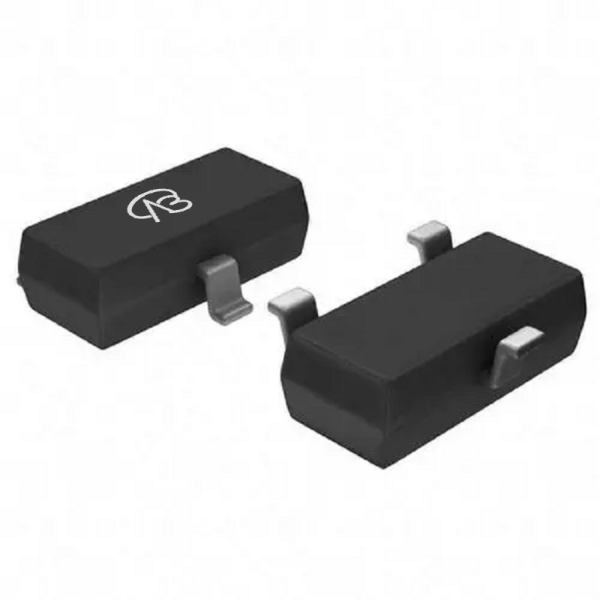
Comparative Analysis: BSS138K (Small-Signal N-channel) vs. VB162K
Analysis of the Original Model (BSS138K) Core:
This is a 50V logic-level N-channel MOSFET from onsemi, packaged in the compact SOT-23. Its design core is to provide reliable low-power switching in minimal space. Key advantages include: a drain current of 220mA, an on-resistance (RDS(on)) of 2.5Ω at a low gate drive of 1.8V, and compatibility with logic-level control signals. It is a classic choice for signal switching and low-current load control.
Compatibility and Differences of the Domestic Alternative (VB162K):
VBsemi's VB162K is offered in the same SOT-23 package and is a pin-to-pin compatible alternative. The main differences are in electrical parameters: VB162K has a higher voltage rating (60V) and a lower on-resistance (e.g., 2.8Ω @ 10V). However, its rated continuous current (0.3A) is similar, while its threshold voltage is slightly higher.
Key Application Areas:
Original Model BSS138K: Ideal for space-constrained, logic-level switching applications such as:
Signal level shifting and isolation in digital circuits.
Driving small relays, LEDs, or other low-current loads.
Interface protection and switching in portable/IoT devices.
Alternative Model VB162K: Suitable for similar small-signal switching applications where a higher voltage rating (60V) or slightly lower on-resistance at higher Vgs is beneficial, providing a reliable domestic alternative.
Comparative Analysis: NVHL080N120SC1A (High-Voltage SiC N-channel) vs. VBP112MC30
This comparison shifts to high-voltage, high-efficiency power conversion. The original model is a Silicon Carbide (SiC) MOSFET, where the design pursuit is "high-voltage capability with low conduction loss."
The core advantages of the original model are:
High-Voltage Performance: Rated for 1200V, making it suitable for industrial and automotive high-voltage systems.
Low Conduction Loss: Features an on-resistance of 80mΩ at 20V gate drive, capable of handling 31A continuous current. This minimizes power loss in high-power applications.
SiC Benefits: Inherits the advantages of SiC technology, including high-temperature operation and fast switching, which are crucial for high-frequency, high-efficiency converters.
The domestic alternative VBP112MC30 is a "direct-performance" SiC alternative:
It matches or closely aligns with key parameters: the same 1200V voltage rating, a similar continuous current of 30A, and an identical on-resistance of 80mΩ (at 18V Vgs). This makes it a highly compatible alternative for high-voltage designs.
Key Application Areas:
Original Model NVHL080N120SC1A: Its high voltage and SiC performance make it ideal for demanding applications such as:
High-efficiency DC-DC converters in solar inverters, UPS systems, and EV charging.
Power factor correction (PFC) circuits in server and telecom power supplies.
High-voltage motor drives and industrial power systems.
Alternative Model VBP112MC30: Serves as a strong domestic alternative for the same high-voltage application spaces—like solar inverters, EV charging, and industrial SMPS—where a reliable, performance-matched SiC MOSFET is needed, offering supply chain diversification.
Conclusion
This analysis reveals two distinct selection paths:
1. For compact, logic-level switching, the original BSS138K remains a proven choice for 50V, low-current applications. Its domestic alternative VB162K provides a compatible option with a higher voltage rating (60V), suitable for designs requiring that margin.
2. For high-voltage, high-power SiC applications, the original NVHL080N120SC1A sets a benchmark with its 1200V/31A/80mΩ performance. The domestic alternative VBP112MC30 emerges as a compelling, performance-matched substitute (1200V/30A/80mΩ), enabling design migration without sacrificing key specifications.
The core takeaway is that selection depends on precise requirement matching. In the context of supply chain diversification, domestic alternatives like VB162K and VBP112MC30 not only provide viable backup options but also demonstrate parameter parity or advantages in specific areas. This gives engineers greater flexibility and resilience in design trade-offs and cost optimization. Understanding each device's design intent and parameter implications is key to unlocking its full value in the circuit.

Download PDF document
 Download now


