 中文
中文 English
MOSFET Selection for Compact Power Applications: BS170-D26Z, NVMFWS0D9N04XMT1G vs. China Alternatives VBR9N602K, VBQA1401
Number of views:9999
 Back to previous page
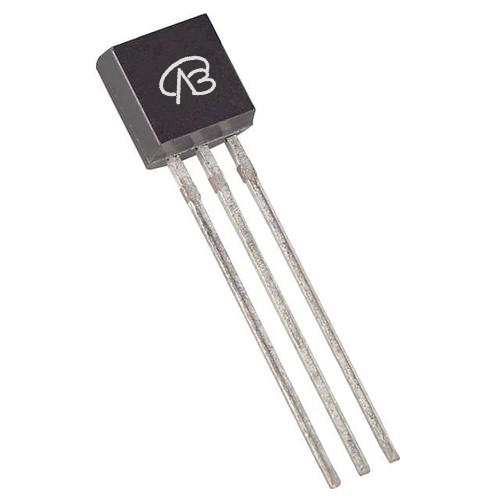
Comparative Analysis: BS170-D26Z (N-channel) vs. VBR9N602K
Analysis of the Original Model (BS170-D26Z) Core:
This is a 60V small-signal N-channel MOSFET from onsemi, in a classic TO-92-3 package. Its design core is to provide reliable, low-cost switching for low-current applications. Key features include a drain-source voltage (Vdss) of 60V, a continuous drain current (Id) of 500mA, and an on-resistance (RDS(on)) of 5Ω at 10V gate drive.
Compatibility and Differences of the Domestic Alternative (VBR9N602K):
VBsemi's VBR9N602K is a pin-to-pin compatible alternative in a TO92 package. The key differences are in electrical parameters: while both are 60V rated, the VBR9N602K offers a significantly lower on-resistance of 2Ω at 10V (vs. 5Ω for the BS170). However, its continuous current rating is slightly lower at 450mA (vs. 500mA).
Key Application Areas:
Original Model BS170-D26Z: Ideal for classic, cost-sensitive, low-power switching applications where very high current isn't required. Typical uses include:
Signal switching and level shifting in analog/digital circuits.
Driving small relays, LEDs, or other low-current loads.
Educational projects and basic electronic designs.
Alternative Model VBR9N602K: Better suited for applications requiring lower conduction loss within a similar voltage and current range. Its lower RDS(on) makes it a more efficient drop-in replacement for the BS170 in many circuits, especially where power dissipation is a concern.
Comparative Analysis: NVMFWS0D9N04XMT1G (N-channel) vs. VBQA1401
This comparison shifts to high-performance, high-current N-channel MOSFETs for demanding applications.
Analysis of the Original Model (NVMFWS0D9N04XMT1G) Core:
This is a high-performance 40V N-channel MOSFET from onsemi in a compact SO-8FL (5x6 mm) package. Its design pursues ultra-low loss and high power density. Core advantages are:
Exceptional Current Handling: An extremely high continuous drain current rating of 273A.
Minimal Conduction Loss: An ultra-low on-resistance of 0.9mΩ at 10V gate drive.
Compact & Qualified: Small footprint, AEC-Q101 qualified, and suitable for automotive/industrial applications like motor drives and battery protection.
Compatibility and Differences of the Domestic Alternative (VBQA1401):
VBsemi's VBQA1401 is a direct footprint-compatible alternative in a DFN8(5x6) package. It represents a highly competitive "performance-matched" option:
It matches the 40V voltage rating.
It offers a very low on-resistance of 0.8mΩ at 10V, slightly better than the original's 0.9mΩ.
It provides a robust continuous current rating of 100A. While lower than the original's exceptionally high 273A spec, 100A is ample for most high-current applications this package targets.
Key Application Areas:
Original Model NVMFWS0D9N04XMT1G: Its ultra-low RDS(on) and massive current rating make it suitable for the most demanding, efficiency-critical, high-power applications such as:
High-current motor drives (e.g., in automotive, robotics).
Primary switching in high-power DC-DC converters.
Battery protection circuits in high-energy systems.
Alternative Model VBQA1401: An excellent alternative for applications requiring high efficiency and significant current (up to 100A) in a compact form factor. Its slightly lower RDS(on) can offer marginal efficiency gains. It is well-suited for:
High-performance motor drives and solenoid control.
Synchronous rectification in intermediate-to-high power DC-DC converters.
Power distribution switches where low voltage drop is critical.
Conclusion
This analysis reveals two distinct selection paths:
For classic low-power signal-level switching, the original BS170-D26Z remains a standard, cost-effective choice. Its domestic alternative VBR9N602K offers a compelling upgrade with significantly lower on-resistance for improved efficiency in compatible footprints.
For compact, high-current power switching, the original NVMFWS0D9N04XMT1G sets a very high benchmark with its extreme current capability. The domestic alternative VBQA1401 provides a highly viable and performance-competitive solution, matching or slightly exceeding key parameters like RDS(on) and offering substantial current (100A) in the same package, making it a strong candidate for many demanding power applications.
The core takeaway is that selection hinges on precise requirement matching. In the context of supply chain diversification, domestic alternatives like VBR9N602K and VBQA1401 not only provide reliable backup options but also offer performance parity or gains in specific areas, giving engineers greater flexibility and resilience in design and cost optimization. Understanding each device's parameter implications is key to unlocking its full value in your circuit.

Download PDF document
 Download now


