 中文
中文 English
MOSFET Selection for Compact and Automotive Power Applications: 2N7002WT1G, NVMFD5C446NT1G vs. China Alternatives VBK162K, VBGQA3402
Number of views:9999
 Back to previous page
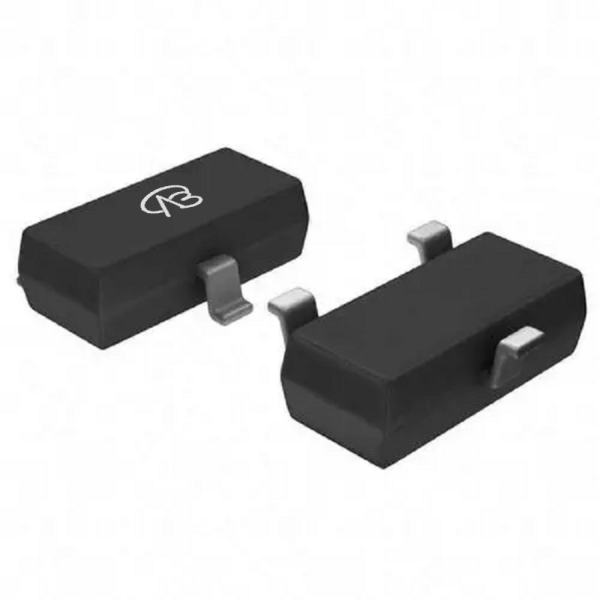
Comparative Analysis: 2N7002WT1G (Small-Signal N-channel) vs. VBK162K
Analysis of the Original Model (2N7002WT1G) Core:
This is a 60V small-signal N-channel MOSFET from onsemi, in an ultra-small SC-70 (SOT-323) package. Its design core is to provide reliable switching and ESD protection in minimal space. Key advantages are: a low on-resistance of 1.6Ω at 10V gate drive, a continuous drain current of 340mA, and integrated ESD protection. It is AEC-Q101 qualified with PPAP capability, making it suitable for automotive applications requiring robust performance.
Compatibility and Differences of the Domestic Alternative (VBK162K):
VBsemi's VBK162K is a pin-to-pin compatible alternative in the same SC70-3 package. The main differences are in electrical parameters: VBK162K has a similar 60V voltage rating but a lower continuous current of 0.3A and higher on-resistance (2Ω @10V). Its threshold voltage is 1.7V, suitable for low-voltage drive.
Key Application Areas:
Original Model 2N7002WT1G: Ideal for low-power, high-reliability applications requiring AEC-Q101 compliance. Typical uses include:
Low-side load switches in automotive modules.
Level translation circuits in portable and IoT devices.
General-purpose switching in space-constrained boards.
Alternative Model VBK162K: Suitable for cost-sensitive applications where full AEC-Q101 compliance is not mandatory, and current demands are below 300mA, such as consumer electronics level shifting or simple load switching.
Comparative Analysis: NVMFD5C446NT1G (Automotive Dual N-channel) vs. VBGQA3402
This comparison shifts to high-power, automotive-grade dual N-channel MOSFETs where efficiency, current handling, and thermal performance are critical.
Analysis of the Original Model (NVMFD5C446NT1G) Core:
This is a dual 40V N-channel MOSFET from onsemi in a thermally enhanced DFN-8 (5x6) package with wettable flanks for optical inspection. Its core advantages are:
High Current Capability: Each channel handles 127A continuous current.
Low Conduction Loss: Extremely low on-resistance of 2.9mΩ at 10V.
Automotive Robustness: AEC-Q101 qualified with PPAP, designed for demanding automotive environments like motor drives or power distribution.
Compatibility and Differences of the Domestic Alternative (VBGQA3402):
VBsemi's VBGQA3402 is a dual N-channel alternative in a compatible DFN8(5x6)-B package. It offers a compelling performance proposition:
Similar Voltage Rating: 40V.
Very Low On-Resistance: 2.2mΩ at 10V, which is lower than the original.
High Current Capacity: 90A continuous current per channel.
SGT Technology: Utilizes Shielded Gate Trench technology for good switching performance and low gate charge.
Key Application Areas:
Original Model NVMFD5C446NT1G: The benchmark for high-current, automotive-grade power switching. Ideal for:
Automotive motor drives (e.g., fans, pumps, window lifts).
High-current load switches and power distribution in ECUs.
Compact DC-DC converters in 12V/24V automotive systems.
Alternative Model VBGQA3402: A high-performance domestic alternative suitable for applications demanding very low RDS(on) and high current in a compact footprint. It is excellent for:
Upgraded or new designs in automotive auxiliary drives.
High-efficiency, high-current synchronous rectification in power supplies.
Applications where thermal performance and power density are priorities.
Conclusion:
This analysis reveals two distinct selection paths:
1. For small-signal, automotive-qualified switching, the original 2N7002WT1G, with its AEC-Q101 compliance, ESD protection, and proven reliability, remains the preferred choice for automotive and high-reliability industrial applications. The domestic alternative VBK162K provides a functional, cost-effective replacement for non-automotive or less stringent commercial uses where current needs are lower.
2. For high-power, automotive dual N-channel applications, the original NVMFD5C446NT1G sets a high standard with its exceptional current rating (127A) and full automotive certification. The domestic alternative VBGQA3402 emerges as a strong "performance-competitive" option, offering even lower on-resistance (2.2mΩ) and a substantial 90A current rating, making it suitable for designers seeking to maximize efficiency and current density, potentially in industrial or cost-optimized automotive segments.
The core conclusion is that selection depends on precise requirement matching. Domestic alternatives like VBK162K and VBGQA3402 provide viable backup and competitive options, offering engineers greater flexibility in design trade-offs, cost control, and supply chain resilience without significant performance compromise in many cases.

Download PDF document
 Download now


