 中文
中文 English
MOSFET Selection for Low-Power Switching & High-Current Applications: 2N7002T, FDS6690A vs. China Alternatives VB162K, VBA1311
Number of views:9999
 Back to previous page
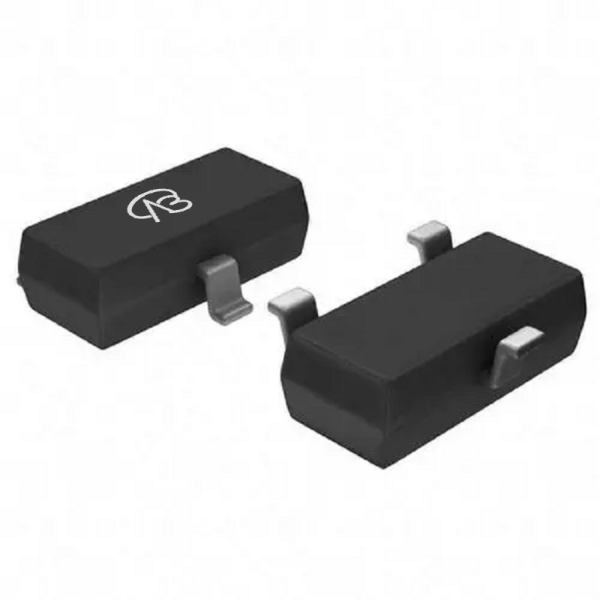
Comparative Analysis: 2N7002T (N-channel Small-Signal) vs. VB162K
Analysis of the Original Model (2N7002T) Core:
This is a 60V N-channel small-signal MOSFET from onsemi in a compact SOT-523F package. Its design core is to provide reliable voltage switching for low-current circuits in a minimal footprint. Key advantages include a high drain-source voltage (Vdss) of 60V, suitable for interfacing or protecting circuits in various voltage environments. Its continuous drain current (Id) is 115mA, and the on-resistance (RDS(on)) is 7.5Ω at a 5V gate drive, making it suitable for signal routing, level shifting, or driving small loads.
Compatibility and Differences of the Domestic Alternative (VB162K):
VBsemi's VB162K is offered in a standard SOT-23-3 package, which is a common and widely compatible footprint. The key differences are in electrical parameters: VB162K shares the same 60V voltage rating but offers a significantly lower on-resistance—3.1Ω at 4.5V and 2.8Ω at 10V—compared to the 2N7002T's 7.5Ω. However, its continuous current rating is 0.3A (300mA), which is higher than the 2N7002T's 115mA.
Key Application Areas:
Original Model 2N7002T: Ideal for classic small-signal switching applications where a 60V rating is needed but current demands are very low (≤115mA). Typical uses include:
Signal Line Switching: In communication interfaces or sensor modules.
Level Translation: Between microcontrollers and peripherals.
Load Switching for Tiny Loads: Such as LEDs or relays within its current limit.
Alternative Model VB162K: Better suited for applications requiring the same 60V withstand capability but with a need for lower conduction loss and slightly higher current handling (up to 300mA). Its lower RDS(on) reduces voltage drop in the switched path.
Comparative Analysis: FDS6690A (N-channel Power MOSFET) vs. VBA1311
This comparison shifts to power switching, where the design pursuit is minimizing conduction loss for high efficiency.
Analysis of the Original Model (FDS6690A) Core:
This is a logic-level N-channel MOSFET from onsemi in an SO-8 package, built using advanced PowerTrench technology. Its core advantages are:
Excellent Conduction Performance: Features a very low on-resistance of 17mΩ at 4.5V gate drive, capable of handling a continuous current of 11A. This minimizes power loss in the on-state.
Optimized for Low-Voltage/Battery Apps: Designed specifically for applications requiring low power loss and fast switching in low-voltage or battery-powered systems.
Compatibility and Differences of the Domestic Alternative (VBA1311):
VBsemi's VBA1311 is a direct pin-to-pin compatible alternative in the SOP-8 package. It represents a significant performance enhancement:
It matches the 30V voltage rating.
It offers a substantially lower on-resistance: 11mΩ at 4.5V and 8mΩ at 10V.
It provides a higher continuous current rating of 13A.
Key Application Areas:
Original Model FDS6690A: An excellent choice for efficient power switching in 12V/24V systems. Typical applications include:
Synchronous Rectification in DC-DC Converters: As the low-side switch in buck or boost circuits.
Motor Drive: For small to medium brushed DC motors.
Load Switches in Battery-Powered Devices: Where low RDS(on) is critical for runtime.
Alternative Model VBA1311: With its superior parameters (lower RDS(on), higher Id), it is perfectly suited for upgraded or new designs that demand even higher efficiency, lower thermal stress, and greater current capacity within the same 30V range. It's ideal for next-generation power management, more powerful motor drives, or any application seeking a performance boost in the same footprint.
Summary
This analysis reveals two distinct selection paths:
1. For small-signal, high-voltage (60V) switching, the classic 2N7002T is suitable for very low-current (115mA) interfacing tasks. Its domestic alternative, VB162K, offers a compelling upgrade with significantly lower on-resistance and higher current capability (300mA) in a standard SOT-23 package, making it a superior choice for new designs requiring better performance in the same voltage class.
2. For power switching in low-voltage (30V), high-current applications, the FDS6690A is a robust, efficient solution. Its domestic alternative, VBA1311, is a direct, performance-enhanced replacement, offering lower RDS(on) and higher current handling in the same SOP-8 package, enabling higher efficiency and power density in applications like advanced DC-DC converters or motor drives.
Core Conclusion: Selection is about precise requirement matching. In the context of supply chain diversification, domestic alternatives like VB162K and VBA1311 not only provide reliable backup options but often deliver superior performance in key parameters, giving engineers greater flexibility and resilience in design trade-offs and cost control. Understanding the specific demands of your circuit—whether it's voltage rating, current handling, or switching efficiency—is key to selecting the MOSFET that maximizes value.

Download PDF document
 Download now


