 中文
中文 English
MOSFET Selection for Compact Power Applications: 2N7002KT7G, NTTFS4C08NTAG vs. China Alternatives VB162K, VBQF1306
Number of views:9999
 Back to previous page
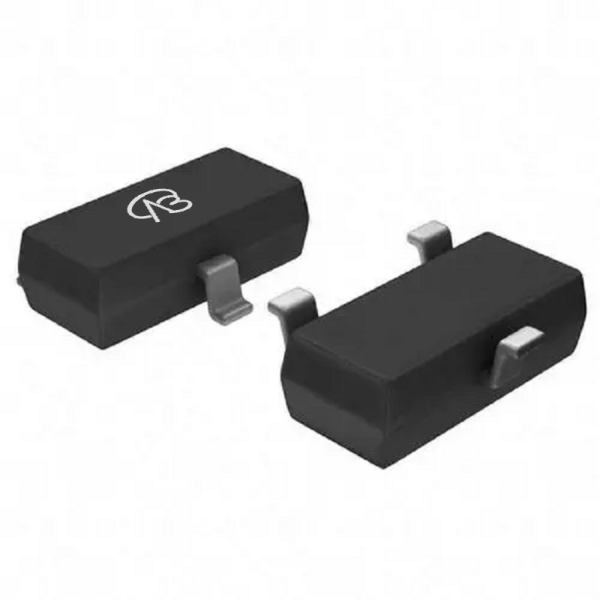
Comparative Analysis: 2N7002KT7G (Small-Signal N-channel) vs. VB162K
Analysis of the Original Model (2N7002KT7G) Core:
This is a 60V small-signal N-channel MOSFET from onsemi, in a compact SOT-23 package. Its design core is to provide reliable, protected switching for low-power control and interface circuits. Key advantages are: ESD protection, low RDS(on) of 1.6Ω @10V, and compliance with AEC-Q101 standards for automotive applications. It features a low gate threshold voltage and is suitable for logic-level driving.
Compatibility and Differences of the Domestic Alternative (VB162K):
VBsemi's VB162K is a pin-to-pin compatible alternative in SOT23-3 package. The main differences lie in the electrical parameters: VB162K has a similar voltage rating (60V) but a significantly higher on-resistance (2.8Ω @10V) and a lower continuous current rating (0.3A) compared to the original model's 380mA.
Key Application Areas:
Original Model 2N7002KT7G: Its characteristics are ideal for low-power signal switching and level shifting where reliability and protection are key. Typical applications include:
- Low-side load switches for microcontrollers and sensors.
- Level translation circuits in mixed-voltage systems.
- General-purpose switching in automotive and industrial control modules.
Alternative Model VB162K: More suitable for cost-sensitive applications where the full 380mA current of the original is not required, and where the higher on-resistance is acceptable, such as in very low-current signal path switching.
Comparative Analysis: NTTFS4C08NTAG (Power N-channel) vs. VBQF1306
This power N-channel MOSFET is designed for high-current switching with low loss in a compact footprint.
Analysis of the Original Model (NTTFS4C08NTAG) Core:
The core advantages of this 30V MOSFET from onsemi are:
- High Current Capability: Continuous drain current up to 52A.
- Low Conduction Loss: Very low on-resistance of 9mΩ @4.5V, 18A.
- Compact Power Package: WDFN-8 (3.3x3.3) offers a good balance of size and thermal performance for power-dense designs.
Compatibility and Differences of the Domestic Alternative (VBQF1306):
The domestic alternative VBQF1306 offers a compelling "performance-enhanced" option. While in a similar DFN8(3x3) package, it achieves superior key parameters: the same 30V voltage rating, a high continuous current of 40A, and a significantly lower on-resistance of 6mΩ @4.5V and 5mΩ @10V.
Key Application Areas:
Original Model NTTFS4C08NTAG: Its ultra-low RDS(on) and high current rating make it suitable for demanding power management tasks. For example:
- Synchronous rectification in high-current DC-DC converters (e.g., for POL, servers).
- Motor drive and solenoid control in automotive or robotics.
- Battery protection circuits and high-current load switches.
Alternative Model VBQF1306: Is an excellent upgrade choice for applications requiring even lower conduction losses than the original part can provide, or where a 40A capability is sufficient, offering potential efficiency gains and thermal advantages.
Conclusion
In summary, this comparative analysis reveals two clear selection paths:
For small-signal, low-current switching and interface applications, the original model 2N7002KT7G, with its AEC-Q101 qualification, ESD protection, and balanced 380mA/1.6Ω performance, is a robust choice for automotive and industrial designs. Its domestic alternative VB162K provides a basic, cost-effective replacement for less demanding, very low-current scenarios.
For compact, high-current power switching, the original model NTTFS4C08NTAG sets a high bar with its 52A current and 9mΩ RDS(on). The domestic alternative VBQF1306 emerges as a strong competitor, offering a superior 5mΩ RDS(on) and a solid 40A rating, making it a viable performance-focused alternative for many high-efficiency power conversion designs.
The core conclusion is: Selection hinges on precise requirement matching. Domestic alternatives like VB162K and VBQF1306 provide valuable options for supply chain diversification, cost optimization, and in some cases, even parameter enhancement, giving engineers greater flexibility in their design trade-offs.

Download PDF document
 Download now


