 中文
中文 English
MOSFET Selection for Signal Switching and High-Power Applications: 2N7002ET1G, FQA44N30 vs. China Alternatives VB162K, VBPB16R47S
Number of views:9999
 Back to previous page
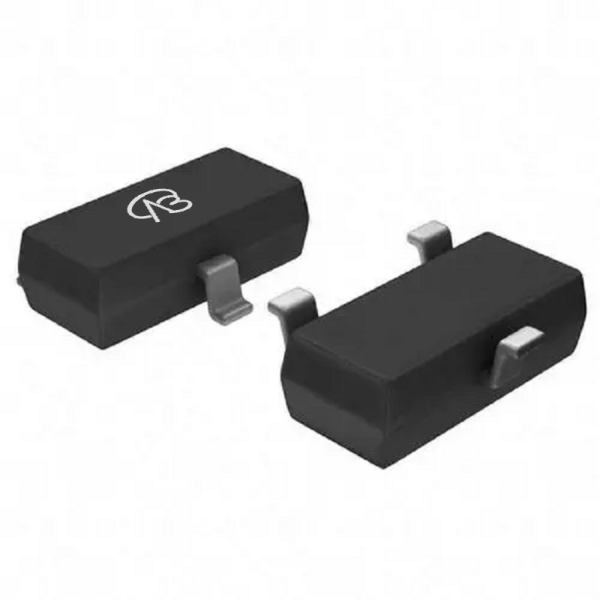
Comparative Analysis: 2N7002ET1G (Small-Signal N-channel) vs. VB162K
Analysis of the Original Model (2N7002ET1G) Core:
This is a 60V small-signal N-channel MOSFET from onsemi, packaged in the industry-standard SOT-23. Its design core is to provide reliable low-power switching and signal amplification in minimal space. Key advantages include: a drain-source voltage (Vdss) of 60V, a continuous drain current (Id) of 310mA, and an on-resistance (RDS(on)) of 3Ω at 4.5V gate drive. It is a classic choice for general-purpose low-current switching.
Compatibility and Differences of the Domestic Alternative (VB162K):
VBsemi's VB162K is a direct pin-to-pin compatible alternative in an SOT23-3 package. The key differences are in electrical parameters: VB162K offers the same 60V voltage rating but features a significantly lower on-resistance of 3.1Ω (at 4.5V) compared to the original's 3Ω, while maintaining a similar continuous current rating of 0.3A. This results in slightly lower conduction losses.
Key Application Areas:
Original Model 2N7002ET1G: Ideal for general-purpose low-side switching, signal level translation, and load switching in low-current circuits. Common applications include:
GPIO interface protection and level shifting in microcontrollers.
Driving small relays, LEDs, or other low-power peripherals.
Signal multiplexing and switching in consumer electronics and IoT modules.
Alternative Model VB162K: Suitable as a direct replacement in all applications of the original model, offering potentially improved efficiency due to its lower on-resistance. It is a viable option for cost-optimized designs requiring reliable small-signal switching.
Comparative Analysis: FQA44N30 (High-Power N-channel) vs. VBPB16R47S
This comparison shifts focus from small-signal to high-power switching, where the design pursuit is high voltage capability, high current handling, and low conduction loss.
Analysis of the Original Model (FQA44N30) Core:
This is a 300V, 43.5A N-channel power MOSFET from onsemi in a TO-3PN package. Its core advantages are derived from planar stripe and DMOS technology:
High-Power Capability: Withstands 300V and delivers a continuous current of 43.5A.
Low Conduction Loss: Features an on-resistance (RDS(on)) as low as 55mΩ at 10V gate drive.
Robust Switching: Engineered for excellent switching performance and high avalanche energy strength, making it suitable for demanding power circuits.
Compatibility and Differences of the Domestic Alternative (VBPB16R47S):
The domestic alternative VBPB16R47S represents a "specification-enhanced" choice. While using a different package (TO3P), it offers a substantially higher voltage rating of 600V and a higher continuous current of 47A. Its on-resistance is comparable at 60mΩ (@10V). This makes it suitable for applications requiring higher voltage margins and similar or greater current capability.
Key Application Areas:
Original Model FQA44N30: An excellent choice for high-performance medium-to-high-power switching applications. Typical uses include:
Switching Power Supplies (SMPS) and Active Power Factor Correction (PFC) stages.
Motor drives for appliances and industrial equipment.
Electronic ballasts and inverter circuits.
Alternative Model VBPB16R47S: Better suited for applications demanding higher voltage withstand capability (up to 600V) and high current, such as:
Higher-voltage off-line SMPS and PFC circuits.
Industrial motor drives and UPS systems.
Applications where enhanced voltage margin is critical for reliability.
Conclusion:
This analysis reveals two distinct selection pathways:
For small-signal, low-current switching, the original 2N7002ET1G remains a reliable, industry-standard workhorse for SOT-23 applications. Its domestic alternative, VB162K, provides a compatible, cost-effective option with slightly improved conduction characteristics, serving as a practical drop-in replacement.
For high-power, high-voltage switching, the original FQA44N30 offers a robust balance of 300V rating, 43.5A current, and low 55mΩ on-resistance, making it a strong candidate for industrial power conversion. The domestic alternative VBPB16R47S pushes the boundaries further with a 600V rating and 47A current, presenting a compelling "upgrade" option for designs requiring higher voltage headroom and increased power density.
The core takeaway is that selection is driven by precise requirement matching. In the context of supply chain diversification, domestic alternatives like VB162K and VBPB16R47S not only provide viable backup options but also offer parameter enhancements in key areas, giving engineers greater flexibility and resilience in design trade-offs and cost optimization. Understanding the specific design philosophy and parameter implications of each device is essential to unlocking its full potential within your circuit.

Download PDF document
 Download now


