 中文
中文 English
MOSFET Selection for Signal Switching and Power Conversion: 2N7002-G, FDMS86104 vs. China Alternatives VB162K, VBGQA1102N
Number of views:9999
 Back to previous page
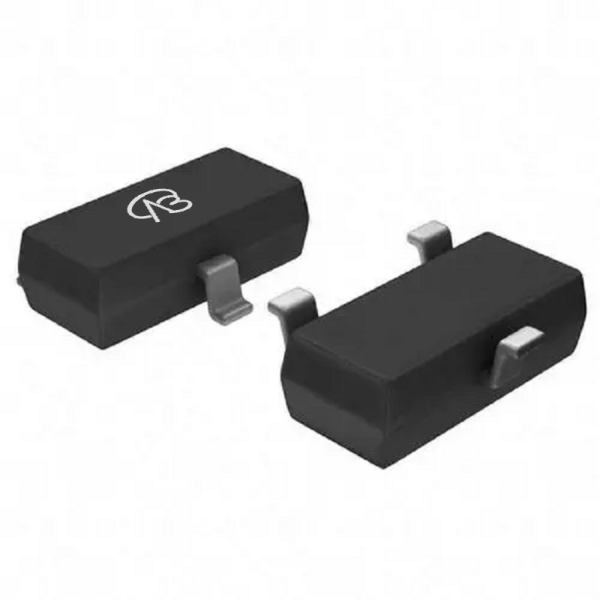
Comparative Analysis: 2N7002-G (Small-Signal N-channel) vs. VB162K
Analysis of the Original Model (2N7002-G) Core:
This is a classic 60V small-signal N-channel MOSFET from onsemi in a compact SOT-23-3 package. Its design core is to provide reliable voltage switching for low-current circuits in a minimal footprint. Key advantages are its high 60V drain-source voltage rating and a very low gate threshold voltage, making it suitable for interfacing with logic-level signals from microcontrollers or other ICs.
Compatibility and Differences of the Domestic Alternative (VB162K):
VBsemi's VB162K is a direct pin-to-pin compatible alternative in the same SOT-23-3 package. The main differences are in electrical parameters: while both are 60V rated, the VB162K offers significantly lower on-resistance (2.8Ω @10V vs. 7.5Ω @10V for the 2N7002-G) and a higher continuous drain current (0.3A vs. 115mA). This makes the VB162K a performance-enhanced drop-in replacement for applications requiring lower conduction loss or slightly higher current capability.
Key Application Areas:
Original Model 2N7002-G: Ideal for classic low-power signal switching and level shifting where current demands are below 115mA. Typical applications include:
GPIO signal isolation and switching in microcontroller circuits.
Driving small relays, LEDs, or other low-current loads.
Interface and bus switching in consumer electronics.
Alternative Model VB162K: Better suited for applications that benefit from its lower RDS(on) and higher current rating within the same tiny footprint. It can be a superior choice for:
More efficient low-side load switches.
Circuits where reduced voltage drop across the MOSFET is critical.
Comparative Analysis: FDMS86104 (Power N-channel) vs. VBGQA1102N
This comparison shifts to higher-power applications. The FDMS86104 is designed for efficiency in power conversion circuits.
Analysis of the Original Model (FDMS86104) Core:
This 100V N-channel MOSFET from onsemi uses the advanced PowerTrench process in a Power56-8 package. Its design core is to minimize conduction loss while maintaining good switching performance. Key advantages are a low on-resistance of 24mΩ @10V, a 16A continuous current rating, and a robust 73W power dissipation capability, making it suitable for demanding power stages.
Compatibility and Differences of the Domestic Alternative (VBGQA1102N):
VBsemi's VBGQA1102N, in a DFN8(5x6) package, is a performance-enhanced alternative. It matches the 100V voltage rating but offers superior key parameters: a significantly lower on-resistance (21mΩ @10V vs. 24mΩ) and a much higher continuous current rating (30A vs. 16A). This represents a major upgrade in current-handling capability and potential for lower conduction losses.
Key Application Areas:
Original Model FDMS86104: Excellent for medium-power applications requiring a balance of voltage rating, current, and switching performance. Typical uses include:
Synchronous rectification in 48V or lower DC-DC converters.
Motor drives for tools, fans, or small appliances.
Power management in telecom and computing equipment.
Alternative Model VBGQA1102N: Ideal for upgraded designs or new projects demanding higher power density and efficiency. Its high current and low RDS(on) make it suitable for:
High-current DC-DC converters (e.g., for servers, POL).
More powerful motor drives and solenoid controls.
Applications where thermal performance is critical.
Conclusion:
This analysis reveals two distinct replacement strategies:
For small-signal switching, the classic 2N7002-G is reliable for basic, low-current tasks. Its domestic alternative, VB162K, offers a compelling upgrade with lower on-resistance and higher current in the same package, providing better performance for similar applications.
For power conversion, the FDMS86104 is a solid performer. Its domestic alternative, VBGQA1102N, stands out as a high-performance upgrade, offering significantly higher current capability and lower on-resistance, making it an excellent choice for next-generation, higher-efficiency designs.
The core takeaway is precise requirement matching. Domestic alternatives like VB162K and VBGQA1102N not only provide reliable supply chain options but also offer opportunities for performance enhancement and cost optimization in new designs.

Download PDF document
 Download now


