 中文
中文 English
MOSFET Selection for Compact Power Applications: 2N7000BU, NTMFS2D5N08XT1G vs. China Alternatives VBR9N602K, VBGQA1803
Number of views:9999
 Back to previous page
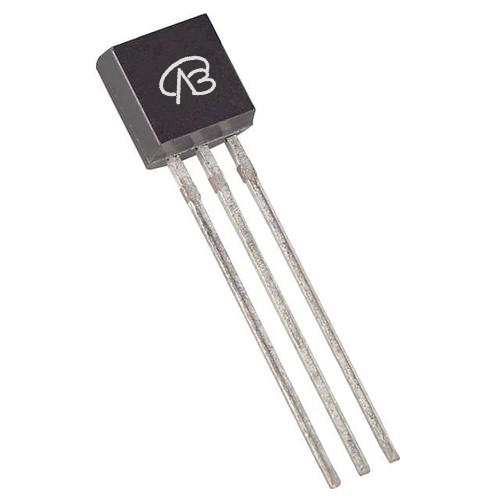
Comparative Analysis: 2N7000BU (Small-Signal N-channel) vs. VBR9N602K
Analysis of the Original Model (2N7000BU) Core:
This is a 60V small-signal N-channel MOSFET from onsemi, using the classic through-hole TO-92 package. Its design core is to provide robust, reliable, and fast switching performance for low-current applications. The key advantages are: a high voltage rating of 60V, a continuous drain current of 200mA (with pulse capability up to 2A), and an on-resistance of 1.2Ω at 10V gate drive. It is manufactured with proprietary high-cell-density DMOS technology to minimize on-resistance.
Compatibility and Differences of the Domestic Alternative (VBR9N602K):
VBsemi's VBR9N602K also uses the TO-92 package and is a direct pin-to-pin compatible alternative. The main differences lie in the electrical parameters: VBR9N602K shares the same 60V voltage rating but offers a slightly higher continuous current of 0.45A. Its on-resistance is 2Ω at 10V, which is higher than the original's 1.2Ω, indicating a trade-off for potentially lower cost or different process focus (Trench technology).
Key Application Areas:
Original Model 2N7000BU: Its characteristics are very suitable for general-purpose low-side switching, signal level shifting, and load switching in low-current circuits (up to 200mA continuous). Typical applications include:
Logic level interfacing and signal switching.
Driving small relays, LEDs, or other low-power loads.
Protection circuits and load management in consumer electronics.
Alternative Model VBR9N602K: More suitable as a cost-effective replacement in applications where the slightly higher on-resistance is acceptable, and the standard TO-92 package is required, for similar low-current switching and driving tasks.
Comparative Analysis: NTMFS2D5N08XT1G (Power N-channel) vs. VBGQA1803
Unlike the small-signal model, the design pursuit of this power N-channel MOSFET is the ultimate balance of 'ultra-low resistance, high current, and fast switching' for synchronous rectification.
Analysis of the Original Model (NTMFS2D5N08XT1G) Core:
The core advantages of the original model are reflected in three aspects:
1. Exceptional Conduction Performance: With an ultra-low on-resistance of 1.9mΩ at 10V gate drive and a very high continuous drain current rating of 181A, it minimizes conduction losses in high-current paths.
2. Optimized Switching Characteristics: It features low gate charge (QG) and capacitance to minimize driving losses, and a low QRR, soft-recovery body diode for improved efficiency in switching applications.
3. Power Package: Using the SO-8FL package, it offers a good balance between current handling, thermal performance, and board space.
Compatibility and Differences of the Domestic Alternative (VBGQA1803):
The domestic alternative VBGQA1803 belongs to a 'performance-competitive' choice in a different package (DFN8 5x6). It matches the 80V voltage rating. While its continuous current (140A) is lower than the original's 181A, it offers a competitive on-resistance of 2.65mΩ at 10V. The use of SGT (Shielded Gate Trench) technology aims for good switching performance.
Key Application Areas:
Original Model NTMFS2D5N08XT1G: Its ultra-low RDS(on) and high current capability make it an ideal choice for high-efficiency, high-current power conversion stages. For example:
Synchronous rectification in high-power DC-DC and AC-DC converters.
Primary-side switching in isolated DC-DC converters.
High-current motor drives and power management modules.
Alternative Model VBGQA1803: Is suitable for applications requiring a compact DFN package, an 80V rating, and high-current capability (up to 140A) with low conduction loss, such as synchronous rectification in compact power supplies or motor drives where its SGT technology can be beneficial.
Conclusion
In summary, this comparative analysis reveals two clear selection paths:
For small-signal, low-current N-channel applications using the TO-92 package, the original model 2N7000BU, with its proven reliability and balanced parameters, remains a solid choice. Its domestic alternative VBR9N602K offers a compatible, potentially cost-effective option with a slightly higher current rating but also a higher on-resistance, suitable for less demanding on-resistance scenarios.
For high-power N-channel applications focusing on ultra-low conduction loss in synchronous rectification, the original model NTMFS2D5N08XT1G, with its benchmark 1.9mΩ RDS(on) and 181A current capability in an SO-8FL package, is a top-tier choice for maximizing efficiency. The domestic alternative VBGQA1803, in a compact DFN package, provides a strong performance option with 2.65mΩ and 140A, suitable for designs prioritizing footprint and still requiring high efficiency.
The core conclusion is: Selection depends on precise requirement matching. Domestic alternatives provide viable backup and competitive options, offering engineers more flexibility in design trade-offs and cost control within a diversified supply chain. Understanding each device's design philosophy and parameter implications is key to maximizing its value in the circuit.

Download PDF document
 Download now


