 中文
中文 English
MOSFET Selection for High-Voltage and High-Efficiency Applications: SPD07N60C3ATMA1, BSC076N06NS3 G vs. China Alternatives VBE16R07S, VBQA1606
Number of views:9999
 Back to previous page
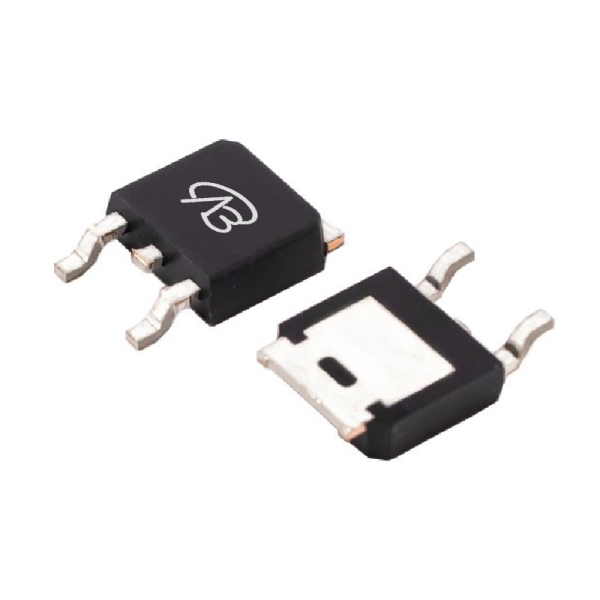
Comparative Analysis: SPD07N60C3ATMA1 (600V N-channel) vs. VBE16R07S
Analysis of the Original Model (SPD07N60C3ATMA1) Core:
This is a 600V N-channel MOSFET from Infineon in a TO-252-3 package. Its design core leverages revolutionary high-voltage technology to achieve an excellent balance between breakdown voltage and conduction loss in a cost-effective package. Key advantages include: a relatively low on-resistance of 600mΩ at 10V gate drive for a 600V device, a continuous drain current of 7.3A, and features like ultra-low gate charge, high dv/dt capability, avalanche ruggedness, and high peak current handling. It is fully qualified for industrial applications.
Compatibility and Differences of the Domestic Alternative (VBE16R07S):
VBsemi's VBE16R07S is a direct pin-to-pin compatible alternative in the same TO-252 package. The key parameters are closely matched: both are 600V N-channel devices. The VBE16R07S offers a similar continuous current rating of 7A and a nearly identical on-resistance of 650mΩ at 10V. It utilizes a Super Junction Multi-EPI process, targeting similar high-voltage switching performance.
Key Application Areas:
Original Model SPD07N60C3ATMA1: Its combination of 600V rating, moderate RDS(on), and robust switching features makes it ideal for cost-sensitive, medium-power off-line applications.
SMPS (Switched-Mode Power Supplies): Used in PFC (Power Factor Correction) stages, flyback, or forward converter primary-side switches for adapters, LED drivers, and auxiliary power supplies.
Motor Drives: Suitable for driving small industrial motors or as switches in inverter stages.
Industrial Controls: Acts as a reliable switching element in relays, contactors, or solenoid drivers.
Alternative Model VBE16R07S: Serves as a highly viable domestic alternative for the same 600V application spaces where supply chain diversification or cost optimization is needed, without significant performance compromise.
Comparative Analysis: BSC076N06NS3 G (60V N-channel) vs. VBQA1606
This comparison shifts focus to lower-voltage, high-current applications where efficiency and power density are paramount.
Analysis of the Original Model (BSC076N06NS3 G) Core:
This Infineon 60V N-channel MOSFET in a TDSON-8 (5x6) package is engineered for high-frequency switching and synchronous rectification. Its core advantages are:
Excellent Conduction Performance: An ultra-low on-resistance of 7.6mΩ at 10V gate drive, supporting a high continuous drain current of 50A. This minimizes conduction losses.
Optimized Switching Characteristics: Features an outstanding Gate Charge (Qg) x RDS(on) Figure of Merit (FOM), enabling high efficiency in fast-switching DC-DC topologies.
Superior Thermal Performance: The TDSON-8 package with exposed pad offers low thermal resistance, crucial for managing heat in high-current applications.
Compatibility and Differences of the Domestic Alternative (VBQA1606):
VBsemi's VBQA1606, in a DFN8(5x6) package, is a form-factor compatible alternative that offers performance enhancement in key areas:
It matches the 60V voltage rating.
It provides a significantly higher continuous current rating of 80A.
It achieves an even lower on-resistance: 6mΩ at 10V (and 7mΩ at 4.5V), using a Trench technology process.
Key Application Areas:
Original Model BSC076N06NS3 G: Its low RDS(on) and optimized FOM make it an ideal choice for high-efficiency, medium-to-high current DC-DC conversion.
Synchronous Rectification: Perfect as the low-side switch in buck converters for point-of-load (POL) modules, server VRMs, and telecom power systems.
High-Current DC-DC Converters: Used in boost or buck-boost circuits for battery management systems (BMS), industrial power supplies.
Alternative Model VBQA1606: With its superior current capability (80A) and lower on-resistance (6mΩ), it is suited for upgraded or more demanding scenarios requiring higher power density, lower conduction losses, or headroom for higher output currents, such as next-generation high-performance POL converters or high-power motor drives.
Conclusion
In summary, this analysis reveals two distinct selection pathways:
For 600V high-voltage switching applications, the original model SPD07N60C3ATMA1 provides a robust, industry-proven solution with balanced RDS(on) and switching capabilities for SMPS and industrial controls. Its domestic alternative VBE16R07S offers a closely matched, pin-to-pin compatible option, ensuring design continuity and supply chain resilience for these voltage domains.
For 60V high-efficiency, high-current applications, the original model BSC076N06NS3 G sets a high standard with its excellent FOM and thermal performance for synchronous rectification in demanding DC-DC converters. The domestic alternative VBQA1606 emerges as a compelling performance-enhanced choice, boasting higher current rating (80A vs. 50A) and lower on-resistance (6mΩ vs. 7.6mΩ), making it ideal for pushing the boundaries of power density and efficiency in next-generation designs.
The core takeaway is that selection is not about absolute superiority but precise requirement matching. In the context of supply chain diversification, domestic alternatives like VBE16R07S and VBQA1606 not only provide reliable backup options but also, in cases like the VBQA1606, offer parametric advancements. This grants engineers greater flexibility and resilience in navigating design trade-offs and cost-control strategies. A deep understanding of each device's design philosophy and parametric implications is essential to unlock its full potential within your circuit.

Download PDF document
 Download now


