 中文
中文 English
MOSFET Selection for High-Voltage and Automotive Power Applications: SPA20N60C3, IAUCN10S7N021ATMA1 vs. China Alternatives VBMB165R20S, VBGQA1103
Number of views:9999
 Back to previous page
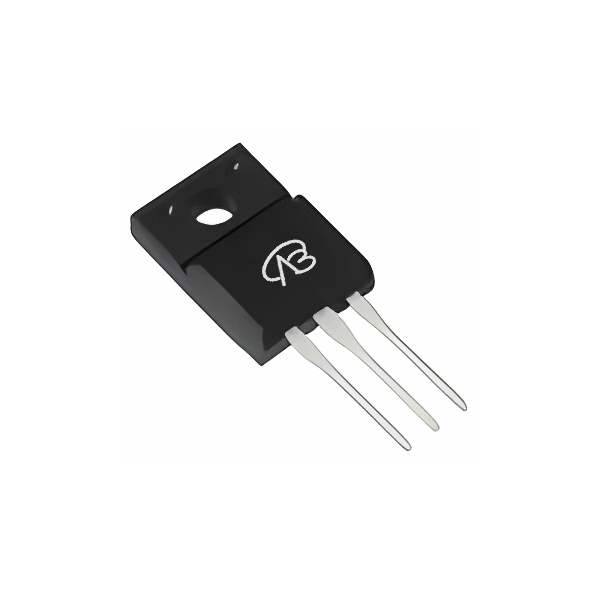
Comparative Analysis: SPA20N60C3 (N-channel, 650V) vs. VBMB165R20S
Analysis of the Original Model (SPA20N60C3) Core:
This Infineon N-channel MOSFET in a TO-220FP package is designed for robust high-voltage switching. Its core strengths are a 650V drain-source voltage (Vdss) rating and a continuous drain current (Id) of 20.7A. With an on-resistance (RDS(on)) of 190mΩ at 10V gate drive, it offers a reliable solution for medium-power off-line applications where cost-effective performance and standard packaging are key.
Compatibility and Differences of the Domestic Alternative (VBMB165R20S):
VBsemi's VBMB165R20S serves as a direct, pin-to-pin compatible alternative in the same TO-220F package. It matches the critical 650V Vdss rating but offers a performance-enhanced electrical profile: a similar 20A continuous current rating paired with a significantly lower on-resistance of 160mΩ at 10V. This reduction in RDS(on) directly translates to lower conduction losses and improved efficiency in operation.
Key Application Areas:
Original Model SPA20N60C3: Ideal for standard 650V switching applications such as AC-DC power supplies, power factor correction (PFC) stages, and motor drives where its balanced parameters provide dependable performance.
Alternative Model VBMB165R20S: Better suited for applications demanding higher efficiency within the same voltage class. Its lower conduction loss makes it an excellent upgrade for SMPS, inverters, and industrial controls, offering potential thermal and efficiency improvements.
Comparative Analysis: IAUCN10S7N021ATMA1 (N-channel, Automotive) vs. VBGQA1103
This comparison shifts focus to ultra-low-loss, high-current switching critical for modern automotive and compact power systems.
Analysis of the Original Model (IAUCN10S7N021ATMA1) Core:
This Infineon OptiMOS™ device is an automotive-grade N-channel MOSFET in a TDSON-8 package. Its design pursues extreme current density and minimal loss, featuring a 100V Vdss, an exceptional continuous current rating of 220A, and an ultra-low RDS(on) of 2.1mΩ at 10V. Certified beyond AEC-Q101, it is engineered for high-reliability automotive applications like motor control, DC-DC conversion, and battery management systems (BMS).
Compatibility and Differences of the Domestic Alternative (VBGQA1103):
VBsemi's VBGQA1103, in a compact DFN8(5x6) package, provides a space-optimized and cost-effective alternative. While it shares the 100V Vdss rating, its parameters are tailored for different design priorities: a high continuous current of 135A and an RDS(on) of 3.45mΩ at 10V. It offers a compelling balance of substantial current capability and low resistance in a smaller footprint.
Key Application Areas:
Original Model IAUCN10S7N021ATMA1: The premier choice for the most demanding automotive and high-current industrial applications, such as high-power BLDC motor drives, main switch in 48V systems, and high-density DC-DC converters where maximum current handling and absolute minimum resistance are critical.
Alternative Model VBGQA1103: Excellently suited for applications where board space is at a premium but high performance is still required. It is a strong candidate for compact motor drives, high-efficiency synchronous rectification in server/telecom power, and advanced BMS, offering a great balance of size, current, and resistance.
Conclusion:
This analysis reveals two distinct replacement strategies:
1. For 650V high-voltage applications, the domestic alternative VBMB165R20S not only provides direct package compatibility but also delivers a performance upgrade with its lower 160mΩ on-resistance compared to the original SPA20N60C3's 190mΩ, enabling higher efficiency in next-generation designs.
2. For 100V high-current applications, the choice depends on the design's primary constraint. The original IAUCN10S7N021ATMA1 remains unmatched for ultimate current capability (220A) and lowest resistance (2.1mΩ) in automotive-grade scenarios. The domestic alternative VBGQA1103 presents a highly integrated solution, packing 135A and 3.45mΩ into a miniature DFN package, ideal for space-constrained, high-performance applications.
The core insight is that effective selection requires precise requirement matching. These domestic alternatives (VBMB165R20S, VBGQA1103) provide not just reliable backup options but also opportunities for performance gains or size reduction, enhancing supply chain resilience and offering engineers greater flexibility in power design trade-offs.

Download PDF document
 Download now


