 中文
中文 English
MOSFET Selection for Low-Power and Medium-Power Switching: SN7002IXTSA1, IRFL4105TRPBF vs. China Alternatives VB162K, VBJ1638
Number of views:9999
 Back to previous page
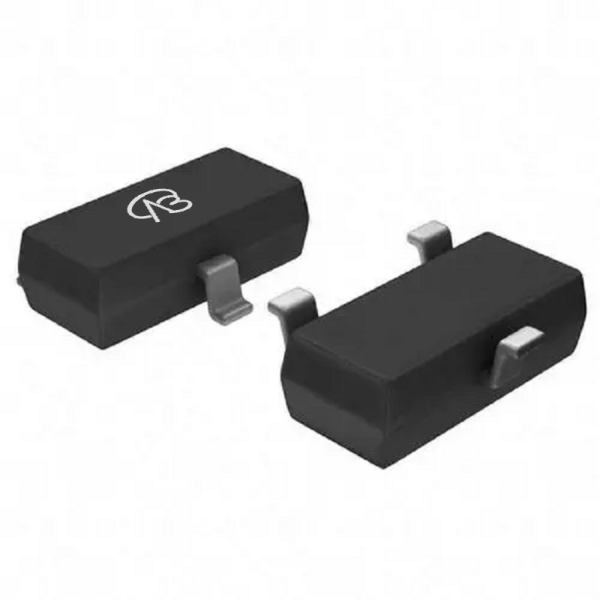
Comparative Analysis: SN7002IXTSA1 (N-channel, Small-Signal) vs. VB162K
Analysis of the Original Model (SN7002IXTSA1) Core:
This is a 60V N-channel small-signal MOSFET from Infineon in a compact SOT-23 package. Its design core is to provide reliable switching for low-power, high-voltage applications. Key advantages include: a drain-source voltage (Vdss) of 60V, a continuous drain current (Id) of 200mA, and a logic-level gate with enhanced dv/dt capability. Its on-resistance is 7.5Ω at 4.5V gate drive. It is designed as an enhancement-mode device suitable for automated assembly and is RoHS and halogen-free compliant.
Compatibility and Differences of the Domestic Alternative (VB162K):
VBsemi's VB162K is also offered in an SOT-23 package and serves as a functional alternative. The main differences are in electrical parameters: VB162K shares the same 60V voltage rating but offers a significantly lower on-resistance of 3100 mΩ (3.1Ω) at 4.5V gate drive and 2800 mΩ (2.8Ω) at 10V. Its continuous current rating is 0.3A (300mA), which is slightly higher than the original's 200mA. It utilizes Trench technology.
Key Application Areas:
Original Model SN7002IXTSA1: Ideal for low-current, high-voltage switching needs where logic-level control and robustness are priorities. Typical applications include:
Signal switching and level translation in communication interfaces.
Load switching for small sensors or indicators in 12V-48V systems.
Protection circuits and high-side switches in battery management systems (BMS) for low-power paths.
Alternative Model VB162K: Better suited for applications requiring slightly higher current capability (up to 300mA) and lower conduction loss (lower RDS(on)) within the same voltage range, such as upgraded designs for power management in portable devices or more efficient signal path control.
Comparative Analysis: IRFL4105TRPBF (N-channel, Power) vs. VBJ1638
This comparison shifts focus to a MOSFET designed for higher current handling in a still compact footprint.
Analysis of the Original Model (IRFL4105TRPBF) Core:
This is a 55V N-channel power MOSFET from Infineon in a SOT-223 package, known for its good thermal performance. Its design core, leveraging the 5th generation HEXFET technology, is to achieve very low specific on-resistance for its silicon area. Key advantages are: a continuous drain current of 3.7A, a low on-resistance of 45mΩ at 10V gate drive, and the combination of fast switching speed with a rugged device design.
Compatibility and Differences of the Domestic Alternative (VBJ1638):
The domestic alternative VBJ1638, in a SOT-223 package, represents a "performance-enhanced" choice. It achieves comprehensive superiority in key parameters: a higher voltage rating of 60V, a much higher continuous drain current of 7A, and a significantly lower on-resistance of 33mΩ at 4.5V and 28mΩ at 10V gate drive.
Key Application Areas:
Original Model IRFL4105TRPBF: Its balance of low on-resistance (45mΩ), 3.7A current capability, and robust SOT-223 package makes it an excellent choice for medium-power applications. For example:
Low-side switches in DC-DC converters for 12V/24V systems.
Motor drivers for small fans, pumps, or actuators.
Power management and load switching in automotive, industrial, or consumer electronics modules.
Alternative Model VBJ1638: Is more suitable for upgrade scenarios demanding higher current capability (7A), lower conduction loss (28mΩ), and a higher voltage margin (60V). This makes it ideal for next-generation designs in areas like:
Higher-current point-of-load (POL) converters.
More powerful motor drives or solenoid drivers.
General-purpose power switches where efficiency and thermal performance are critical.
Summary and Selection Paths:
This analysis reveals two distinct selection paths based on power level:
For low-power, high-voltage signal switching, the original SN7002IXTSA1, with its 60V rating and logic-level control in a tiny SOT-23, is a proven solution for classic low-current applications. Its domestic alternative VB162K offers a compelling upgrade with lower on-resistance and slightly higher current handling, providing a more efficient drop-in option for space-constrained designs.
For medium-power applications, the original IRFL4105TRPBF offers a reliable, well-balanced solution with 3.7A capability and 45mΩ RDS(on). The domestic alternative VBJ1638 delivers significant "performance enhancement," with nearly double the current (7A) and substantially lower on-resistance (28mΩ), making it a powerful choice for designs pushing higher power density and efficiency.
Core Conclusion: Selection is not about absolute superiority but precise requirement matching. In the context of supply chain diversification, domestic alternatives like VB162K and VBJ1638 not only provide viable backup options but also offer parameter advancements in key areas. This gives engineers greater flexibility and resilience in design trade-offs and cost control. Understanding the design philosophy and parameter implications of each device is essential to maximize its value in the circuit.

Download PDF document
 Download now


