 中文
中文 English
MOSFET Selection for High-Power & Compact Switching: PSMN7R0-100BS,118, PSMN6R0-30YLD vs. China Alternatives VBL1105, VBED1303
Number of views:9999
 Back to previous page
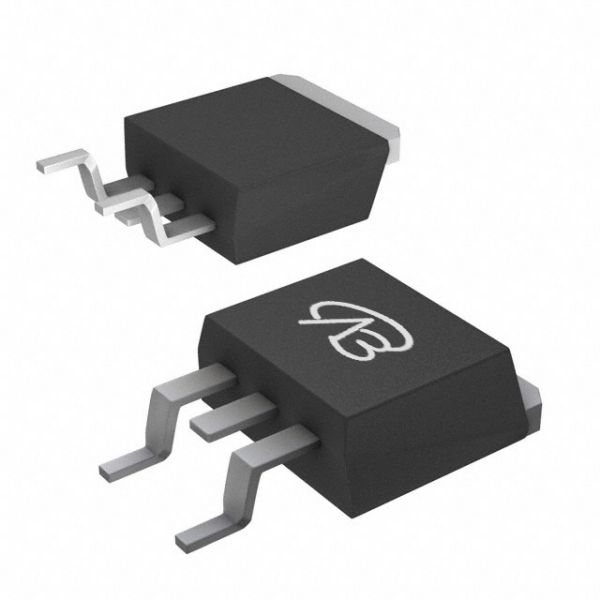
Comparative Analysis: PSMN7R0-100BS,118 (100V N-channel) vs. VBL1105
Analysis of the Original Model (PSMN7R0-100BS,118) Core:
This is a 100V N-channel MOSFET in a D2PAK package, designed for high-current switching in robust power applications. Its key strengths are a high continuous drain current rating of 100A and a low on-resistance of 6.8mΩ (measured at 10V, 15A). The package offers excellent thermal performance, making it suitable for high-power circuits where heat dissipation is critical.
Compatibility and Differences of the Domestic Alternative (VBL1105):
VBsemi’s VBL1105 is also offered in a TO-263 (D2PAK-compatible) package and serves as a pin-to-pin alternative. The primary differences are in electrical parameters: VBL1105 features a significantly lower on-resistance of 4mΩ (at 10V) and a higher continuous current rating of 140A, while maintaining the same 100V voltage rating. This represents a substantial performance upgrade in conduction loss and current capability.
Key Application Areas:
Original Model PSMN7R0-100BS,118: Ideal for high-power DC-DC converters, motor drives, and power distribution systems operating around 48V-100V, where a balance of voltage rating, current handling (up to 100A), and proven thermal performance is required.
Alternative Model VBL1105: Better suited for next-generation or upgraded designs demanding even higher efficiency and power density. Its ultra-low 4mΩ RDS(on) and 140A current rating make it excellent for high-current synchronous rectification, server/telecom power supplies, and high-performance motor controllers where reducing conduction losses is paramount.
Comparative Analysis: PSMN6R0-30YLD (30V N-channel) vs. VBED1303
This comparison shifts focus to compact, high-efficiency switching. The original model is engineered for optimal performance in a minimal footprint.
Analysis of the Original Model (PSMN6R0-30YLD) Core:
Housed in a space-saving SOT-669 (LFPAK56) package, this 30V N-channel MOSFET delivers impressive performance for its size: a continuous drain current of 66A and a low on-resistance of 6.0mΩ (typical). Its design prioritizes high current density and efficient switching in tightly packed PCB layouts.
Compatibility and Differences of the Domestic Alternative (VBED1303):
VBsemi’s VBED1303 is a direct pin-to-pin compatible alternative in the SOT-669 package. It offers a notable performance enhancement: a lower on-resistance of 2.8mΩ (at 10V) and a higher continuous current rating of 90A, while maintaining the 30V voltage rating. This translates to significantly reduced conduction losses and higher current capability in the same compact footprint.
Key Application Areas:
Original Model PSMN6R0-30YLD: Perfect for space-constrained, high-current applications in 12V-24V systems. Typical uses include point-of-load (POL) converters, battery protection circuits, and motor drives in portable devices, drones, or automotive subsystems where board space is at a premium.
Alternative Model VBED1303: An excellent choice for designs pushing the limits of efficiency and power density within the same package outline. Its superior RDS(on) and 90A rating make it ideal for advanced synchronous buck converters, high-current load switches, and compact motor drives that require minimal voltage drop and thermal generation.
Conclusion:
This analysis reveals two distinct upgrade paths:
1. For high-power, high-voltage (100V) applications using the D2PAK/TO-263 package, the domestic alternative VBL1105 provides a significant performance boost over the PSMN7R0-100BS,118, with lower RDS(on) (4mΩ vs. 6.8mΩ) and higher current handling (140A vs. 100A), enabling more efficient and powerful designs.
2. For compact, medium-voltage (30V) applications using the SOT-669 package, the domestic alternative VBED1303 outperforms the PSMN6R0-30YLD with substantially lower RDS(on) (2.8mΩ vs. ~6.0mΩ) and higher current capability (90A vs. 66A), offering superior efficiency in the same minimal footprint.
The core takeaway is that selection depends on precise requirement matching. In the era of supply chain diversification, these domestic alternatives not only provide reliable compatibility but also deliver enhanced performance in key parameters, giving engineers greater flexibility and resilience in design trade-offs and cost optimization. Understanding each device's design philosophy and parameter implications is essential to unlocking its full potential in your circuit.

Download PDF document
 Download now


