 中文
中文 English
MOSFET Selection for High-Power Density Applications: PSMN6R3-120ESQ, PSMN012-100YSFX vs. China Alternatives VBN1105, VBED1101N
Number of views:9999
 Back to previous page
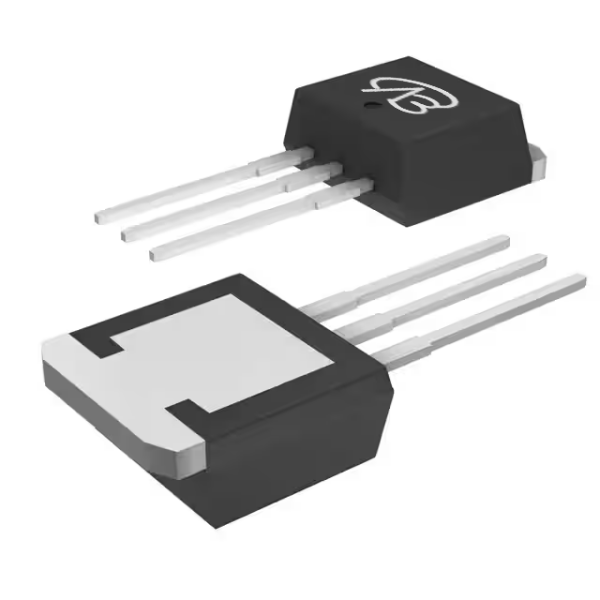
Comparative Analysis: PSMN6R3-120ESQ (N-channel) vs. VBN1105
Analysis of the Original Model (PSMN6R3-120ESQ) Core:
This is a 120V N-channel MOSFET from Nexperia in a SOT-226-3 (TO-262) package. Its design core is to deliver high current capability with low conduction loss in a robust, industry-standard package. Key advantages are: a high continuous drain current of 70A, a low on-resistance of 6.7mΩ (typical @10V, 25°C), and a 120V drain-source voltage rating. This combination makes it suitable for high-power switching applications requiring good thermal performance.
Compatibility and Differences of the Domestic Alternative (VBN1105):
VBsemi's VBN1105 is also offered in a TO-262 package and serves as a pin-to-pin compatible alternative. The main differences are in electrical parameters: VBN1105 has a slightly lower voltage rating (100V vs. 120V) and a marginally higher on-resistance (9mΩ @10V vs. 6.7mΩ). However, it offers a very high continuous current rating of 100A.
Key Application Areas:
Original Model PSMN6R3-120ESQ: Ideal for applications requiring a balance of high voltage (120V), high current (70A), and low conduction loss. Typical uses include:
High-current DC-DC converters in 48V/60V systems (e.g., telecom, industrial power).
Motor drives and inverters for industrial tools and light electric vehicles.
Solid-state relays and high-power load switches.
Alternative Model VBN1105: An excellent choice for applications where the voltage requirement is within 100V but current demand is paramount (up to 100A). It is well-suited for:
Ultra-high-current point-of-load (POL) converters and synchronous rectification in low-voltage, high-current scenarios.
Upgrading designs where lower RDS(on) at high current is needed, provided the 100V rating is sufficient.
Comparative Analysis: PSMN012-100YSFX (N-channel) vs. VBED1101N
This comparison focuses on high-performance MOSFETs in advanced power packages designed for efficiency and power density.
Analysis of the Original Model (PSMN012-100YSFX) Core:
This Nexperia MOSFET utilizes the LFPAK56 (Power-SO8) package, emphasizing low on-resistance and high power dissipation in a compact footprint. Its core advantages are: a 100V drain-source voltage, a high continuous current of 65A, a low on-resistance of 11.8mΩ (@10V), and a high power dissipation of 130W. This makes it a top-tier choice for space-constrained, high-efficiency applications.
Compatibility and Differences of the Domestic Alternative (VBED1101N):
VBsemi's VBED1101N comes in a SOT-669 package and is a functional alternative designed for similar high-density applications. Key parameter comparisons: VBED1101N matches the 100V voltage rating and offers a comparable continuous current of 69A. Its on-resistance is very close at 11.6mΩ (@10V), essentially matching the original's performance in this critical parameter.
Key Application Areas:
Original Model PSMN012-100YSFX: Excels in applications demanding maximum power density, high efficiency, and excellent thermal performance from a small package. Typical applications include:
High-frequency, high-efficiency DC-DC converters (buck, boost) in servers, networking, and computing equipment.
Motor drive circuits in compact automotive or robotics systems.
Any application where the LFPAK56 package's thermal and electrical benefits are required.
Alternative Model VBED1101N: Serves as a strong domestic alternative for designs requiring 100V/ ~65A capability with low RDS(on) in a thermally enhanced package. It is suitable for:
Direct replacement or new designs in similar high-density power conversion and motor control applications.
Providing supply chain diversification without significant performance compromise on key metrics like RDS(on) and current rating.
Conclusion:
This analysis reveals two distinct selection strategies based on package and performance priorities:
For high-power applications using the robust TO-262 package, the original PSMN6R3-120ESQ offers an excellent balance of 120V rating, 70A current, and very low 6.7mΩ RDS(on). Its alternative, VBN1105, trades some voltage headroom (100V) for significantly higher current capability (100A), making it a powerful option for ultra-high-current, lower-voltage circuits.
For maximum power density in advanced packages, the original PSMN012-100YSFX (LFPAK56) sets a high standard with 65A, 11.8mΩ, and 130W dissipation. The domestic alternative VBED1101N (SOT-669) achieves remarkable parameter parity, offering nearly identical voltage (100V), current (69A), and on-resistance (11.6mΩ) performance, presenting a viable and competitive alternative.
The core takeaway is that selection hinges on precise requirement matching. In the landscape of supply chain resilience, domestic alternatives like VBN1105 and VBED1101N not only provide reliable backup options but also offer compelling performance characteristics—whether in unmatched current capability or closely matched efficiency parameters—granting engineers greater flexibility in design optimization and cost management.

Download PDF document
 Download now


