 中文
中文 English
MOSFET Selection for High-Power Density Applications: PSMN3R8-100BS,118, BUK7Y3R5-40H,115 vs. China Alternatives VBL1105 and VBGED1401
Number of views:9999
 Back to previous page
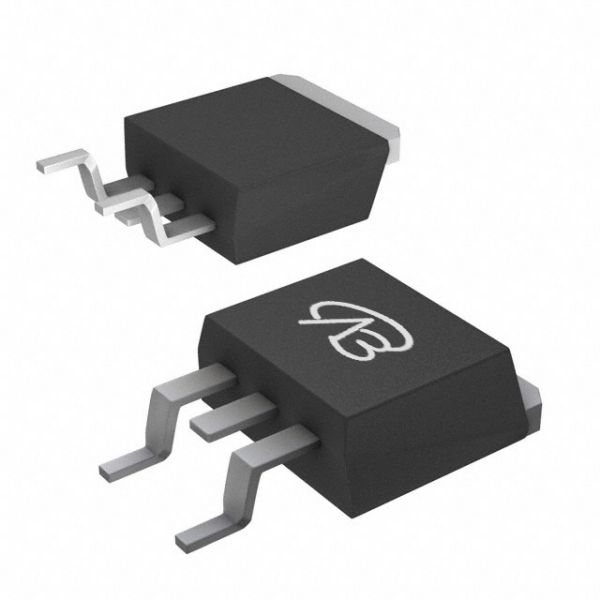
Comparative Analysis: PSMN3R8-100BS,118 (N-channel) vs. VBL1105
Analysis of the Original Model (PSMN3R8-100BS,118) Core:
This is a 100V N-channel MOSFET from Nexperia in a TO-263 (D²PAK) package. Its design core is to deliver high current handling with low conduction loss in a robust, industry-standard package. Key advantages are: a very low on-resistance of 3.9mΩ (typical at 10V, 25°C) and a high continuous drain current rating of 120A. This combination makes it a powerhouse for demanding high-voltage, high-current switching applications.
Compatibility and Differences of the Domestic Alternative (VBL1105):
VBsemi's VBL1105 is a direct pin-to-pin compatible alternative in the same TO-263 package. It matches the original's 100V voltage rating. The key differences are in performance: VBL1105 offers a slightly higher typical on-resistance of 4mΩ (@10V) but boasts a significantly higher continuous current rating of 140A. This presents an interesting trade-off between marginally higher conduction loss and substantially higher current capability.
Key Application Areas:
Original Model PSMN3R8-100BS,118: Ideal for high-power 48V-100V systems requiring excellent balance of low RDS(on) and high current. Typical applications include:
High-power DC-DC converters in telecom/server power supplies.
Motor drives for industrial equipment and e-mobility.
Inverter and power stage modules in solar energy systems.
Alternative Model VBL1105: Suited for applications where the primary demand is for maximum current throughput (up to 140A) with good voltage withstand, potentially offering a headroom upgrade in current-heavy designs, albeit with a slight compromise on the lowest possible RDS(on).
Comparative Analysis: BUK7Y3R5-40H,115 (N-channel) vs. VBGED1401
This comparison focuses on ultra-low resistance switching for lower voltage, very high-current applications.
Analysis of the Original Model (BUK7Y3R5-40H,115) Core:
This Nexperia 40V MOSFET is engineered for minimal conduction loss in high-current paths. Its core advantages are an extremely low on-resistance of 3.5mΩ (@10V) and a high continuous current of 120A, packaged in a thermally efficient format (LFPAK56 or similar) supporting 115W power dissipation. This makes it a top-tier choice for efficiency-critical, medium-voltage applications.
Compatibility and Differences of the Domestic Alternative (VBGED1401):
VBsemi's VBGED1401 represents a significant "performance leap" alternative. While maintaining the 40V voltage rating, it achieves a dramatically lower typical on-resistance of 0.7mΩ (@10V) and a massive continuous current rating of 250A. This indicates vastly superior conduction performance and current handling capability, likely enabled by advanced SGT (Shielded Gate Trench) technology.
Key Application Areas:
Original Model BUK7Y3R5-40H,115: Excels in 12V/24V/48V bus applications where minimizing conduction loss is paramount. Typical uses include:
Synchronous rectification in high-current DC-DC converters (e.g., VRMs, POL converters).
High-current load switches and OR-ing circuits in data centers.
Motor drives for high-performance robotics and automotive systems.
Alternative Model VBGED1401: Is the definitive choice for next-generation designs demanding the absolute lowest possible conduction loss and highest current density. It is perfectly suited for:
Ultra-high-efficiency power stages in server CPUs/GPUs.
High-power motor controllers in electric vehicles and industrial drives.
Any application where thermal management and efficiency are the primary bottlenecks.
Summary
This analysis reveals two distinct selection strategies for high-power applications:
For 100V-class high-current switching, the original PSMN3R8-100BS,118 offers an excellent blend of low 3.9mΩ RDS(on) and 120A current in a reliable package. Its domestic alternative VBL1105 provides a compelling option with even higher current capability (140A), suitable for designs prioritizing current headroom over the absolute minimum RDS(on).
For 40V-class ultra-low-loss switching, the original BUK7Y3R5-40H,115 sets a high standard with its 3.5mΩ RDS(on) and 120A rating. The domestic alternative VBGED1401 delivers a transformative performance boost with its groundbreaking 0.7mΩ RDS(on) and 250A rating, making it a superior choice for pushing the boundaries of power density and efficiency.
The core conclusion is that selection is driven by precise requirement matching. In the context of supply chain diversification, domestic alternatives like VBL1105 and particularly VBGED1401 not only provide viable backups but can offer significant performance advantages in key parameters, giving engineers greater flexibility and resilience in their design and cost optimization efforts.

Download PDF document
 Download now


