 中文
中文 English
MOSFET Selection for High-Performance Power Switching: PSMN1R5-30BLEJ, PSMN1R0-40YLDX vs. China Alternatives VBL1301, VBGED1401
Number of views:9999
 Back to previous page
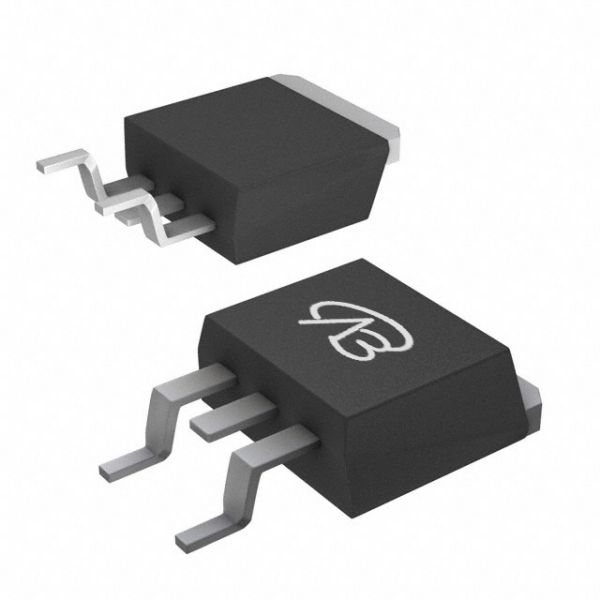
Comparative Analysis: PSMN1R5-30BLEJ (N-channel) vs. VBL1301
Analysis of the Original Model (PSMN1R5-30BLEJ) Core:
This is a 30V N-channel MOSFET from Nexperia in a D2PAK (TO-263) package. Its design core focuses on robust power handling with very low conduction loss in a standard high-power package. Key advantages are: an extremely low on-resistance of 1.5mΩ (typical @10V, 25°C) and a high continuous drain current rating of 120A. This combination makes it suitable for applications demanding high current and minimal voltage drop.
Compatibility and Differences of the Domestic Alternative (VBL1301):
VBsemi's VBL1301 is offered in a TO-263 package and serves as a potential alternative. The key differences lie in the electrical parameters: VBL1301 features a slightly lower on-resistance of 1.4mΩ (@10V) and a significantly higher continuous current rating of 260A, while maintaining the same 30V voltage rating. This suggests an enhanced current-handling capability.
Key Application Areas:
Original Model PSMN1R5-30BLEJ: Ideal for high-current, medium-voltage switching where low RDS(on) in a standard package is paramount. Typical applications include:
High-current DC-DC converters and voltage regulators (e.g., for computing, telecom).
Motor drives and solenoids in automotive or industrial systems.
Power distribution and load switches in server/rack PSUs.
Alternative Model VBL1301: Suited for applications requiring even higher current capacity (up to 260A) and marginally lower conduction loss than the original part, potentially offering an upgrade path for designs needing higher power density or margin.
Comparative Analysis: PSMN1R0-40YLDX (N-channel) vs. VBGED1401
This comparison highlights the pursuit of ultra-low resistance and fast switching in advanced packages for the highest efficiency.
Analysis of the Original Model (PSMN1R0-40YLDX) Core:
This 40V N-channel MOSFET from Nexperia utilizes an advanced LFPAK56 (Power-SO8) package and TrenchMOS technology. Its core advantages are:
Ultra-Low Conduction Loss: An impressively low on-resistance of 1.1mΩ (@10V).
Exceptional Current Capability: A continuous drain current rating of 280A.
Advanced Package: The LFPAK56 offers excellent thermal and switching performance in a compact footprint, suitable for high-frequency operation.
Compatibility and Differences of the Domestic Alternative (VBGED1401):
VBsemi's VBGED1401 is also housed in an LFPAK56 package, providing direct pin-to-pin compatibility. It presents a performance-enhanced profile: it matches the 40V rating but features an even lower on-resistance of 0.7mΩ (@10V) and a high current rating of 250A.
Key Application Areas:
Original Model PSMN1R0-40YLDX: Its ultra-low RDS(on) and high current in a thermally efficient package make it a top-tier choice for the most demanding power conversion stages. Applications include:
Synchronous rectification in high-frequency, high-current DC-DC converters (e.g., VRMs, POL converters).
Inverter and motor drive stages in high-performance automotive (xEV) and industrial systems.
High-density power supplies for servers, networking, and telecom infrastructure.
Alternative Model VBGED1401: With its superior 0.7mΩ RDS(on), it is an excellent choice for upgrade scenarios where minimizing conduction loss is the absolute priority, potentially enabling higher efficiency or allowing for a smaller heatsink in similar high-power applications.
Summary
This analysis reveals two distinct selection paths for high-performance N-channel MOSFETs:
For high-current applications in a standard D2PAK package, the original PSMN1R5-30BLEJ, with its 1.5mΩ and 120A capability, is a robust, proven solution. Its domestic alternative VBL1301 offers a compelling upgrade with higher current (260A) and slightly lower RDS(on) (1.4mΩ), suitable for designs pushing current limits.
For ultra-high-efficiency applications requiring an advanced LFPAK56 package, the original PSMN1R0-40YLDX sets a high bar with 1.1mΩ and 280A. The domestic alternative VBGED1401 achieves a significant performance leap with an ultra-low 0.7mΩ RDS(on) and 250A current, making it a top contender for next-generation designs where every milliohm counts.
The core conclusion is: Selection is driven by precise requirement matching. In the context of supply chain diversification, domestic alternatives like VBL1301 and VBGED1401 not only provide viable backup options but also demonstrate competitive or even superior performance in key parameters, offering engineers greater flexibility and resilience in design optimization and cost management. Understanding the specific performance envelope of each device is key to unlocking its full potential in the circuit.

Download PDF document
 Download now


