 中文
中文 English
MOSFET Selection for Industrial and Compact Power Applications: PSMN016-100BS,118 vs. VBL1102N and PMN16XNEX vs. VB7322
Number of views:9999
 Back to previous page
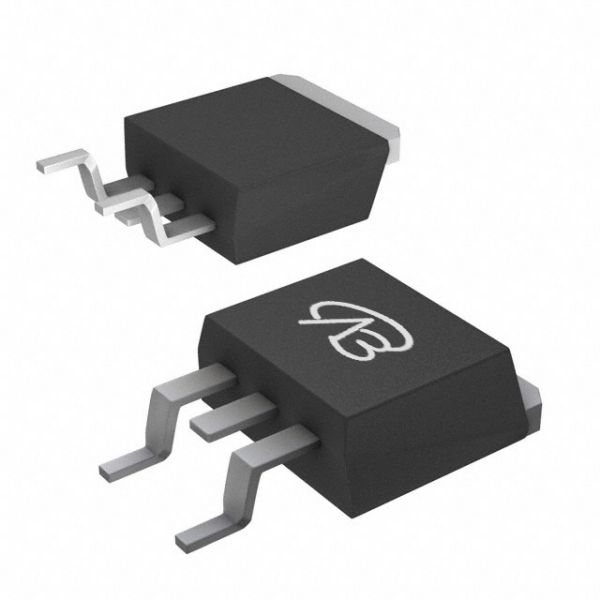
Comparative Analysis: PSMN016-100BS,118 (N-channel) vs. VBL1102N
Analysis of the Original Model (PSMN016-100BS,118) Core:
This is a 100V N-channel MOSFET from Nexperia in a robust D2PAK package, rated for operation up to 175°C. Its design core is delivering high-current capability (57A continuous) and rugged reliability for industrial environments. A key strength is its low on-resistance of 16mΩ (measured at 10V, 15A), which minimizes conduction losses in high-power circuits.
Compatibility and Differences of the Domestic Alternative (VBL1102N):
VBsemi's VBL1102N offers a direct pin-to-pin compatible alternative in the TO-263 (D2PAK) package. The parameters show a comparable voltage rating (100V) and a slightly higher continuous current rating (70A). However, its on-resistance is specified as 20mΩ (@10V), which is marginally higher than the original part's 16mΩ.
Key Application Areas:
Original Model PSMN016-100BS,118: Ideal for high-power, high-reliability applications such as industrial motor drives, robust power supplies, inverters, and communication infrastructure equipment where its proven 57A current capability and low RDS(on) are critical.
Alternative Model VBL1102N: A suitable alternative for applications requiring the same 100V rating and potentially higher current peaks (70A), where a slight increase in conduction loss is acceptable. It fits well in high-current switching circuits, power tools, and automotive auxiliary systems.
Comparative Analysis: PMN16XNEX (N-channel) vs. VB7322
This comparison shifts focus to space-constrained applications where a small footprint is paramount.
Analysis of the Original Model (PMN16XNEX) Core:
This Nexperia part is a 20V N-channel MOSFET in a miniature SOT-457 (SC-74) package. Its design pursues a balance of good current density (9.1A continuous) and low on-resistance (15mΩ @ 4.5V) within a minimal PCB area, making it perfect for power management in portable devices.
Compatibility and Differences of the Domestic Alternative (VB7322):
VBsemi's VB7322 is offered in a SOT-23-6 package, which is a different footprint than the SOT-457. Electrically, it provides a higher voltage rating (30V vs. 20V) and a similar continuous current (6A vs. 9.1A). Its on-resistance is specified as 27mΩ (@4.5V), which is higher than the original's 15mΩ.
Key Application Areas:
Original Model PMN16XNEX: Excels in space-critical, battery-powered applications like load switching, power distribution, and DC-DC conversion in smartphones, tablets, IoT modules, and portable consumer electronics where its 9.1A capability in a tiny package is key.
Alternative Model VB7322: A viable option for designs requiring a higher voltage margin (30V) and where the SOT-23-6 footprint is suitable. It fits applications like low-power motor control, LED driving, or secondary power switching where the 6A current rating and small size are sufficient.
Conclusion:
The selection path is defined by the primary design constraint:
1. For High-Power & Ruggedness: The original PSMN016-100BS,118, with its 16mΩ RDS(on) and 57A rating in a D2PAK package, is a benchmark for industrial-grade power stages. The alternative VBL1102N offers a compatible, higher-current (70A) option with a slightly higher RDS(on), suitable for cost-optimized or supply-resilient designs with similar voltage needs.
2. For Ultra-Compact Size: The original PMN16XNEX is a strong choice for maximizing current (9.1A) in the minimal SOT-457 footprint for 20V systems. The alternative VB7322 shifts the trade-off, offering a higher 30V rating in a different (SOT-23-6) small package but with a lower current (6A) and higher RDS(on).
There is no universally superior choice. The key is precise requirement matching. These domestic alternatives (VBL1102N, VB7322) provide engineers with viable, parameter-adjusted options, enhancing flexibility in design trade-offs and supply chain strategy without necessarily being direct drop-in replacements in all aspects. Understanding the specific electrical and footprint implications of each device is crucial to leveraging its full value in the circuit.

Download PDF document
 Download now


