 中文
中文 English
MOSFET Selection for Compact Power Applications: PMV65UNER, BUK9Y6R5-40HX vs. China Alternatives VB1240, VBGED1401
Number of views:9999
 Back to previous page
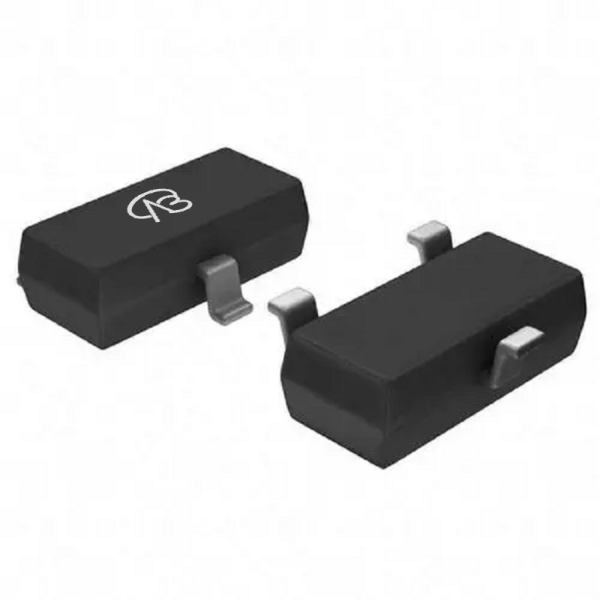
Comparative Analysis: PMV65UNER (N-channel) vs. VB1240
Analysis of the Original Model (PMV65UNER) Core:
This is a 20V N-channel MOSFET from Nexperia, using the compact SOT-23 package. Its design core is to provide a reliable switching solution in minimal board space. Key advantages are: a balanced on-resistance of 73mΩ at a 4.5V drive voltage, with a continuous drain current of 2.8A. It utilizes trench MOSFET technology for good performance in a tiny footprint.
Compatibility and Differences of the Domestic Alternative (VB1240):
VBsemi's VB1240 is a direct pin-to-pin compatible alternative in the same SOT23-3 package. The main differences are significantly enhanced electrical parameters: VB1240 offers a much lower on-resistance of 28mΩ@4.5V and a higher continuous current rating of 6A at the same 20V voltage rating.
Key Application Areas:
Original Model PMV65UNER: Ideal for space-constrained, low-to-medium current switching applications such as load switching, signal level shifting, or power management in portable consumer electronics.
Alternative Model VB1240: Suited for the same compact applications but where lower conduction loss and higher current handling (up to 6A) are critical, offering a performance upgrade path.
Comparative Analysis: BUK9Y6R5-40HX (N-channel) vs. VBGED1401
This automotive-grade N-channel MOSFET is designed for high-power, high-reliability applications.
Analysis of the Original Model (BUK9Y6R5-40HX) Core:
This 40V MOSFET from Nexperia uses the robust LFPAK56 (PowerSO-8) package. Its core advantages are:
High Power & Automotive Grade: Features a very low on-resistance of 6.5mΩ@10V, a high continuous current of 70A, and is AEC-Q101 qualified for automotive applications.
Advanced Technology: Built on the latest Trench 9 low-ohmic superjunction technology for high efficiency and performance.
Compatibility and Differences of the Domestic Alternative (VBGED1401):
VBsemi's VBGED1401 is a compatible alternative in the LFPAK56 package and represents a substantial performance enhancement. It boasts an ultra-low on-resistance of 0.7mΩ@10V and an exceptionally high continuous current rating of 250A, while maintaining the same 40V voltage rating.
Key Application Areas:
Original Model BUK9Y6R5-40HX: An excellent choice for demanding automotive and industrial applications requiring AEC-Q101 reliability, such as motor drives, solenoid control, and high-current DC-DC converters in 12V/24V systems.
Alternative Model VBGED1401: Targets ultra-high-efficiency, very high-current applications where minimizing conduction loss is paramount. It is suitable for next-generation high-power designs, advanced motor drives, and power distribution systems that demand the highest current capability.
Conclusion:
This analysis reveals two distinct selection paths:
For compact, low-power switching, the original PMV65UNER offers a proven solution, while its domestic alternative VB1240 provides a significant performance boost in the same footprint for more demanding designs.
For high-power, automotive-grade applications, the original BUK9Y6R5-40HX sets a high standard with its reliability and performance. The domestic alternative VBGED1401 pushes the boundaries further with its extreme current rating and ultra-low RDS(on), enabling new possibilities in power density and efficiency.
The core conclusion is: Selection depends on precise requirement matching. Domestic alternatives not only provide viable backups but also offer performance enhancements, giving engineers greater flexibility in design and cost optimization.

Download PDF document
 Download now


