 中文
中文 English
MOSFET Selection for Compact Power Applications: PMV50XNEAR, PMDPB95XNE2X vs. China Alternatives VB1307N, VBQG3322
Number of views:9999
 Back to previous page
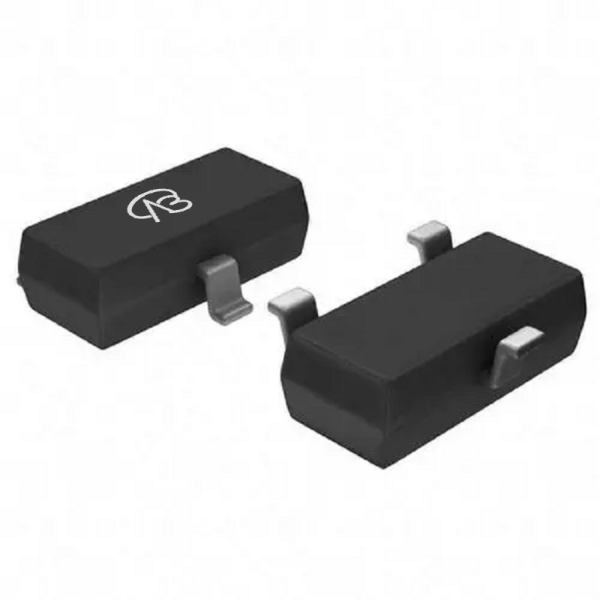
Comparative Analysis: PMV50XNEAR (Single N-channel) vs. VB1307N
Analysis of the Original Model (PMV50XNEAR) Core:
This is a 30V N-channel MOSFET from Nexperia, using the compact SOT23-3 (TO-236AB) package. Its design core is to provide a reliable and cost-effective switching solution in a minimal footprint. Key advantages are: a balanced on-resistance of 60mΩ at a 4.5V drive voltage, with a continuous drain current of 3.4A. It utilizes Trench MOSFET technology for good performance in a small SMD plastic package.
Compatibility and Differences of the Domestic Alternative (VB1307N):
VBsemi's VB1307N is a direct pin-to-pin compatible alternative in the SOT23-3 package. The main differences lie in the electrical parameters: VB1307N offers a significantly higher continuous current rating (5A vs. 3.4A) and improved on-resistance (62mΩ@4.5V, comparable to the original; 47mΩ@10V). This represents a performance-enhanced alternative.
Key Application Areas:
Original Model PMV50XNEAR: Its characteristics are very suitable for space-constrained, low to medium current switching applications in 12V-24V systems. Typical applications include:
- Load switches and power management in consumer electronics.
- Signal switching and level translation circuits.
- Driver stages for small motors or solenoids.
Alternative Model VB1307N: More suitable for upgrade scenarios requiring higher current capability (up to 5A) and slightly better conduction efficiency, while maintaining the same compact SOT23 footprint.
Comparative Analysis: PMDPB95XNE2X (Dual N-channel) vs. VBQG3322
This dual N-channel MOSFET is designed for applications where board space is at a premium and dual switches are needed.
Analysis of the Original Model (PMDPB95XNE2X) Core:
This is a dual 30V N-channel MOSFET from Nexperia in an ultra-small DFN2020-6 (2x2mm) package. Its design pursuit is high-density integration. Each channel can handle a continuous current of 3A with an on-resistance of 77mΩ at 4.5V gate drive. It is ideal for dual-switch circuits where minimizing PCB area is critical.
Compatibility and Differences of the Domestic Alternative (VBQG3322):
VBsemi's VBQG3322 is a direct pin-to-pin compatible alternative in the same DFN2020-6 package. It provides substantial performance enhancement: each channel boasts a much higher continuous current (5.8A vs. 3A) and significantly lower on-resistance (26mΩ@4.5V and 22mΩ@10V vs. 77mΩ@4.5V). This translates to lower conduction losses and higher power handling in the same tiny footprint.
Key Application Areas:
Original Model PMDPB95XNE2X: Its ultra-compact dual-channel integration makes it an ideal choice for high-density designs requiring paired switches. For example:
- Dual load switches in portable and IoT devices.
- Complementary switches in compact DC-DC converters or motor H-bridge drivers.
- Space-constrained power distribution and multiplexing circuits.
Alternative Model VBQG3322: Is more suitable for upgraded scenarios demanding significantly higher current per channel, much lower conduction loss, and greater thermal margin, all within the same miniature DFN2020-6 package.
In summary, this comparative analysis reveals two clear selection paths:
For single N-channel applications in standard compact packages (SOT23), the original model PMV50XNEAR offers a proven, balanced solution for currents around 3-4A. Its domestic alternative VB1307N provides a compelling "performance-enhanced" option with higher current rating (5A) and competitive on-resistance, making it suitable for direct upgrades or new designs needing more headroom.
For dual N-channel applications where maximum space savings are paramount, the original model PMDPB95XNE2X delivers essential dual-switch functionality in a 2x2mm footprint. Its domestic alternative VBQG3322 stands out as a "superior performance" replacement, dramatically improving current capability (to 5.8A per channel) and slashing on-resistance, enabling more powerful or efficient designs without increasing board space.
The core conclusion is: There is no absolute superiority or inferiority in selection; the key lies in precise matching of requirements. In the context of supply chain diversification, domestic alternative models not only provide feasible backup options but also achieve significant surpassing in specific parameters like current and RDS(on), offering engineers more flexible and resilient choice space in design trade-offs and cost control. Understanding the design philosophy and parameter implications of each device is essential to maximize its value in the circuit.

Download PDF document
 Download now


