 中文
中文 English
MOSFET Selection for Compact Signal & Power Applications: PMV30ENEAR, PMGD175XNEX vs. China Alternatives VB1435, VBK3215N
Number of views:9999
 Back to previous page
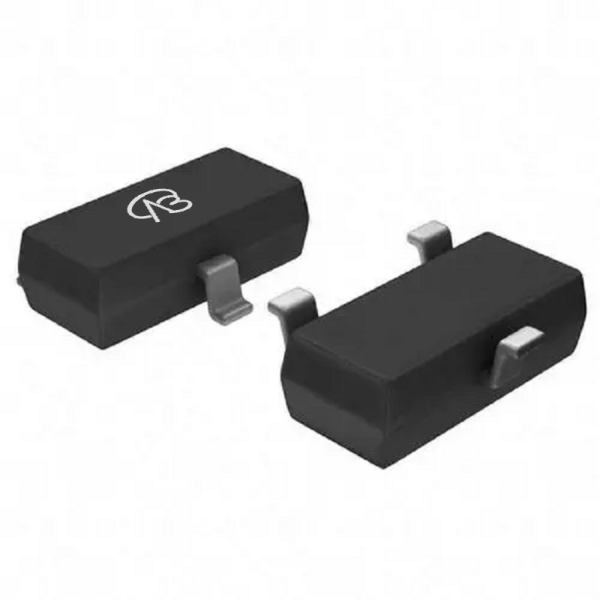
Comparative Analysis: PMV30ENEAR (Single N-channel) vs. VB1435
Analysis of the Original Model (PMV30ENEAR) Core:
This is a 40V N-channel MOSFET from Nexperia in a compact SOT-23 package. Its design core is to deliver robust performance in a minimal footprint for low-to-moderate power applications. Key advantages include: a continuous drain current (Id) of 4.8A, a low on-resistance of 23mΩ (at 10V Vgs), and the reliability of trench MOSFET technology. It's engineered for efficient switching where board space is at a premium.
Compatibility and Differences of the Domestic Alternative (VB1435):
VBsemi's VB1435 is a direct pin-to-pin compatible alternative in the SOT23-3 package. The key parameters show a strong match: both are 40V, single N-channel devices rated for 4.8A continuous current. The on-resistance of VB1435 is slightly higher at 35mΩ (at 10V Vgs) compared to the original's 23mΩ, but remains in a competitive range for many applications, offering a viable alternative with a similar performance profile.
Key Application Areas:
Original Model PMV30ENEAR: Ideal for space-constrained designs requiring reliable 40V switching at currents up to ~5A. Typical applications include:
Load and power switching in consumer electronics (USB power distribution, peripheral control).
DC-DC converter secondary-side switching.
General-purpose signal amplification and switching modules.
Alternative Model VB1435: A suitable domestic replacement for the above applications, providing a solid balance of voltage rating, current capability, and compact size, especially where supply chain diversification is a priority.
Comparative Analysis: PMGD175XNEX (Dual N-channel) vs. VBK3215N
This comparison shifts to dual N-channel MOSFETs, where the design pursuit is integrating two efficient switches into a single ultra-small package for signal routing and low-side drive applications.
Analysis of the Original Model (PMGD175XNEX) Core:
This Nexperia component integrates two 30V N-channel MOSFETs in a tiny SC-70-6 (SOT-363) package. Its core advantage is functional density: it provides two independent switches with a continuous current of 950mA per channel and an on-resistance of 252mΩ (at 4.5V Vgs) in a footprint ideal for portable and high-density designs.
Compatibility and Differences of the Domestic Alternative (VBK3215N):
VBsemi's VBK3215N is a pin-to-pin compatible dual N-channel alternative in an SC70-6 package. It presents a significant performance enhancement in key parameters: while the original is rated for 30V, VBK3215N has a slightly lower voltage rating of 20V. However, it offers a substantially higher continuous current of 2.6A (total, or per channel depending on configuration) and a much lower on-resistance of 86mΩ (at 4.5V Vgs). This makes it a "performance-upgraded" choice for applications within its voltage range.
Key Application Areas:
Original Model PMGD175XNEX: Perfect for applications requiring dual switches or a small-signal differential pair in the tightest spaces, such as:
Data line switching (USB, audio signal routing).
Low-side drive for sensors or LEDs in portable devices.
Battery management system (BMS) signal switching.
Alternative Model VBK3215N: An excellent choice for upgraded scenarios where lower conduction loss and higher current capability are needed, provided the 20V rating is sufficient. It is well-suited for:
More demanding low-side switching and power path management in 5V-12V systems.
Driving higher-current LEDs or small motors in compact modules.
Applications where the original model's current limit is a constraint.
Conclusion
This analysis reveals two distinct selection pathways:
For single N-channel, moderate-current applications around 40V/5A, the original PMV30ENEAR offers a proven solution in a SOT-23 package. Its domestic alternative VB1435 provides a closely matched, pin-compatible option for supply chain resilience with minimal performance trade-off.
For ultra-compact dual N-channel switching needs, the original PMGD175XNEX delivers two 30V switches in a minuscule SC-70-6 footprint. Its domestic alternative VBK3215N, while rated for a lower voltage (20V), offers a powerful upgrade in current handling (2.6A) and significantly lower on-resistance, making it a compelling "performance-enhanced" alternative for suitable voltage domains.
The core takeaway is that selection hinges on precise requirement matching. In the era of supply chain diversification, domestic alternatives like VB1435 and VBK3215N not only provide reliable backup options but can also offer performance advantages in specific areas, granting engineers greater flexibility and design resilience during component selection and cost optimization.

Download PDF document
 Download now


