 中文
中文 English
MOSFET Selection for Signal Switching & Low-Power Control: PMV28ENEAR, 2N7002BKW,115 vs. China Alternatives VB1330, VBK162K
Number of views:9999
 Back to previous page
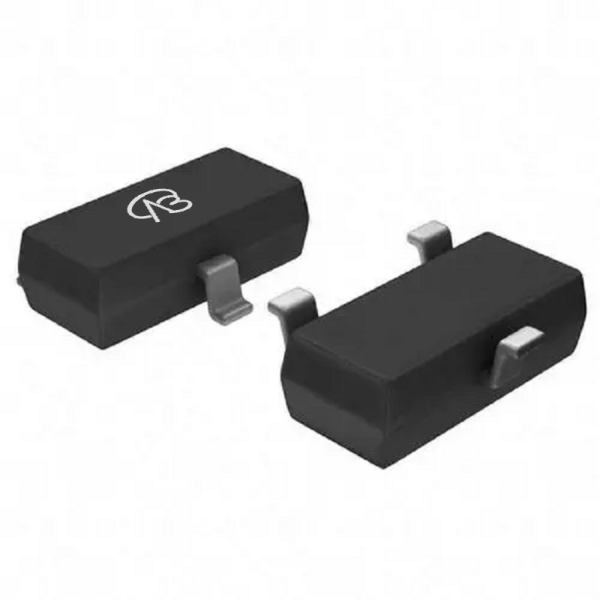
Comparative Analysis: PMV28ENEAR (N-channel, SOT-23) vs. VB1330
Analysis of the Original Model (PMV28ENEAR) Core:
This is a 30V N-channel MOSFET from Nexperia in a compact SOT-23 package. Its design core is to provide a robust balance of current handling and low on-resistance in a minimal footprint. Key advantages include: a continuous drain current (Id) of 4.4A and a low on-resistance (RDS(on)) of 37mΩ at 10V gate drive. This makes it highly efficient for power switching in space-constrained applications.
Compatibility and Differences of the Domestic Alternative (VB1330):
VBsemi's VB1330 is a direct pin-to-pin compatible alternative in the SOT-23 package. It offers comparable or slightly improved key electrical parameters: the same 30V voltage rating, a higher continuous current of 6.5A, and a lower on-resistance of 30mΩ at 10V. This represents a performance-enhanced drop-in replacement.
Key Application Areas:
Original Model PMV28ENEAR: Ideal for load switching, power management, and DC-DC conversion in portable electronics, IoT devices, and consumer applications where its 4.4A capability and low RDS(on) in a SOT-23 package are valued.
Alternative Model VB1330: Suits the same applications as the original but offers headroom for higher current demands or lower conduction losses, making it an excellent upgrade or alternative for efficiency-focused designs.
Comparative Analysis: 2N7002BKW,115 (N-channel, SC-70) vs. VBK162K
This comparison focuses on ultra-compact, low-power signal switching MOSFETs.
Analysis of the Original Model (2N7002BKW,115) Core:
This is a classic 60V N-channel MOSFET from Nexperia in a tiny SC-70 (SOT-323) package. Its design prioritizes high-voltage blocking capability and basic switching functionality in the smallest possible space. It features a 60V drain-source voltage (Vdss), a continuous current (Id) of 310mA, and an on-resistance (RDS(on)) of 1.6Ω at 10V.
Compatibility and Differences of the Domestic Alternative (VBK162K):
VBsemi's VBK162K is a direct pin-to-pin compatible alternative in the SC-70 package. It matches the original's key specifications closely: the same 60V voltage rating and 0.3A (300mA) continuous current. Its on-resistance is specified as 2000mΩ (2Ω) at 10V, which is comparable to the original part's typical performance.
Key Application Areas:
Original Model 2N7002BKW,115: A go-to choice for signal-level switching, GPIO interfacing, level translation, and protecting I/O lines in applications like communication modules, sensors, and low-power microcontrollers, where its high voltage rating and tiny size are critical.
Alternative Model VBK162K: Serves as a reliable domestic alternative for the same signal switching and interface protection applications, offering a viable second-source option with equivalent core specifications.
Summary
This analysis reveals two distinct selection paths for small-signal MOSFETs:
For SOT-23 package applications requiring a balance of current handling and low on-resistance around 30V, the original PMV28ENEAR is a proven solution. Its domestic alternative, VB1330, offers a performance-enhanced, pin-compatible option with higher current (6.5A) and lower RDS(on) (30mΩ@10V).
For SC-70 package applications demanding high-voltage (60V) signal switching in an ultra-miniature footprint, the classic 2N7002BKW,115 remains a standard. Its domestic alternative, VBK162K, provides a functionally equivalent, pin-compatible replacement, ensuring supply chain resilience.
The core conclusion is that selection depends on precise requirement matching. Domestic alternatives like VB1330 and VBK162K not only provide reliable backup options but also, in the case of VB1330, offer performance gains, giving engineers greater flexibility in design trade-offs and cost control for signal and low-power switching tasks.

Download PDF document
 Download now


