 中文
中文 English
MOSFET Selection for Automotive & Compact Power: PMV240SPR, BUK9Y12-40E,115 vs. China Alternatives VB2101K, VBED1402
Number of views:9999
 Back to previous page
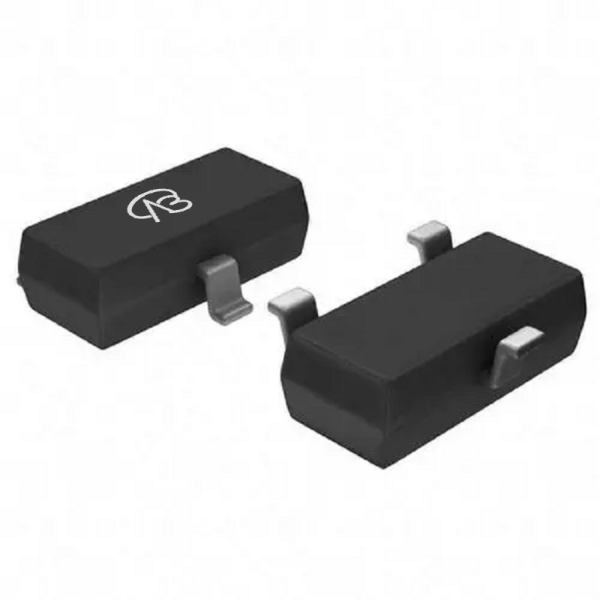
Comparative Analysis: PMV240SPR (P-channel) vs. VB2101K
Analysis of the Original Model (PMV240SPR) Core:
This is a 100V P-channel MOSFET from Nexperia, housed in the ultra-compact SOT-23 package. Its design core is to provide a robust high-voltage switching solution in a minimal footprint. Key advantages are its high drain-source voltage (Vdss) of 100V, making it suitable for off-line or bus applications, and a continuous drain current (Id) of 1.2A. The on-resistance (RDS(on)) is 365mΩ at 10V gate drive.
Compatibility and Differences of the Domestic Alternative (VB2101K):
VBsemi's VB2101K is a direct pin-to-pin compatible alternative in the SOT23-3 package. The main differences lie in the electrical parameters: VB2101K matches the high voltage rating (-100V) but offers a slightly higher continuous current (-1.5A vs. 1.2A). However, its conduction performance is weaker, with an on-resistance of 500mΩ at 10V (compared to 365mΩ for the PMV240SPR).
Key Application Areas:
Original Model PMV240SPR: Its high voltage rating and compact size make it ideal for signal-level switching, protection circuits, or high-side switching in auxiliary power rails within automotive, industrial, or consumer applications where 100V capability is needed.
Alternative Model VB2101K: Suitable as a functional replacement in applications requiring the same high-voltage footprint but where the slightly higher RDS(on) is acceptable, and the marginally higher current rating might be beneficial.
Comparative Analysis: BUK9Y12-40E,115 (N-channel) vs. VBED1402
This comparison shifts focus to high-current, automotive-grade power switching, where efficiency and reliability are paramount.
Analysis of the Original Model (BUK9Y12-40E,115) Core:
This is an AEC-Q101 qualified, logic-level N-channel MOSFET from Nexperia in the LFPAK56 (PowerSO-8) package. Its design pursues a balance of high current capability, low on-resistance, and automotive-grade robustness. Core advantages include a high continuous current of 52A at 40V Vdss and a very low on-resistance of 12mΩ at a low gate drive of 5V, minimizing conduction losses in high-current paths.
Compatibility and Differences of the Domestic Alternative (VBED1402):
VBsemi's VBED1402, in a SOT669 package, presents a significant "performance-enhanced" alternative. While the voltage rating is identical (40V), it dramatically surpasses the original in key metrics: a massive continuous drain current of 100A and an ultra-low on-resistance of 2mΩ at 10V gate drive (and 2.4mΩ at 4.5V).
Key Application Areas:
Original Model BUK9Y12-40E,115: Its automotive qualification, high current (52A), and low RDS(on) at logic-level drive make it an ideal choice for demanding automotive applications like motor drives (fuel pumps, fans), solenoid drivers, or high-current DC-DC converters in 12V/24V vehicle systems.
Alternative Model VBED1402: Is suited for upgrade or new design scenarios requiring even higher current handling (up to 100A) and significantly lower conduction losses. It's excellent for high-performance power stages, server POL converters, or advanced motor drives where thermal performance and efficiency are critical, though package compatibility should be verified.
Conclusion:
This analysis reveals two distinct selection paths:
For high-voltage P-channel applications in compact spaces, the original PMV240SPR offers a proven balance of 100V rating and 1.2A capability in a SOT-23 package. Its domestic alternative VB2101K provides a compatible footprint with a slightly higher current rating but trades off with higher on-resistance.
For high-current N-channel automotive and power applications, the AEC-Q101 qualified BUK9Y12-40E,115 is a robust, high-efficiency choice. The domestic alternative VBED1402 offers a substantial performance boost in current and on-resistance for designs that can leverage its enhanced capabilities and accommodate its different package (SOT669 vs. LFPAK56).
The core conclusion is that selection hinges on precise requirement matching. Domestic alternatives like VB2101K and VBED1402 provide viable backup or even enhanced-performance options, offering engineers greater flexibility in design trade-offs and cost control within a diversified supply chain. Understanding each device's design philosophy and parameter implications is key to maximizing its value in the circuit.

Download PDF document
 Download now


