 中文
中文 English
MOSFET Selection for Compact Power Applications: PMDT670UPE,115, BSP89,115 vs. China Alternatives VBTA4250N, VBJ1252K
Number of views:9999
 Back to previous page
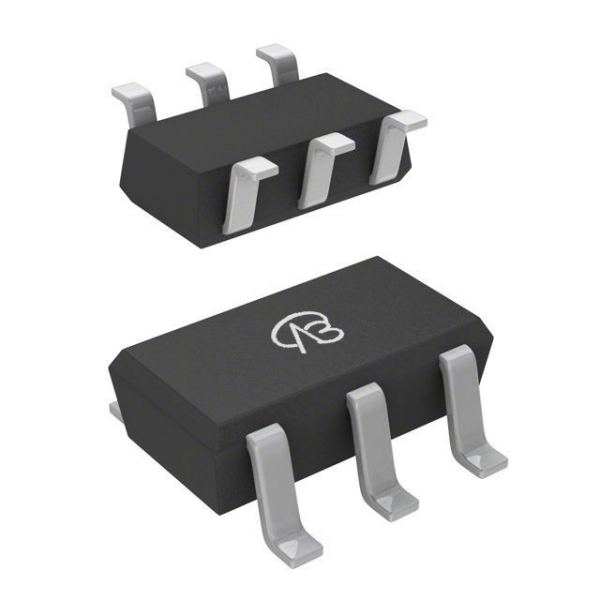
Comparative Analysis: PMDT670UPE,115 (Dual P-channel) vs. VBTA4250N
Analysis of the Original Model (PMDT670UPE,115) Core:
This is a 20V Dual P-channel MOSFET from Nexperia, using an ultra-compact SOT-666 package. Its design core is to provide dual switching functionality in a minimal footprint for space-constrained, low-power applications. Key parameters include a continuous drain current of 550mA per channel and an on-resistance (RDS(on)) of 850mΩ at 4.5V gate drive.
Compatibility and Differences of the Domestic Alternative (VBTA4250N):
VBsemi's VBTA4250N is also a Dual P-channel MOSFET in a small SC75-6 package, offering a pin-to-pin compatible alternative. The main differences lie in the improved electrical parameters: VBTA4250N features a significantly lower on-resistance of 450mΩ at 4.5V gate drive, enhancing conduction efficiency. Its continuous current rating is -0.5A per channel, suitable for similar low-current applications.
Key Application Areas:
Original Model PMDT670UPE,115: Ideal for space-critical designs requiring dual P-channel switches with moderate current handling, such as power management in portable electronics, load switching for multiple low-power modules, or signal routing.
Alternative Model VBTA4250N: Offers a performance-enhanced drop-in replacement with lower conduction loss, making it suitable for upgraded designs in similar compact applications like handheld devices, IoT sensors, or battery management circuits where improved efficiency is desired.
Comparative Analysis: BSP89,115 (N-channel) vs. VBJ1252K
This N-channel MOSFET is designed for higher voltage, low-current switching applications where reliability and compact packaging are key.
Analysis of the Original Model (BSP89,115) Core:
This is a 240V N-channel MOSFET from Nexperia in a SOT-223 package. Its design pursues a balance of high voltage capability, compact surface-mount packaging, and sufficient current for specialized applications. It features a continuous drain current of 375mA and an on-resistance of 2.8Ω at 10V gate drive. It is specifically noted for applications like telephone line current interrupters, relay drivers, and transformer drivers.
Compatibility and Differences of the Domestic Alternative (VBJ1252K):
VBsemi's VBJ1252K is a direct SOT-223 package compatible alternative. It offers a higher voltage rating of 250V and a higher continuous current capability of 0.79A. However, its on-resistance is 2000mΩ (2.0Ω) at 10V, which is lower than the original's 2.8Ω, indicating better conduction performance. This makes it a robust alternative for high-voltage, low-to-medium current switching.
Key Application Areas:
Original Model BSP89,115: Its high voltage rating and specified reliability make it a classic choice for telecommunication line interfaces, such as line current interrupters, and for driving relays or transformers in industrial control, power supplies, or network equipment.
Alternative Model VBJ1252K: Serves as a strong domestic alternative for the same high-voltage switching niches. With its lower on-resistance and higher current rating, it is well-suited for demanding applications in power supplies, lighting controls, or any circuit requiring efficient switching at up to 250V, potentially offering improved performance and thermal margins.
Conclusion:
In summary, this comparative analysis reveals two clear selection paths:
For dual P-channel applications in ultra-compact footprints, the original model PMDT670UPE,115 provides a proven dual-switch solution. Its domestic alternative VBTA4250N offers a compelling upgrade with significantly lower on-resistance for reduced conduction losses in similar space-constrained designs like portable and battery-powered devices.
For high-voltage N-channel switching applications, the original model BSP89,115 is a trusted component for telecom and industrial driving circuits. Its domestic alternative VBJ1252K presents a viable and performance-competitive option, featuring a higher voltage and current rating along with lower on-resistance, suitable for next-generation designs in power management and interface control.
The core conclusion is: Selection hinges on precise requirement matching. In the context of supply chain diversification, domestic alternatives like VBTA4250N and VBJ1252K not only provide reliable backup options but also offer parameter enhancements in key areas, giving engineers greater flexibility and resilience in design trade-offs and cost optimization. Understanding the specific design intent and parameter implications of each device is crucial to leveraging its full value in the circuit.

Download PDF document
 Download now


