 中文
中文 English
MOSFET Selection for Compact Power Applications: PMDT290UCE,115, PH9030AL115 vs. China Alternatives VBTA5220N, VBED1303
Number of views:9999
 Back to previous page
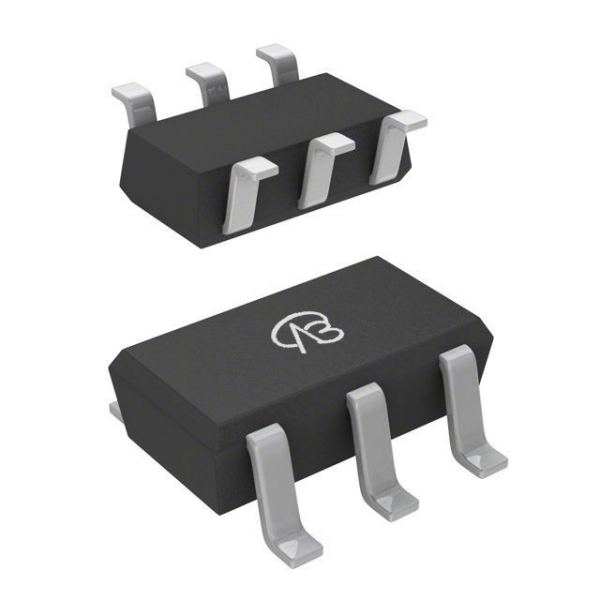
Comparative Analysis: PMDT290UCE,115 (Dual N+P-channel) vs. VBTA5220N
Analysis of the Original Model (PMDT290UCE,115) Core:
This is a 20V Dual N+P-channel MOSFET from Nexperia, in a compact SOT-666 package. Its design core is to provide complementary switching in minimal space. Key advantages are: integration of one N-channel (RDS(on) 290mΩ@4.5V, Id 800mA) and one P-channel (RDS(on) 670mΩ@4.5V, Id 550mA), enabling efficient push-pull or level-shift circuits.
Compatibility and Differences of the Domestic Alternative (VBTA5220N):
VBsemi's VBTA5220N is a direct pin-to-pin compatible alternative in an SC75-6 package. The main differences lie in the electrical parameters: VBTA5220N offers similar voltage ratings (±20V) and features lower on-resistance for the N-channel (270mΩ@4.5V) but a slightly higher P-channel resistance (660mΩ@4.5V). Its continuous current ratings are moderately lower at 0.6A (N) and -0.3A (P).
Key Application Areas:
Original Model PMDT290UCE,115: Ideal for space-constrained applications requiring complementary pair switching, such as:
Level translation and interface circuits in portable electronics.
Push-pull drivers for sensors or small loads.
Power management in compact modules where board area is critical.
Alternative Model VBTA5220N: A suitable alternative for applications where the slightly lower current capability is acceptable but benefits from the compatible footprint and competitive N-channel on-resistance, serving in similar compact dual-MOSFET circuit roles.
Comparative Analysis: PH9030AL115 (N-channel) vs. VBED1303
This N-channel MOSFET is designed for high-current switching with low loss in a thermally efficient package.
Analysis of the Original Model (PH9030AL115) Core:
The core advantages of this original model from Nexperia are:
High Current Capability: Continuous drain current rating of 63A.
Low Conduction Loss: Very low on-resistance of 9mΩ at 10V gate drive.
Robust Package: Housed in the LFPAK-56 package, offering excellent power dissipation for its size, suitable for demanding medium-to-high power applications.
Compatibility and Differences of the Domestic Alternative (VBED1303):
The domestic alternative VBED1303, in an SOT669 package, presents a "performance-enhanced" profile:
It matches the 30V voltage rating.
It significantly surpasses in current capability with a 90A continuous drain current rating.
It features a substantially lower on-resistance of 2.8mΩ at 10V gate drive, promising lower conduction losses and improved thermal performance.
Key Application Areas:
Original Model PH9030AL115: Excels in applications demanding robust performance and efficient thermal management, such as:
Synchronous rectification in high-current DC-DC converters (e.g., for servers, telecom).
Motor drive circuits for power tools or automotive subsystems.
High-side or low-side switches in power distribution systems.
Alternative Model VBED1303: Is an excellent upgrade choice for applications where maximizing current throughput and minimizing conduction loss are paramount, potentially enabling higher power density or efficiency in similar circuits like advanced DC-DC converters and high-performance motor drives.
Conclusion
In summary, this comparative analysis reveals two clear selection paths:
For ultra-compact designs requiring a complementary MOSFET pair, the original PMDT290UCE,115 offers a proven, integrated solution. Its domestic alternative VBTA5220N provides a viable, footprint-compatible option with competitive N-channel resistance for cost-sensitive or supply-chain-diversified projects.
For high-current, low-loss switching applications, the original PH9030AL115 sets a high standard with its 63A capability and 9mΩ RDS(on). The domestic alternative VBED1303 emerges as a compelling performance-enhanced choice, boasting superior 90A current rating and a remarkably low 2.8mΩ RDS(on), suitable for next-generation designs pushing efficiency and power density limits.
The core conclusion is: Selection hinges on precise requirement matching. Domestic alternatives not only offer supply chain resilience but also present opportunities for parameter-specific enhancement, giving engineers greater flexibility in design optimization and cost-performance trade-offs.

Download PDF document
 Download now


