 中文
中文 English
MOSFET Selection for Compact Power Applications: PMBF170,235, PSMN1R4-30YLDX vs. China Alternatives VB162K, VBGED1401
Number of views:9999
 Back to previous page
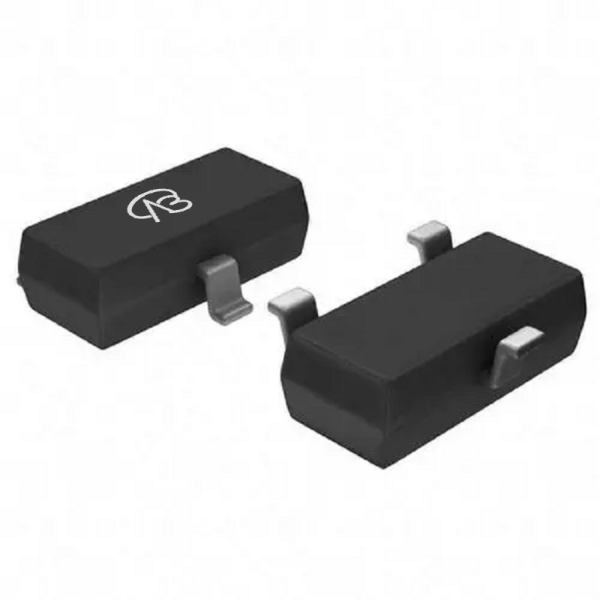
Comparative Analysis: PMBF170,235 (Small-Signal N-channel) vs. VB162K
Analysis of the Original Model (PMBF170,235) Core:
This is a 60V small-signal N-channel MOSFET from Nexperia, using a compact SOT-23 package. Its design core is to provide reliable switching and amplification in space-constrained, low-current circuits. Key advantages include: a drain current of 300mA, an on-resistance of 2.8Ω at 10V gate drive, and robust 60V drain-source voltage rating, making it suitable for various protection and interface circuits.
Compatibility and Differences of the Domestic Alternative (VB162K):
VBsemi's VB162K is a direct pin-to-pin compatible alternative in the SOT23-3 package. The key parameters are closely matched: both are 60V, 300mA N-channel MOSFETs. The on-resistance is comparable at 2.8Ω (10V). This makes VB162K a highly suitable functional and electrical replacement.
Key Application Areas:
Original Model PMBF170,235: Ideal for low-power signal switching, level shifting, and load switching in portable electronics, IoT modules, and consumer devices where board space is critical.
Alternative Model VB162K: Perfect for the same small-signal applications, offering a reliable domestic alternative for circuit protection, load driving, and interface switching up to 300mA.
Comparative Analysis: PSMN1R4-30YLDX (Power N-channel) vs. VBGED1401
This comparison shifts to high-current, low-loss power switching. The design pursuit here is maximizing efficiency and power density.
Analysis of the Original Model (PSMN1R4-30YLDX) Core:
This Nexperia MOSFET features Nexperia's NextPowerS3 technology with "SchottkyPlus" in an LFPAK56 package. Its core advantages are:
Ultra-Low Conduction Loss: Extremely low on-resistance of 1.44mΩ at 4.5V gate drive.
High Current Capability: Continuous drain current rating of 100A.
Fast Switching & Low Spike: Optimized for high-frequency, high-efficiency applications like synchronous rectification.
Compatibility and Differences of the Domestic Alternative (VBGED1401):
The domestic alternative VBGED1401, also in an LFPAK56 package, presents a "performance-enhanced" option. It offers a higher voltage rating (40V vs. 30V), a significantly higher continuous current (250A vs. 100A), and an even lower on-resistance of 0.7mΩ (at 10V). This provides substantial margin for lower losses and higher power throughput.
Key Application Areas:
Original Model PSMN1R4-30YLDX: An excellent choice for high-efficiency DC-DC converters (synchronous rectification), motor drives, and power management in servers/telecom where 30V/100A capability and fast switching are paramount.
Alternative Model VBGED1401: Suited for upgraded or new designs requiring higher voltage margin, much higher current (250A), and minimal conduction loss, such as in high-current POL converters, advanced motor drives, or power distribution systems.
Conclusion
This analysis reveals two distinct selection paths:
For small-signal, space-constrained applications, the original PMBF170,235 and its domestic alternative VB162K are closely matched, making VB162K a viable direct replacement for most 60V/300mA switching needs.
For high-current, high-efficiency power applications, the original PSMN1R4-30YLDX sets a high benchmark with its ultra-low RDS(on) and fast switching. The domestic alternative VBGED1401 offers a significant performance upgrade in voltage, current, and resistance, ideal for demanding next-generation designs.
The core conclusion is: Selection hinges on precise requirement matching. Domestic alternatives like VB162K and VBGED1401 provide not only reliable backup options but also opportunities for performance enhancement, offering engineers greater flexibility and resilience in design and cost optimization. Understanding each device's design philosophy and parameters is key to unlocking its full potential in your circuit.

Download PDF document
 Download now


