 中文
中文 English
MOSFET Selection for Compact Power Applications: PHB29N08T,118, PMV30XPEAR vs. China Alternatives VBL1101M, VB2240
Number of views:9999
 Back to previous page
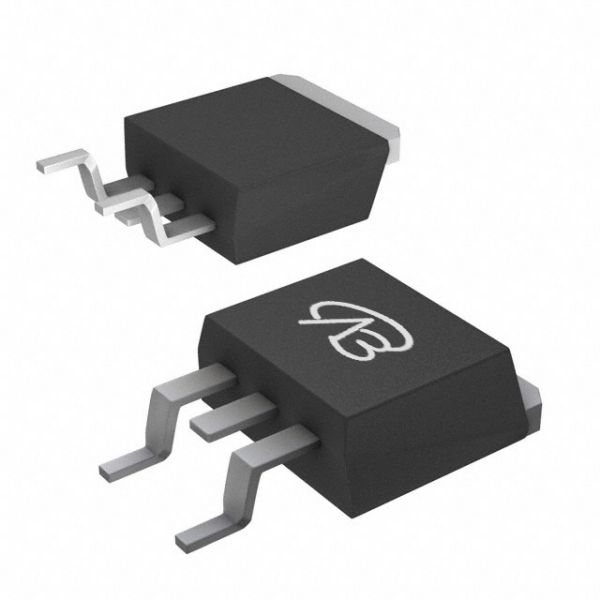
Comparative Analysis: PHB29N08T,118 (N-channel) vs. VBL1101M
Analysis of the Original Model (PHB29N08T,118) Core:
This is a 75V N-channel MOSFET from Nexperia in a D2PAK (TO-263) package. Its design core focuses on providing a reliable, medium-power switching solution with good thermal performance. Key advantages include a drain-source voltage (Vdss) of 75V, a continuous drain current (Id) of 27A, and an on-resistance (RDS(on)) of 40mΩ measured at 11V, 14A. The robust D2PAK package facilitates heat dissipation, making it suitable for applications requiring sustained power handling.
Compatibility and Differences of the Domestic Alternative (VBL1101M):
VBsemi's VBL1101M is an N-channel MOSFET in a TO-263 package, offering a potential form-factor alternative. The key differences lie in its electrical parameters: VBL1101M features a higher voltage rating of 100V (vs. 75V) and a gate-source voltage (Vgs) rating of ±20V. However, its on-resistance is higher at 100mΩ (@10V), and its continuous current rating is 20A, which is lower than the original's 27A.
Key Application Areas:
Original Model PHB29N08T,118: Its 75V/27A rating with 40mΩ RDS(on) makes it well-suited for medium-power DC-DC conversion, motor drives, or power switching in 48V or lower voltage systems where a balance of current capability and conduction loss is needed.
Alternative Model VBL1101M: With its higher 100V voltage rating, it is more suitable for applications requiring a greater voltage safety margin but where the current demand is within 20A and a higher on-resistance can be tolerated, such as in certain auxiliary power circuits or load switches.
Comparative Analysis: PMV30XPEAR (P-channel) vs. VB2240
Analysis of the Original Model (PMV30XPEAR) Core:
This is a -20V P-channel MOSFET from Nexperia in a compact SOT-23 package. Its design pursuit is to offer efficient power switching in a minimal footprint using trench MOSFET technology. Its core advantages are a low on-resistance of 34mΩ at 4.5V gate drive, a continuous drain current of -5.3A, and the space-saving benefits of the SOT-23 package, ideal for high-density PCB designs.
Compatibility and Differences of the Domestic Alternative (VB2240):
VBsemi's VB2240 is a direct pin-to-pin compatible alternative in an SOT23-3 package. Its parameters show strong alignment: it has the same voltage rating (-20V) and a nearly identical on-resistance of 34mΩ at 4.5V gate drive. The continuous drain current is specified as -5A, which is very close to the original's -5.3A, making it a highly comparable drop-in replacement.
Key Application Areas:
Original Model PMV30XPEAR: Its combination of low RDS(on), -5.3A current, and tiny SOT-23 package makes it perfect for space-constrained applications like load switching, power distribution, and battery management in portable devices, IoT modules, and consumer electronics.
Alternative Model VB2240: As a performance-matched alternative, it is suitable for the same compact P-channel application scenarios requiring efficient load switching or power path control around 20V/5A, offering a viable domestic sourcing option.
Summary
This analysis reveals two distinct selection scenarios:
For the N-channel, medium-power D2PAK application represented by PHB29N08T,118, the original model offers a strong balance of 75V, 27A, and 40mΩ RDS(on). The domestic alternative VBL1101M provides a higher voltage rating (100V) but with a trade-off in higher on-resistance and lower current capability, positioning it for different, voltage-prioritized use cases.
For the P-channel, ultra-compact SOT-23 application represented by PMV30XPEAR, the original excels with its 34mΩ RDS(on) and -5.3A current in a miniature package. The domestic alternative VB2240 emerges as a highly competitive, near-identical performance replacement, offering excellent parameter matching for direct substitution in space-constrained designs.
The core conclusion is that selection hinges on precise requirement matching. In the context of supply chain diversification, domestic alternatives like VB2240 demonstrate strong compatibility, while others like VBL1101M offer different parametric advantages. Understanding each device's specifications is key to leveraging its full value and ensuring design resilience.

Download PDF document
 Download now


