 中文
中文 English
MOSFET Selection for Compact Power Applications: NX138BKWX, PMPB09R1XNX vs. China Alternatives VBK162K, VBQG7313
Number of views:9999
 Back to previous page
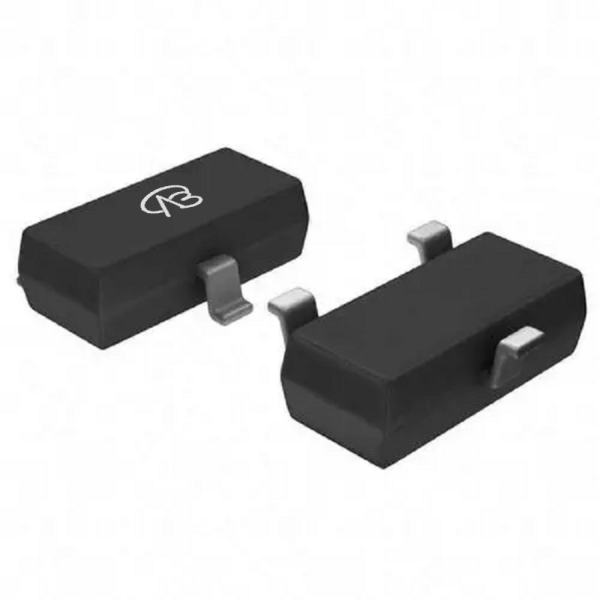
Comparative Analysis: NX138BKWX (N-channel) vs. VBK162K
Analysis of the Original Model (NX138BKWX) Core:
This is a 60V N-channel MOSFET from Nexperia, using an ultra-small SOT-323 (SC-70) package. Its design core is to provide a reliable switching solution in a minimal footprint for low-current applications. Key advantages are: a drain-source voltage rating of 60V, suitable for various low-power circuits, and an on-resistance of 2.1Ω at 10V gate drive. It features a continuous drain current of 210mA, making it ideal for signal switching, level shifting, or driving small loads where space is at a premium.
Compatibility and Differences of the Domestic Alternative (VBK162K):
VBsemi's VBK162K also uses a compact SC70-3 package and is a direct pin-to-pin compatible alternative. The main differences lie in the electrical parameters: VBK162K matches the 60V voltage rating but offers a lower on-resistance of 2.0Ω at 10V. Its continuous current rating is 0.3A (300mA), which is slightly higher than the original model's 210mA, providing a marginal performance improvement in similar applications.
Key Application Areas:
Original Model NX138BKWX: Its characteristics are very suitable for space-constrained, low-power 60V systems requiring reliable switching. Typical applications include:
Signal switching and multiplexing in portable devices.
Level translation circuits in low-voltage logic interfaces.
Driving small relays, LEDs, or other low-current peripherals.
Alternative Model VBK162K: Offers a slightly enhanced current capability and marginally lower on-resistance, making it a suitable drop-in replacement for applications within the 300mA range, potentially offering slightly better efficiency.
Comparative Analysis: PMPB09R1XNX (N-channel) vs. VBQG7313
Unlike the first model focusing on ultra-low current, the design pursuit of this N-channel MOSFET is achieving high current capability with low conduction loss in a compact power package.
Analysis of the Original Model (PMPB09R1XNX) Core:
The core advantages of this Nexperia model are reflected in its power density:
Excellent conduction performance: It features a very low on-resistance of 9.1mΩ at a 4.5V gate drive, enabling high efficiency. It supports a high continuous drain current of 13A.
Compact Power Package: Utilizing the DFN1006D-2 (DFN2020M-6) package, it achieves an outstanding balance between thermal performance and a minimal footprint, ideal for power management in dense layouts.
Compatibility and Differences of the Domestic Alternative (VBQG7313):
The domestic alternative VBQG7313 belongs to a 'performance-competitive' choice. It uses a compatible DFN6(2x2) package. While it shares the same 30V voltage rating, its key parameters show a mixed comparison: It offers a slightly lower continuous current (12A vs. 13A) but achieves a significantly lower on-resistance of 24mΩ at 4.5V (and 20mΩ at 10V). This presents a trade-off between peak current handling and conduction loss for a given gate drive condition.
Key Application Areas:
Original Model PMPB09R1XNX: Its very low RDS(on) and high current in a tiny package make it ideal for high-density, medium-current power switching. For example:
Load switches and power path management in battery-powered devices (e.g., smartphones, tablets).
Low-side switches in compact DC-DC converters for point-of-load regulation.
Motor drive control for small drones or compact robotics.
Alternative Model VBQG7313: Is a viable alternative for applications where the slightly lower current rating is acceptable, and the potentially lower gate charge (implied by higher RDS(on) at 4.5V) might be beneficial for very fast switching or simpler drive circuits, still within space-constrained 30V systems.
Conclusion
In summary, this comparative analysis reveals two clear selection paths:
For ultra-compact, low-current (sub-300mA) 60V switching, the original model NX138BKWX is a proven solution in a SOT-323 package. Its domestic alternative VBK162K offers a pin-to-pin replacement with marginally better current and RDS(on) performance, providing a straightforward upgrade path.
For compact, medium-to-high current (12-13A) 30V power switching, the original PMPB09R1XNX stands out with its exceptionally low 9.1mΩ RDS(on) at 4.5V. The domestic alternative VBQG7313 offers a compatible package with a different performance trade-off (lower current but different RDS(on) profile), giving designers an option to optimize for specific drive conditions or cost.
The core conclusion is: Selection depends on precise requirement matching. In the context of supply chain diversification, domestic alternatives like VBK162K and VBQG7313 provide feasible, performance-competitive backup options, offering engineers greater flexibility in design trade-offs and cost control. Understanding the specific parameter implications of each device is key to maximizing its value in the circuit.

Download PDF document
 Download now


