 中文
中文 English
MOSFET Selection for Automotive and Power Applications: IRLZ34NSTRLPBF, IAUC120N06S5N017ATMA1 vs. China Alternatives VBL1632, VBGQA1602
Number of views:9999
 Back to previous page
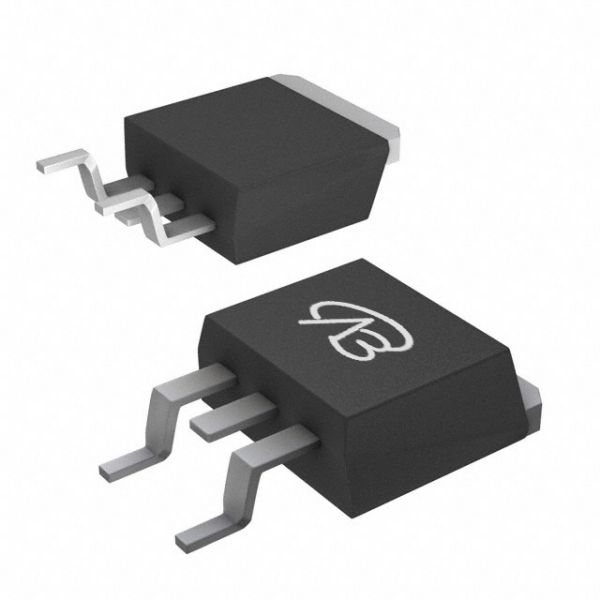
Comparative Analysis: IRLZ34NSTRLPBF (N-channel, D2PAK) vs. VBL1632
Analysis of the Original Model (IRLZ34NSTRLPBF) Core:
This is a 55V N-channel MOSFET from Infineon, utilizing the robust D2PAK (TO-263) surface-mount package. Its design core is based on the fifth-generation HEXFET technology, which achieves a very low on-resistance per silicon area. Key advantages include a continuous drain current of 30A and an on-resistance (RDS(on)) of 35mΩ at 10V gate drive. This combination, along with the fast switching speed and ruggedness inherent to HEXFET technology, makes it an efficient and reliable choice for a wide range of applications. The D2PAK package offers excellent power dissipation capability.
Compatibility and Differences of the Domestic Alternative (VBL1632):
VBsemi's VBL1632 is offered in a TO-263 package, making it a form-factor compatible alternative. Electrically, it presents a compelling option: it features a slightly higher voltage rating (60V vs. 55V) and a significantly higher continuous current rating (50A vs. 30A). The on-resistance is comparable or slightly better (32mΩ @10V vs. 35mΩ @10V for the original).
Key Application Areas:
Original Model IRLZ34NSTRLPBF: Its ruggedness and good current handling make it suitable for various industrial and automotive auxiliary applications, such as motor control, solenoid drivers, and medium-power DC-DC converters in 12V/24V systems.
Alternative Model VBL1632: With its higher current rating and comparable/low RDS(on), it is well-suited for applications demanding higher power density or an upgrade path, including more demanding motor drives, power tools, and high-current switching circuits where the TO-263 package is appropriate.
Comparative Analysis: IAUC120N06S5N017ATMA1 (N-channel, TDSON-8) vs. VBGQA1602
This comparison focuses on high-performance, low-loss N-channel MOSFETs for demanding applications like automotive.
Analysis of the Original Model (IAUC120N06S5N017ATMA1) Core:
This is a 60V, automotive-grade N-channel OptiMOS power MOSFET from Infineon in a TDSON-8 package. Its design pursues the ultimate in low conduction loss and high current capability within a compact footprint. The core advantages are an exceptionally low on-resistance of 1.7mΩ at 10V gate drive and a very high continuous drain current of 120A. It is characterized for automotive applications (AEC-Q101 qualified), featuring 100% avalanche testing, enhanced reliability, and a high operating junction temperature (175°C).
Compatibility and Differences of the Domestic Alternative (VBGQA1602):
VBsemi's VBGQA1602 uses a DFN8(5x6) package, which is compact and suitable for high-density designs. It positions itself as a "performance-enhanced" alternative. It matches the 60V voltage rating but dramatically surpasses the original in key parameters: a continuous current rating of 180A and an even lower on-resistance of 1.7mΩ at 10V (with excellent performance down to 2.5V and 4.5V gate drives as well).
Key Application Areas:
Original Model IAUC120N06S5N017ATMA1: Its ultra-low RDS(on), high current, and automotive-grade ruggedness make it an ideal choice for high-efficiency, high-reliability applications. Typical uses include:
Automotive systems: BLDC motor drives (e.g., pumps, fans), battery management system (BMS) switches, and high-current DC-DC converters.
High-performance server and telecom power supplies: Synchronous rectification and high-current point-of-load (POL) converters.
Alternative Model VBGQA1602: With its superior current capability and ultra-low RDS(on) across a range of gate voltages, it is targeted at the most demanding upgrade scenarios requiring maximum power density and minimum conduction loss. This includes next-generation high-power motor drives, high-current OR-ing switches, and advanced POL modules.
Conclusion
In summary, this analysis reveals two distinct selection pathways based on performance and package needs:
For robust, medium-to-high power applications using the D2PAK/TO-263 package, the original IRLZ34NSTRLPBF offers proven reliability with 30A capability and 35mΩ RDS(on). Its domestic alternative, VBL1632, provides a compelling upgrade with higher current (50A) and slightly better RDS(on) (32mΩ), making it suitable for more demanding designs within the same form factor.
For ultra-high efficiency, high-current applications demanding advanced packaging (TDSON-8/DFN), the automotive-grade IAUC120N06S5N017ATMA1 sets a high standard with 120A and 1.7mΩ RDS(on). The domestic alternative VBGQA1602 pushes the boundaries further, offering a remarkable 180A current rating while maintaining the same ultra-low 1.7mΩ RDS(on), representing a top-tier choice for maximizing power density and minimizing losses.
The core conclusion is that selection is not about absolute superiority but about precise requirement matching. In the context of supply chain diversification, domestic alternatives like VBL1632 and VBGQA1602 not only provide viable backup options but also offer significant performance enhancements in key parameters. This gives engineers greater flexibility and resilience in design trade-offs, cost control, and performance optimization. Understanding the design philosophy and parameter implications of each device is essential to unlocking its full potential in your circuit.

Download PDF document
 Download now


