 中文
中文 English
MOSFET Selection for High-Performance Power Conversion: IRLR8726TRPBF, IRF7241TRPBF vs. China Alternatives VBE1303, VBA2412
Number of views:9999
 Back to previous page
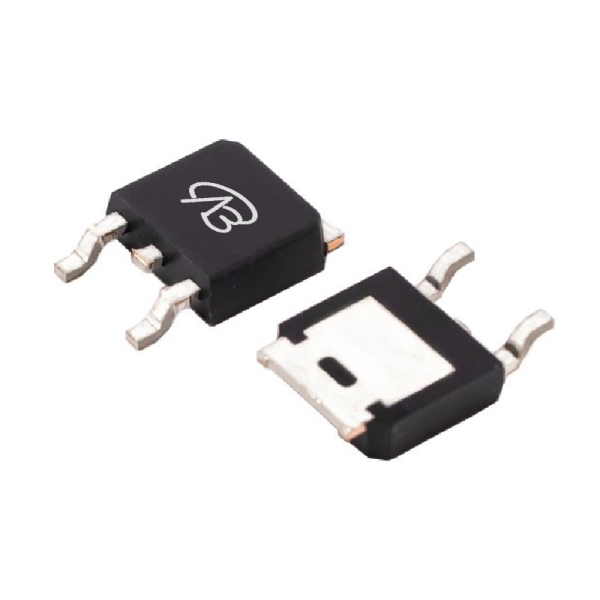
Comparative Analysis: IRLR8726TRPBF (N-channel) vs. VBE1303
Analysis of the Original Model (IRLR8726TRPBF) Core:
This is a 30V N-channel MOSFET from Infineon in a TO-252 (DPAK) package. Its design core focuses on delivering extremely low conduction loss and high current capability for high-frequency switching applications. Key advantages include a very low on-resistance (RDS(on)) of 5.8mΩ at 10V gate drive, a high continuous drain current rating of 86A, and features like ultra-low gate charge for fast switching and full avalanche characterization for robustness.
Compatibility and Differences of the Domestic Alternative (VBE1303):
VBsemi's VBE1303 offers a direct pin-to-pin compatible alternative in the same TO-252 package. It presents a significant performance enhancement in key electrical parameters: it matches the 30V voltage rating but features a dramatically lower on-resistance of 2mΩ @ 10V (compared to 5.8mΩ) and a higher continuous current rating of 100A (compared to 86A).
Key Application Areas:
Original Model IRLR8726TRPBF: Excels in high-frequency, high-current synchronous rectification stages. Its low RDS(on) and high current handling make it ideal for:
High-frequency synchronous buck converters for computer processor (CPU/GPU) power delivery.
Synchronous rectification in isolated DC-DC converters for telecom and industrial systems.
Alternative Model VBE1303: With its superior conduction performance (lower RDS(on) and higher current), it is an excellent upgrade choice for the same applications, potentially offering lower conduction losses, higher efficiency, and greater thermal margin, especially in demanding power stages.
Comparative Analysis: IRF7241TRPBF (P-channel) vs. VBA2412
Analysis of the Original Model (IRF7241TRPBF) Core:
This is a -40V P-channel MOSFET from Infineon in a compact SO-8 package. Its design pursues a balance of moderate current capability, voltage rating, and space-saving form factor for high-side switching and power management tasks. Its key parameters include a continuous drain current of -6.2A and an on-resistance of 70mΩ at a -4.5V gate drive.
Compatibility and Differences of the Domestic Alternative (VBA2412):
VBsemi's VBA2412 is a direct pin-to-pin compatible alternative in the SO-8 package. It represents a substantial performance upgrade: while maintaining the -40V voltage rating, it offers a significantly lower on-resistance of 14mΩ @ -4.5V (vs. 70mΩ) and a much higher continuous current rating of -16.1A (vs. -6.2A).
Key Application Areas:
Original Model IRF7241TRPBF: Suited for space-constrained applications requiring P-channel switches with moderate performance, such as:
Load switches and high-side switches in various power management circuits.
Power path management in battery-operated devices.
Alternative Model VBA2412: Its dramatically improved RDS(on) and current capability make it a powerful replacement, enabling higher efficiency, lower voltage drop, and the ability to handle more demanding loads in similar high-side switching and power path applications, all within the same compact footprint.
Summary and Selection Insight
This analysis reveals two distinct upgrade paths through domestic alternatives:
For N-channel applications in high-current, high-frequency converters like synchronous buck or rectification stages, the original IRLR8726TRPBF is a robust performer. Its domestic alternative VBE1303 provides a compelling performance-enhanced option, featuring significantly lower on-resistance (2mΩ vs. 5.8mΩ) and higher current rating (100A vs. 86A), which can translate directly into higher efficiency and power density.
For P-channel applications in compact high-side switching, the original IRF7241TRPBF offers a proven solution. Its domestic alternative VBA2412 delivers a remarkable performance leap, with vastly superior on-resistance (14mΩ vs. 70mΩ) and current handling (16.1A vs. 6.2A), making it an excellent choice for upgrading efficiency and load capability without changing the board layout.
The core conclusion is clear: Selection is about precise requirement matching. In the context of supply chain diversification, these domestic alternatives (VBE1303, VBA2412) not only provide reliable, pin-compatible replacements but also offer significant parametric advantages. They grant engineers greater flexibility in design optimization, efficiency improvement, and cost control, empowering more resilient and high-performance power solutions.

Download PDF document
 Download now


