 中文
中文 English
MOSFET Selection for High-Current Switching: IRLR8726TRLPBF, IPD30N03S4L09ATMA1 vs. China Alternatives VBE1305, VBE1308
Number of views:9999
 Back to previous page
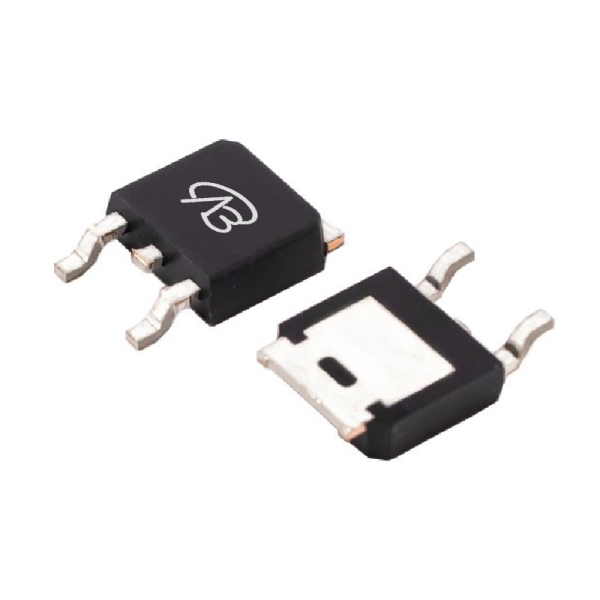
Comparative Analysis: IRLR8726TRLPBF (N-channel) vs. VBE1305
Analysis of the Original Model (IRLR8726TRLPBF) Core:
This is a 30V N-channel MOSFET from Infineon in a DPAK (TO-252AA) package. Its design core is to deliver very high continuous current with low conduction loss in a compact footprint. Key advantages are: an exceptionally high continuous drain current rating of 86A and a low on-resistance of 5.8mΩ (typical at 10V, 25°C). It also features a gate threshold voltage suitable for standard drive circuits. With a power dissipation rating of 75W, it offers solid thermal performance for high-current applications.
Compatibility and Differences of the Domestic Alternative (VBE1305):
VBsemi's VBE1305 is a direct pin-to-pin compatible alternative in the TO-252 package. The key differences are in the electrical parameters: VBE1305 offers a significantly lower on-resistance of 4mΩ (at 10V) compared to the original's 5.8mΩ. Its continuous current rating is also very high at 85A, nearly matching the original's 86A. This makes it a performance-competitive alternative.
Key Application Areas:
Original Model IRLR8726TRLPBF: Ideal for applications demanding very high current throughput and efficiency. Typical uses include:
High-current DC-DC converters and synchronous rectification in server, telecom, or computing power supplies.
Motor drives for robotics, e-mobility, or industrial tools.
Battery management system (BMS) discharge switches and high-current load switches.
Alternative Model VBE1305: Suited for the same high-current applications as the original but offers potential advantages in lower conduction loss and temperature rise due to its lower RDS(on), making it an excellent choice for efficiency-critical upgrades or new designs.
Comparative Analysis: IPD30N03S4L09ATMA1 (N-channel) vs. VBE1308
This comparison focuses on a robust 30V N-channel MOSFET designed for a balance of current capability and switching performance.
Analysis of the Original Model (IPD30N03S4L09ATMA1) Core:
This Infineon MOSFET in a TO-252 package is engineered for reliable medium-to-high current switching. Its core strengths are: a solid continuous current rating of 30A and a low on-resistance of 9mΩ (at 10V). It is part of Infineon's OptiMOS series, known for good switching characteristics and quality.
Compatibility and Differences of the Domestic Alternative (VBE1308):
VBsemi's VBE1308 is a pin-to-pin compatible alternative. It presents a "performance-enhanced" profile: while maintaining the same 30V voltage rating, it offers a substantially higher continuous current of 70A and a lower on-resistance of 7mΩ (at 10V) compared to the original's 30A and 9mΩ.
Key Application Areas:
Original Model IPD30N03S4L09ATMA1: Well-suited for applications requiring a reliable 30A switch with good efficiency. Common uses include:
DC-DC conversion in automotive, industrial, or consumer electronics (e.g., buck/boost converters).
Motor control for fans, pumps, or small actuators.
Power distribution and load switching in various electronic systems.
Alternative Model VBE1308: Targets applications that can benefit from a significant margin in current handling and lower conduction loss. It is an excellent choice for upgrading existing 30A designs for higher power or efficiency, or for new designs where over-specification provides added reliability and thermal headroom.
Conclusion
In summary, this analysis reveals two clear selection paths for high-current N-channel applications:
For the ultra-high-current domain represented by IRLR8726TRLPBF (~86A), the domestic alternative VBE1305 stands out as a highly competitive, pin-compatible replacement. It not only matches the high current capability but surpasses the original in key efficiency metrics with its lower 4mΩ on-resistance.
For the robust medium-high current application represented by IPD30N03S4L09ATMA1 (30A), the domestic alternative VBE1308 offers a substantial performance upgrade. With double the current rating (70A) and lower on-resistance (7mΩ), it provides significant headroom for more demanding designs or enhanced reliability.
The core takeaway is that selection is about precise requirement matching. In the context of supply chain diversification, these domestic alternatives (VBE1305, VBE1308) provide not just viable backups but also opportunities for performance gains and cost optimization, giving engineers greater flexibility and resilience in their design choices. Understanding the parameter trade-offs is key to leveraging the full value of these components in your circuit.

Download PDF document
 Download now


