 中文
中文 English
MOSFET Selection for Power Applications: IRLR3105TRPBF, IPB95R130PFD7ATMA1 vs. China Alternatives VBE1638, VBL19R20S
Number of views:9999
 Back to previous page
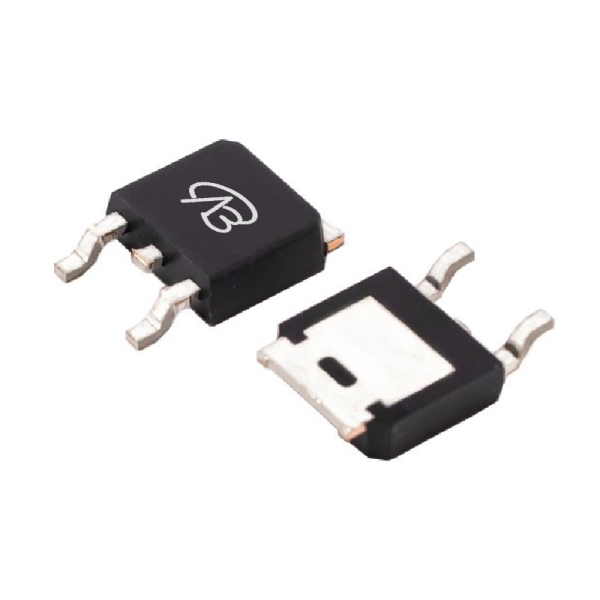
Comparative Analysis: IRLR3105TRPBF (N-channel) vs. VBE1638
Analysis of the Original Model (IRLR3105TRPBF) Core:
This is a 55V N-channel MOSFET from Infineon in a TO-252 (DPAK) package. Its design core focuses on providing a robust balance of voltage rating, current handling, and low conduction loss in a cost-effective, industry-standard package. Key advantages include: a low on-resistance of 37mΩ at a 10V gate drive, a continuous drain current rating of 15A, and a high power dissipation capability of 57W, ensuring good thermal performance.
Compatibility and Differences of the Domestic Alternative (VBE1638):
VBsemi's VBE1638 is a direct pin-to-pin compatible alternative in the same TO-252 package. It offers a performance-enhanced profile: a slightly higher voltage rating (60V vs. 55V) and significantly better conduction characteristics. Its on-resistance is lower at 25mΩ (@10V), and it boasts a much higher continuous current rating of 45A.
Key Application Areas:
Original Model IRLR3105TRPBF: An excellent, reliable choice for mainstream medium-power switching applications such as DC-DC converters (low-side switch), motor drives, and power management circuits in 12V, 24V, or 48V systems where 55V rating is sufficient.
Alternative Model VBE1638: More suitable for upgraded scenarios demanding higher current capability (up to 45A), lower conduction loss (25mΩ), and a slight voltage margin increase. Ideal for designing more compact or higher-efficiency solutions in similar applications.
Comparative Analysis: IPB95R130PFD7ATMA1 (High-Voltage N-channel) vs. VBL19R20S
This comparison shifts to high-voltage applications. The design pursuit of the original model is high-efficiency switching at high voltages with superior body diode performance.
Analysis of the Original Model (IPB95R130PFD7ATMA1) Core:
Part of Infineon's latest 950V CoolMOS PFD7 series in a TO-263 (D2PAK) package, it sets a benchmark in superjunction (SJ) technology. Its core advantages are:
High Voltage & Current: A 950V drain-source voltage and 36.5A continuous current rating target demanding industrial SMPS.
Optimized for Resonant Topologies: Features an integrated ultra-fast body diode with the market-lowest reverse recovery charge (Qrr), minimizing switching losses in LLC converters and other resonant circuits.
Low Conduction Loss: An on-resistance of 130mΩ (@10V) balances conduction performance with high-voltage capability.
Compatibility and Differences of the Domestic Alternative (VBL19R20S):
VBsemi's VBL19R20S is a package-compatible alternative in TO-263. The main differences are in the electrical parameters: It has a slightly lower voltage rating (900V vs. 950V) and a lower continuous current rating (20A vs. 36.5A). Its on-resistance is higher at 270mΩ (@10V). It is based on a Multi-EPI Superjunction technology.
Key Application Areas:
Original Model IPB95R130PFD7ATMA1: The premier choice for high-performance, high-voltage applications like industrial switch-mode power supplies (SMPS), server/telecom PSUs, and lighting ballasts, especially where resonant topologies (LLC) are used, leveraging its exceptional body diode.
Alternative Model VBL19R20S: Serves as a cost-optimized alternative for high-voltage applications where the full 950V/36.5A capability is not required. Suitable for auxiliary power supplies, lower-power industrial SMPS, or other 900V-class applications where its 20A current and 270mΩ RDS(on) are sufficient.
Conclusion
In summary, this analysis reveals two distinct selection paths:
For mainstream medium-voltage/current switching, the original IRLR3105TRPBF offers a proven, balanced performance in a DPAK package. Its domestic alternative VBE1638 provides significant performance enhancement with higher current (45A) and lower on-resistance (25mΩ), making it an attractive upgrade for efficiency-driven designs.
For high-voltage industrial applications, the original IPB95R130PFD7ATMA1 stands out with its state-of-the-art 950V CoolMOS PFD7 technology, optimized especially for resonant converters. Its domestic alternative VBL19R20S offers a viable, cost-optimized solution for applications where its 900V/20A rating is adequate, providing supply chain diversification.
The core conclusion is: Selection hinges on precise requirement matching. In the context of supply chain diversification, domestic alternatives not only provide feasible backup options but also offer compelling performance/cost trade-offs, giving engineers greater flexibility in design. Understanding each device's design philosophy and parameter implications is key to maximizing its value in your circuit.

Download PDF document
 Download now


