 中文
中文 English
MOSFET Selection for Industrial and High-Voltage Applications: IRLR2705TRPBF, IPA65R190E6XKSA1 vs. China Alternatives VBE1638, VBMB165R20S
Number of views:9999
 Back to previous page
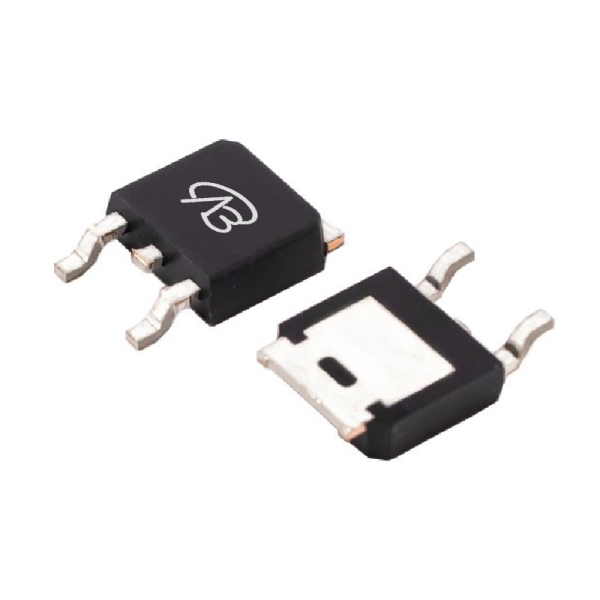
Comparative Analysis: IRLR2705TRPBF (N-channel) vs. VBE1638
Analysis of the Original Model (IRLR2705TRPBF) Core:
This is a 55V N-channel MOSFET from Infineon, utilizing a DPAK (TO-252AA) surface-mount package. Its design core is based on the fifth-generation HEXFET technology, which achieves a very low on-resistance per silicon area. Key advantages include: a low on-resistance of 51mΩ at a 5V gate drive (17A condition), a continuous drain current rating of 28A, and the renowned HEXFET benefits of fast switching speed and ruggedness. The DPAK package is designed for surface mounting using vapor phase, infrared, or wave soldering techniques, making it suitable for automated production.
Compatibility and Differences of the Domestic Alternative (VBE1638):
VBsemi's VBE1638 is a direct pin-to-pin compatible alternative in the TO-252 package. The main differences lie in the enhanced electrical parameters: VBE1638 offers a slightly higher voltage rating (60V vs. 55V) and significantly better conduction performance. It features a lower on-resistance of 30mΩ at 4.5V (25mΩ at 10V) and a higher continuous current rating of 45A. This indicates a more advanced Trench technology process, providing lower conduction losses and higher current handling capability.
Key Application Areas:
Original Model IRLR2705TRPBF: Its balance of 55V rating, 28A current, and low on-resistance makes it highly suitable for a wide range of medium-power DC-DC conversion, motor control, and power management in industrial controls, automotive systems, and switching power supplies where robust performance is required.
Alternative Model VBE1638: With its superior current capability (45A) and lower on-resistance, it is an excellent "performance-enhanced" drop-in replacement. It is ideal for applications demanding higher efficiency, lower heat generation, or an upgrade path within the same circuit footprint, such as in more demanding motor drives, high-current DC-DC converters, or as a reliability upgrade.
Comparative Analysis: IPA65R190E6XKSA1 (N-channel) vs. VBMB165R20S
This comparison shifts focus to high-voltage applications. The design pursuit here is achieving high breakdown voltage while maintaining manageable conduction losses and switching performance.
Analysis of the Original Model (IPA65R190E6XKSA1) Core:
This is a 650V N-channel MOSFET from Infineon in a TO-220F full-pack (isolated) package. Its core advantage lies in providing a robust high-voltage switching solution. Key parameters include a 650V drain-source voltage, a continuous current of 20.2A, and an on-resistance of 190mΩ at 10V gate drive. The TO-220F package offers good thermal performance for its power level, crucial for managing losses in high-voltage operation.
Compatibility and Differences of the Domestic Alternative (VBMB165R20S):
VBsemi's VBMB165R20S is a direct compatible alternative in the TO-220F package. It matches the critical 650V voltage rating and 20A continuous current. The key enhancement is a lower on-resistance of 160mΩ at 10V gate drive, compared to the original's 190mΩ. This reduction in RDS(on) directly translates to lower conduction losses and potentially better efficiency and thermal performance. It utilizes a Super Junction Multi-EPI process designed for high-voltage efficiency.
Key Application Areas:
Original Model IPA65R190E6XKSA1: A reliable choice for 650V systems requiring good balance, commonly used in switch-mode power supplies (SMPS) like PFC stages, offline converters, UPS systems, and industrial motor drives where high voltage blocking is essential.
Alternative Model VBMB165R20S: As a "performance-optimized" alternative, it is particularly suitable for applications where minimizing conduction loss is a priority within the same 650V/20A class. This makes it a compelling choice for designing more efficient power supplies, inverters, or as an upgrade to improve the thermal profile of existing designs.
Conclusion
In summary, this analysis reveals clear and practical selection paths:
For medium-voltage, medium-current N-channel applications commonly found in industrial and automotive environments, the original IRLR2705TRPBF is a proven, reliable workhorse. Its domestic alternative VBE1638 presents a significant "performance boost" with higher current (45A vs. 28A) and lower on-resistance, making it an excellent drop-in upgrade for enhanced efficiency and power handling without design changes.
For high-voltage (650V) switching applications, the original IPA65R190E6XKSA1 provides a solid foundation. Its domestic alternative VBMB165R20S offers a direct package-compatible solution with the advantage of lower on-resistance (160mΩ vs. 190mΩ), enabling reduced conduction losses and potentially higher system efficiency in SMPS, PFC, and motor drive circuits.
The core takeaway is that selection is driven by precise requirement matching. In the context of supply chain diversification, these domestic alternatives not only provide reliable backup options but also offer tangible performance enhancements in key parameters. This gives engineers greater flexibility and resilience in making design trade-offs and optimizing for cost, performance, and availability. Understanding the specific parameter implications of each device is key to unlocking its full value in your circuit.

Download PDF document
 Download now


