 中文
中文 English
MOSFET Selection for Compact and High-Voltage Applications: IRLML2402TRPBF, IPD80R2K0P7ATMA1 vs. China Alternatives VB1240, VBE18R02S
Number of views:9999
 Back to previous page
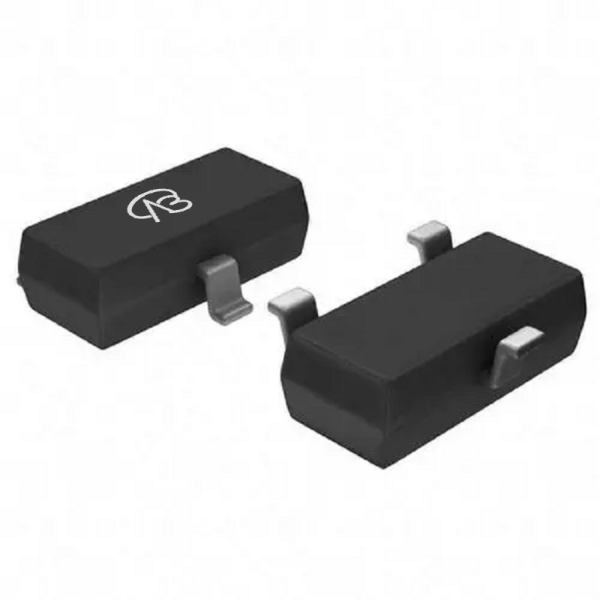
Comparative Analysis: IRLML2402TRPBF (Low-Voltage N-channel) vs. VB1240
Analysis of the Original Model (IRLML2402TRPBF) Core:
This is a 20V N-channel MOSFET from Infineon in a compact SOT-23 package. Its design core is to provide basic switching functionality in space-constrained, low-power circuits. Key parameters include a continuous drain current of 1.2A and an on-resistance of 250mΩ at a 4.5V gate drive.
Compatibility and Differences of the Domestic Alternative (VB1240):
VBsemi's VB1240 is a pin-to-pin compatible alternative in SOT23-3 package. It offers significant performance enhancement: a much lower on-resistance of 28mΩ at 4.5V and a higher continuous current rating of 6A at the same 20V voltage rating.
Key Application Areas:
Original Model IRLML2402TRPBF: Suitable for low-current switching, signal level translation, or load switching in portable electronics where minimal footprint is crucial and performance demands are modest.
Alternative Model VB1240: Ideal for direct upgrades in the same applications where significantly lower conduction loss and higher current handling are required, enabling better efficiency or support for more demanding loads within the same compact footprint.
Comparative Analysis: IPD80R2K0P7ATMA1 (High-Voltage N-channel) vs. VBE18R02S
This comparison shifts to high-voltage applications, where the design pursuit balances voltage withstand capability and switching performance.
Analysis of the Original Model (IPD80R2K0P7ATMA1) Core:
This Infineon MOSFET is an 800V, 3A device in a TO-252-3 (DPAK) package. Its core advantage is high-voltage operation with an on-resistance of 2Ω at 10V gate drive, suitable for offline power supplies and lighting.
Compatibility and Differences of the Domestic Alternative (VBE18R02S):
VBsemi's VBE18R02S is a compatible alternative in a TO252 package. It matches the 800V voltage rating but differs in key parameters: it has a slightly lower continuous current rating of 2A but offers a significantly improved on-resistance of 2.6Ω (2600mΩ) at 10V gate drive.
Key Application Areas:
Original Model IPD80R2K0P7ATMA1: Targeted for high-voltage applications like offline switch-mode power supplies (SMPS), LED lighting drivers, and auxiliary power circuits where 800V rating and 3A current are required.
Alternative Model VBE18R02S: Suitable for similar high-voltage applications where the 2A current rating is sufficient. Its lower on-resistance can lead to reduced conduction losses, potentially improving efficiency in designs where its current capability meets the requirement.
Conclusion:
This analysis reveals two distinct selection paths:
For low-voltage, space-constrained applications, the original IRLML2402TRPBF offers a compact solution for basic switching. Its domestic alternative VB1240 provides a powerful performance-enhanced drop-in replacement with dramatically lower RDS(on) and higher current, ideal for efficiency upgrades.
For high-voltage applications, the original IPD80R2K0P7ATMA1 serves as a reliable choice for 800V/3A needs. The domestic alternative VBE18R02S offers a compatible solution with improved on-resistance, suitable for scenarios where its 2A current rating is adequate and lower loss is beneficial.
The core conclusion is that selection hinges on precise requirement matching. Domestic alternatives not only provide viable backups but also offer performance advantages in specific areas, giving engineers greater flexibility in design trade-offs and cost control. Understanding each device's parameters is key to maximizing its value in the circuit.

Download PDF document
 Download now


