 中文
中文 English
MOSFET Selection for Power Switching Solutions: IRLML0040TRPBF, IPT010N08NM5ATMA1 vs. China Alternatives VB1330, VBGQT1801
Number of views:9999
 Back to previous page
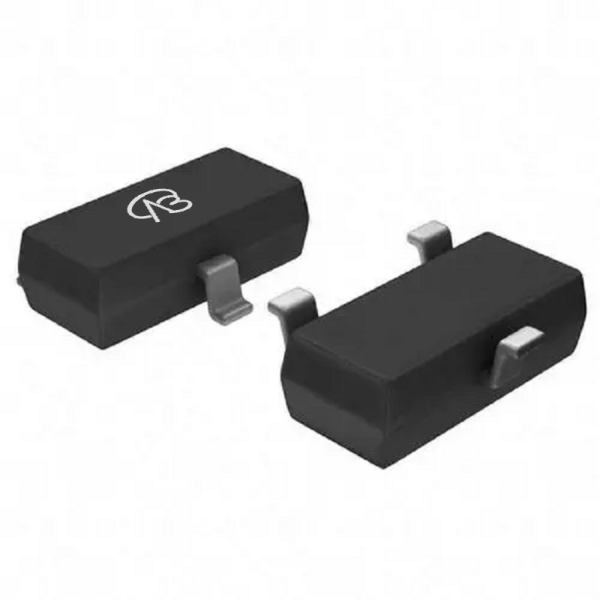
Comparative Analysis: IRLML0040TRPBF (N-channel) vs. VB1330
Analysis of the Original Model (IRLML0040TRPBF) Core:
This is a 40V N-channel MOSFET from Infineon in a compact SOT-23 package. Its design aims to provide reliable switching in space-constrained, low-to-medium current applications. Key advantages include: a drain-source voltage (Vdss) of 40V, continuous drain current (Id) of 3.6A, and an on-resistance (RDS(on)) of 56mΩ at 10V gate drive. It is a cost-effective solution for general-purpose load switching and control.
Compatibility and Differences of the Domestic Alternative (VB1330):
VBsemi's VB1330 is offered in the same SOT-23 package and is a pin-to-pin compatible alternative. The main parameter differences are: VB1330 has a slightly lower voltage rating (30V) but offers significantly better conduction performance. Its RDS(on) is 30mΩ at 10V (vs. 56mΩ for the original) and it supports a higher continuous current of 6.5A (vs. 3.6A). This makes it a performance-enhanced drop-in replacement where the lower voltage rating is acceptable.
Key Application Areas:
Original Model IRLML0040TRPBF: Ideal for general-purpose switching, load control, and power management in consumer electronics, IoT modules, and portable devices where 40V rating and 3.6A current are sufficient.
Alternative Model VB1330: Better suited for applications requiring lower conduction loss and higher current capability within a 30V system, such as more efficient DC-DC converter switches, motor drivers for small fans, or power distribution switches where lower RDS(on) improves thermal performance.
Comparative Analysis: IPT010N08NM5ATMA1 (N-channel) vs. VBGQT1801
This comparison shifts to high-power applications where ultra-low on-resistance and high current handling are paramount.
Analysis of the Original Model (IPT010N08NM5ATMA1) Core:
This Infineon MOSFET is an 80V N-channel device in an HSOF-8 package, designed for demanding high-frequency switching and synchronous rectification. Its core strengths are: very low RDS(on) of 1.05mΩ at 10V, an exceptionally high continuous drain current rating of 425A, and features like 100% avalanche tested and excellent Figure of Merit (FOM). It targets high-efficiency, high-power-density converters.
Compatibility and Differences of the Domestic Alternative (VBGQT1801):
VBsemi's VBGQT1801 comes in a TOLL package and serves as a high-performance alternative for similar application spaces. It matches the 80V voltage rating. While its continuous current rating (350A) is lower than the original's 425A, it achieves a lower on-resistance of 1.0mΩ at 10V. This combination of low RDS(on) and high current makes it a compelling alternative for reducing conduction losses.
Key Application Areas:
Original Model IPT010N08NM5ATMA1: Excellent for high-current synchronous rectification in server/telecom power supplies, high-power DC-DC converters (e.g., for 48V systems), motor drives, and uninterruptible power supplies (UPS) where maximum current capability and robust performance are critical.
Alternative Model VBGQT1801: A strong candidate for upgrading designs where minimizing conduction loss is a priority. Suitable for high-efficiency synchronous buck/boost converters, motor controllers, and power stages in energy storage or automotive systems that operate within its 350A current envelope.
Conclusion:
This analysis outlines two distinct substitution strategies:
1. For compact, low-to-medium power switching, the original IRLML0040TRPBF offers a balanced 40V/3.6A solution. Its domestic alternative VB1330 provides a performance-optimized path with significantly lower RDS(on) and higher current (6.5A) in the same package, ideal for efficiency upgrades in 30V systems.
2. For high-power, high-efficiency applications, the original IPT010N08NM5ATMA1 sets a benchmark with ultra-low 1.05mΩ RDS(on) and massive 425A current. The domestic alternative VBGQT1801 competes by offering a slightly lower RDS(on) (1.0mΩ) in a different package, suitable for designs where minimizing conduction loss is key and the 350A current rating is sufficient.
The core takeaway is that selection depends on precise requirement matching. Domestic alternatives like VB1330 and VBGQT1801 not only provide supply chain resilience but also offer opportunities for performance improvement or cost optimization in specific parameters, giving engineers greater flexibility in their design choices.

Download PDF document
 Download now


