 中文
中文 English
MOSFET Selection for High-Voltage Power Applications: IRFR825TRPBF, IPW60R120C7 vs. China Alternatives VBE165R05S, VBP16R26S
Number of views:9999
 Back to previous page
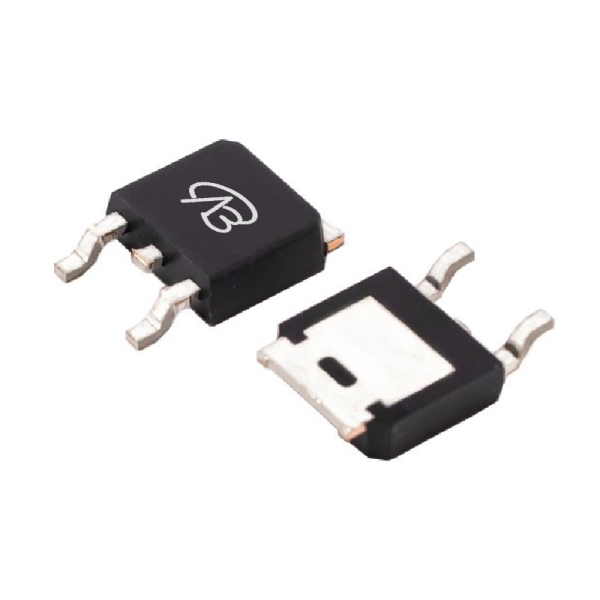
Comparative Analysis: IRFR825TRPBF (N-channel) vs. VBE165R05S
Analysis of the Original Model (IRFR825TRPBF) Core:
This is a 500V N-channel MOSFET from Infineon in a DPAK package. Its design core is to provide a reliable and cost-effective switching solution for medium-voltage applications. Key advantages include a high drain-source voltage (Vdss) of 500V, a continuous drain current (Id) of 6A, and an on-resistance (RDS(on)) of 1.05Ω at 10V gate drive. It serves as a fundamental building block for various offline power circuits.
Compatibility and Differences of the Domestic Alternative (VBE165R05S):
VBsemi's VBE165R05S is offered in a TO-252 package (similar footprint to DPAK) and serves as a functional alternative. The main differences are in the electrical parameters: VBE165R05S features a significantly higher voltage rating of 650V, offering greater margin in high-voltage lines. However, its continuous current rating is 5A, and its on-resistance is 1000mΩ (1.0Ω) at 10V, which is comparable to the original part's conduction performance.
Key Application Areas:
Original Model IRFR825TRPBF: Well-suited for classic 500V-class applications requiring moderate current. Typical uses include:
Offline Switch-Mode Power Supplies (SMPS): Used in auxiliary power sections or lower-power main switches.
Lighting Ballasts: For electronic ballasts in fluorescent or HID lighting.
AC-DC Conversion: In lower-power adapters and power factor correction (PFC) stages.
Alternative Model VBE165R05S: More suitable for applications demanding a higher voltage safety margin (650V) while operating within a 5A current range. It's a viable alternative for designs where enhanced voltage ruggedness is prioritized.
Comparative Analysis: IPW60R120C7 (N-channel) vs. VBP16R26S
This comparison shifts focus to high-performance Super Junction (SJ) MOSFETs, where the design pursuit is achieving an optimal figure-of-merit (low RDS(on) Area) for high efficiency in demanding circuits.
Analysis of the Original Model (IPW60R120C7) Core:
This 600V CoolMOS C7 device from Infineon, in a TO-247 package, represents advanced SJ technology. Its core advantages are:
High-Efficiency Switching: With an RDS(on) of 231mΩ at 10V and a continuous current of 31A, it offers low conduction loss.
Advanced Technology: As part of the CoolMOS C7 series, it is designed for high power density and efficiency, featuring excellent switching characteristics crucial for modern high-frequency power supplies.
Compatibility and Differences of the Domestic Alternative (VBP16R26S):
The domestic alternative VBP16R26S, also in a TO-247 package and utilizing SJ_Multi-EPI technology, presents a compelling "performance-competitive" option. It matches the 600V voltage rating. While its rated continuous current is 26A (vs. 31A), it boasts a significantly lower on-resistance of 115mΩ at 10V. This lower RDS(on) can translate to reduced conduction losses in many applications, offering an efficiency advantage.
Key Application Areas:
Original Model IPW60R120C7: Ideal for high-performance, high-power applications where top-tier efficiency and current handling are critical. For example:
High-Density Server/Telecom SMPS: As the main switch in PFC or LLC resonant converter stages.
Industrial Power Systems: In motor drives, UPS, and solar inverters.
High-Power Adapters/Chargers: For fast-charging solutions and high-output power supplies.
Alternative Model VBP16R26S: Highly suitable for 600V applications where minimizing conduction loss is paramount. Its superior RDS(on) makes it an excellent choice for efficiency-upgrade scenarios in PFC circuits, hard-switched and resonant converters, even if the peak current requirement is slightly below the original's 31A rating.
Conclusion
In summary, this analysis reveals two distinct selection pathways for high-voltage applications:
For standard 500V-class applications, the original IRFR825TRPBF offers proven performance with 6A capability. Its domestic alternative VBE165R05S provides a direct package-compatible option with a higher 650V rating, suitable for designs needing extra voltage margin within a 5A current envelope.
For advanced 600V high-power applications, the original IPW60R120C7 CoolMOS C7 sets a high benchmark with 31A current and advanced switching performance. The domestic alternative VBP16R26S emerges as a strong contender, matching the voltage and package while offering a substantially lower on-resistance (115mΩ vs. 231mΩ), making it a compelling choice for designs prioritizing ultra-low conduction loss and high efficiency.
The core takeaway is that selection is driven by precise requirement matching. In the context of supply chain diversification, domestic alternatives like VBE165R05S and VBP16R26S not only provide viable backup options but also offer specific parametric advantages—such as higher voltage rating or lower RDS(on)—granting engineers greater flexibility in design trade-offs and cost optimization. A deep understanding of each device's specifications is key to unlocking its full potential in your circuit.

Download PDF document
 Download now


