 中文
中文 English
MOSFET Selection for Power Applications: IRFR5305TRLPBF, BSC160N15NS5ATMA1 vs. China Alternatives VBE2658, VBGQA1151N
Number of views:9999
 Back to previous page
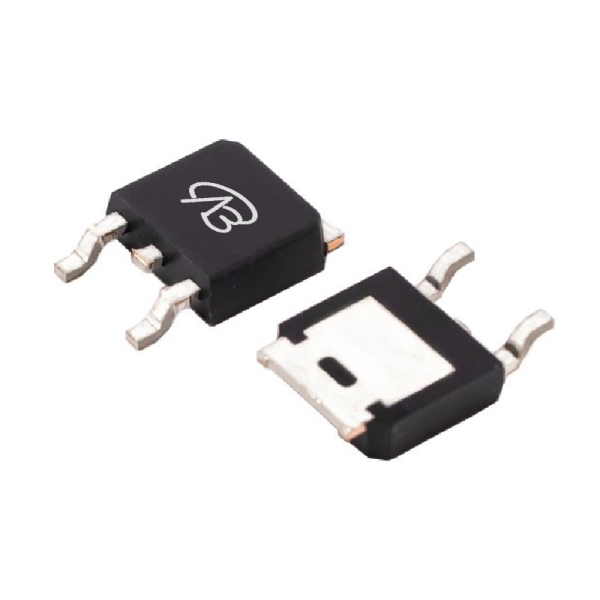
Comparative Analysis: IRFR5305TRLPBF (P-channel) vs. VBE2658
Analysis of the Original Model (IRFR5305TRLPBF) Core:
This is a 55V P-channel MOSFET from Infineon, in a DPAK (TO-252AA) package. Its design core leverages 5th generation HEXFET technology to achieve an extremely low on-resistance per silicon area. Key advantages include a robust continuous drain current of 31A and an on-resistance (RDS(on)) of 65mΩ @10V, 16A. Combined with fast switching speed and a rugged design, it offers high efficiency and reliability for a wide range of applications, supporting up to 1.5W power dissipation in typical surface-mount applications.
Compatibility and Differences of the Domestic Alternative (VBE2658):
VBsemi's VBE2658 is a direct package-compatible alternative in TO-252. The main differences lie in the electrical parameters: VBE2658 offers a slightly higher voltage rating (-60V vs. -55V) and a lower on-resistance of 46mΩ @10V. However, its continuous current rating (-35A) is different from the original's 31A, indicating a potentially different current handling optimization.
Key Application Areas:
Original Model IRFR5305TRLPBF: Its balance of ruggedness, current capability, and low RDS(on) makes it suitable for various medium-power P-channel applications such as load switching, power management in 48V systems, and DC-DC conversion.
Alternative Model VBE2658: With its lower on-resistance and compatible package, it is well-suited for applications requiring efficient power switching with a -60V rating, potentially offering lower conduction losses in similar circuit topologies.
Comparative Analysis: BSC160N15NS5ATMA1 (N-channel) vs. VBGQA1151N
This N-channel comparison focuses on high-voltage, high-current applications where efficiency and switching performance are critical.
Analysis of the Original Model (BSC160N15NS5ATMA1) Core:
This Infineon 150V N-channel MOSFET in TDSON-8 package is designed for high-frequency switching and synchronous rectification. Its core advantages are an excellent Figure of Merit (FOM, gate charge x RDS(on)), a very low on-resistance of 18.5mΩ @8V, and a high continuous current of 56A. Features like very low reverse recovery charge (Qrr) and 150°C operating temperature make it reliable for demanding applications.
Compatibility and Differences of the Domestic Alternative (VBGQA1151N):
The domestic alternative VBGQA1151N, in a DFN8(5x6) package, presents a "performance-enhanced" profile. It matches the 150V voltage rating but offers a significantly lower on-resistance of 13.5mΩ @10V and a higher continuous current rating of 70A. This indicates potential for lower conduction losses and higher current throughput in compatible designs.
Key Application Areas:
Original Model BSC160N15NS5ATMA1: Ideal for high-efficiency, high-frequency applications such as synchronous rectification in SMPS (e.g., server, telecom), motor drives, and DC-DC converters in 100-150V systems.
Alternative Model VBGQA1151N: With its superior current capability and lower RDS(on), it is suitable for upgraded scenarios demanding higher power density, lower losses, and robust performance in similar high-voltage applications, including high-current motor drives and power supplies.
Conclusion:
This analysis reveals two distinct selection paths:
For robust, medium-power P-channel switching, the original IRFR5305TRLPBF offers a proven balance of current handling and ruggedness. Its domestic alternative VBE2658 provides a compatible option with a slightly higher voltage rating and lower on-resistance, suitable for efficiency-focused designs within its current range.
For high-voltage, high-current N-channel applications, the original BSC160N15NS5ATMA1 sets a high standard with its excellent FOM and reliability for high-frequency switching. The domestic alternative VBGQA1151N offers significant performance gains in on-resistance and current capability, enabling higher efficiency and power density in upgrade scenarios.
The core takeaway is precise requirement matching. Domestic alternatives like VBE2658 and VBGQA1151N not only provide viable supply chain options but also offer parameter enhancements, giving engineers greater flexibility in design trade-offs and cost optimization. Understanding each device's design philosophy and parameter implications is key to maximizing its value in the circuit.

Download PDF document
 Download now


