 中文
中文 English
MOSFET Selection for Medium to High Power Applications: IRFR3410TRPBF, ISC104N12LM6ATMA1 vs. China Alternatives VBE1104N, VBQA1101N
Number of views:9999
 Back to previous page
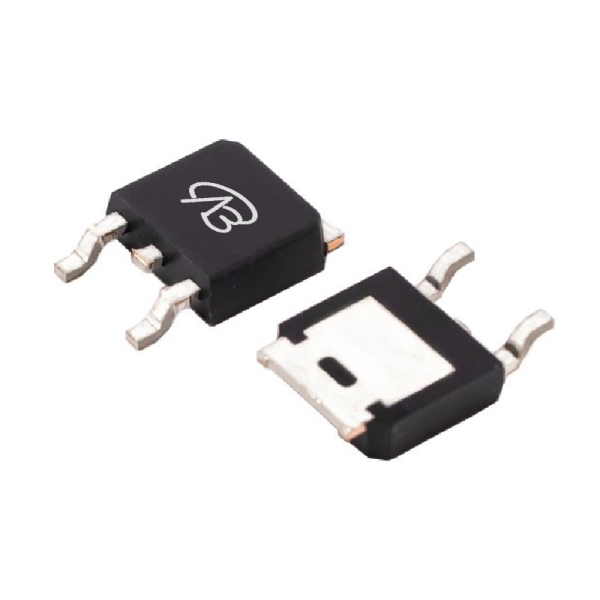
Comparative Analysis: IRFR3410TRPBF (N-channel) vs. VBE1104N
Analysis of the Original Model (IRFR3410TRPBF) Core:
This is a 100V N-channel MOSFET from Infineon in a standard DPAK (TO-252AA) package. Its design core is to provide robust and reliable switching capability for medium-power applications. Key advantages include: a drain-source voltage (Vdss) of 100V, a continuous drain current (Id) of 31A, and an on-resistance (RDS(on)) of 39mΩ at a 10V gate drive. The DPAK package offers good thermal performance for its power class.
Compatibility and Differences of the Domestic Alternative (VBE1104N):
VBsemi's VBE1104N is offered in the same TO-252 package, ensuring direct pin-to-pin and footprint compatibility. The key differences are in the electrical parameters: VBE1104N matches the 100V voltage rating but offers a higher continuous current of 40A and a lower on-resistance of 30mΩ (@10V), indicating potentially better conduction performance and efficiency.
Key Application Areas:
Original Model IRFR3410TRPBF: Well-suited for classic 48-100V system applications requiring dependable performance, such as:
Power supplies and adapters: Used in PFC stages or as main switches.
Motor drives: For driving brushed DC or BLDC motors in industrial controls, automotive auxiliaries.
General-purpose switching and power management in industrial equipment.
Alternative Model VBE1104N: An excellent performance-upgrade replacement, ideal for applications where lower conduction loss and higher current handling within the same voltage and package are desired, potentially leading to cooler operation and higher efficiency.
Comparative Analysis: ISC104N12LM6ATMA1 (N-channel) vs. VBQA1101N
This comparison shifts to higher-performance N-channel MOSFETs focused on low loss and high current density in modern power designs.
Analysis of the Original Model (ISC104N12LM6ATMA1) Core:
This Infineon MOSFET in a TDSON-8 package is designed for high efficiency and power density. Its core advantages are:
High Current Capability: A continuous drain current of 63A at 120V Vdss.
Low Conduction Loss: A low on-resistance of 10.4mΩ at 10V gate drive.
Thermal Performance: The TDSON-8 package provides a good balance between compact size and a power dissipation capability of 94W.
Compatibility and Differences of the Domestic Alternative (VBQA1101N):
VBsemi's VBQA1101N uses a compact DFN8(5x6) package. While the footprint differs from TDSON-8, it represents a modern, space-saving alternative. Its parameters show a strong performance match: a 100V Vdss, a very high 65A continuous current, and an exceptionally low on-resistance of 9mΩ (@10V), which is lower than the original part.
Key Application Areas:
Original Model ISC104N12LM6ATMA1: Ideal for high-efficiency, high-current applications such as:
Synchronous rectification in high-power DC-DC converters (e.g., for servers, telecom).
Motor drives for e-mobility, power tools, or high-performance fans.
High-density power modules and inverters.
Alternative Model VBQA1101N: A compelling domestic alternative offering superior on-resistance and current rating. It is suitable for next-generation designs requiring maximum efficiency and current density in a small form factor, potentially serving as an upgrade path in new designs or a viable alternative in the 100-120V range.
Conclusion
In summary, this analysis reveals two viable replacement strategies with domestic alternatives offering competitive or enhanced performance:
For the standard DPAK package application (IRFR3410TRPBF), the domestic alternative VBE1104N provides a direct, pin-compatible replacement with lower on-resistance (30mΩ vs. 39mΩ) and higher current rating (40A vs. 31A), making it a strong candidate for efficiency improvements in existing designs.
For the high-performance, compact package application (ISC104N12LM6ATMA1), the domestic alternative VBQA1101N, while in a different (DFN8) package, offers significantly lower on-resistance (9mΩ vs. 10.4mΩ) and a higher current rating (65A vs. 63A). This makes it an excellent choice for new designs where layout can be adapted to leverage its superior electrical performance and smaller footprint.
The core takeaway is that selection is driven by precise requirement matching. In the context of supply chain diversification, these domestic alternatives (VBE1104N, VBQA1101N) not only provide reliable backup options but also demonstrate parameter competitiveness or superiority, offering engineers greater flexibility in design optimization and cost management. Understanding the design intent and parameter implications of each device is key to unlocking its full potential in the circuit.

Download PDF document
 Download now


