 中文
中文 English
MOSFET Selection for Medium-Power Switching: IRFR220NTRPBF, BSC155N06ND vs. China Alternatives VBE1203M, VBQA3615
Number of views:9999
 Back to previous page
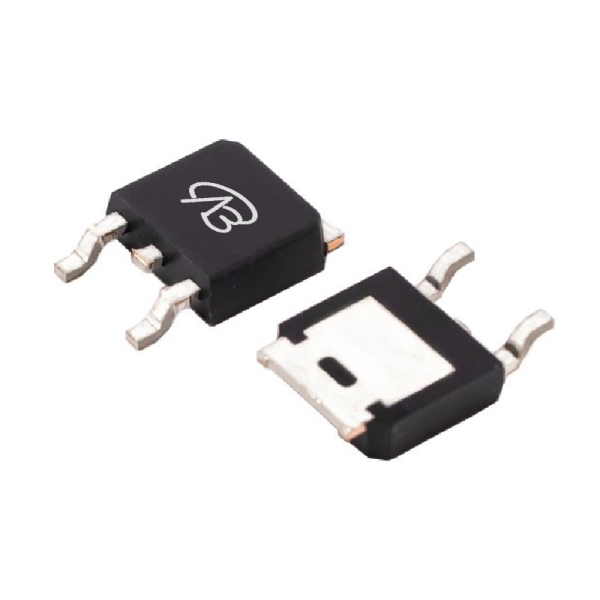
Comparative Analysis: IRFR220NTRPBF (200V N-channel) vs. VBE1203M
Analysis of the Original Model (IRFR220NTRPBF) Core:
This is a 200V N-channel MOSFET from Infineon in a TO-252 (DPAK) package. Its design core is to provide a robust and cost-effective solution for medium-voltage switching. Key advantages are: a high drain-source voltage rating of 200V, suitable for off-line or bus applications, and a continuous drain current of 5A. Its on-resistance is 600mΩ at 10V gate drive.
Compatibility and Differences of the Domestic Alternative (VBE1203M):
VBsemi's VBE1203M is also offered in a TO-252 package and serves as a pin-to-pin compatible alternative. The main differences are in electrical parameters: VBE1203M matches the 200V voltage rating but offers significantly improved performance. It features a much lower on-resistance of 245mΩ at 10V and a higher continuous current rating of 10A.
Key Application Areas:
Original Model IRFR220NTRPBF: Suitable for applications requiring a 200V rating with moderate current, such as:
Off-line switch-mode power supplies (SMPS) in auxiliary circuits.
Relay or solenoid drivers in industrial controls.
Low-power motor drives or inverter circuits.
Alternative Model VBE1203M: Ideal for upgraded scenarios within the same voltage class that demand lower conduction loss and higher current capability. It is a strong candidate for replacing the original in designs seeking higher efficiency or needing to handle currents beyond 5A.
Comparative Analysis: BSC155N06ND (Dual 60V N-channel) vs. VBQA3615
This dual N-channel MOSFET is designed for applications requiring high current density and efficient switching in a compact footprint.
Analysis of the Original Model (BSC155N06ND) Core:
This Infineon part integrates two N-channel MOSFETs in a TDSON-8-EP (5x6) package. Its core advantages are:
Dual-Die Integration: Saves board space in synchronous rectification or half-bridge configurations.
Good Balance of RDS(on) and Current: Features an on-resistance of 15.5mΩ per channel at 10V (for 17A) and a continuous current rating of 20A per channel.
Optimized for Switching: Designed as a fast-switching MOSFET, suitable for high-frequency DC-DC applications.
Compatibility and Differences of the Domestic Alternative (VBQA3615):
VBsemi's VBQA3615 is a direct alternative in a DFN8(5x6) package. It represents a significant "performance-enhanced" option:
It matches the 60V voltage rating.
It offers dramatically lower on-resistance: 11mΩ at 10V gate drive.
It provides a much higher continuous drain current rating of 40A.
Key Application Areas:
Original Model BSC155N06ND: An excellent choice for space-constrained, efficiency-focused medium-power applications, such as:
Synchronous rectification in 12V/24V input DC-DC converters (buck, boost).
Motor drive circuits for robotics, fans, or small tools.
Power management in computing and telecom boards.
Alternative Model VBQA3615: Suited for upgrade scenarios demanding the utmost in current handling and minimal conduction loss. It is ideal for next-generation DC-DC converters with higher output current or for driving more powerful motors, offering a substantial margin for improved thermal performance and efficiency.
Conclusion
This analysis reveals two distinct selection paths:
For 200V N-channel applications, the original IRFR220NTRPBF provides a reliable, standard solution. Its domestic alternative VBE1203M offers a compelling upgrade with significantly lower RDS(on) and higher current capability, enabling higher efficiency designs as a drop-in replacement.
For compact, dual 60V N-channel applications, the original BSC155N06ND delivers a proven balance of integration and performance. The domestic alternative VBQA3615 provides a major performance boost with ultra-low RDS(on) and high current rating, making it a powerful option for pushing power density and efficiency limits.
The core takeaway is that selection depends on precise requirement matching. In the context of supply chain diversification, domestic alternatives like VBE1203M and VBQA3615 not only provide viable backup options but also offer parameter advancements, giving engineers greater flexibility and resilience in design trade-offs and cost control. Understanding each device's design philosophy and parameter implications is key to maximizing its value in the circuit.

Download PDF document
 Download now


