 中文
中文 English
MOSFET Selection for Industrial and Power Applications: IRFI1310NPBF, IRF640NSTRLPBF vs. China Alternatives VBMB1104N, VBL1203M
Number of views:9999
 Back to previous page
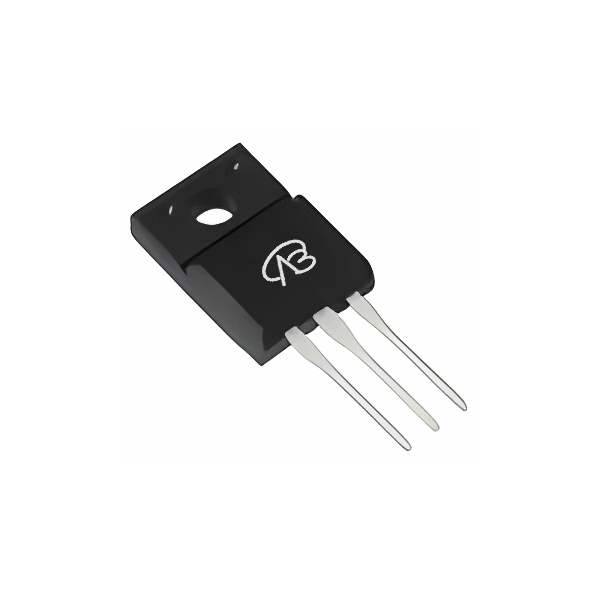
Comparative Analysis: IRFI1310NPBF (N-channel) vs. VBMB1104N
Analysis of the Original Model (IRFI1310NPBF) Core:
This is a 100V N-channel MOSFET from Infineon in a TO-220F package. Its design core is to provide a reliable balance of voltage, current, and conduction loss for general-purpose industrial applications. Key advantages are: a drain-source voltage (Vdss) of 100V, a continuous drain current (Id) of 24A, and an on-resistance (RDS(on)) of 36mΩ at 10V gate drive. This combination makes it a solid choice for various medium-power switching tasks.
Compatibility and Differences of the Domestic Alternative (VBMB1104N):
VBsemi's VBMB1104N is a direct pin-to-pin compatible alternative in the same TO-220F package. The key differences are in electrical parameters: VBMB1104N offers a similar 100V voltage rating but significantly outperforms the original in current handling and conduction loss. It features a higher continuous drain current of 50A and a lower on-resistance of 34mΩ at 10V.
Key Application Areas:
Original Model IRFI1310NPBF: Well-suited for a wide range of 100V-class applications requiring dependable performance, such as:
Motor drives and controls (e.g., for fans, pumps).
Switch-mode power supplies (SMPS) and DC-DC converters.
General-purpose industrial switching and solenoid drivers.
Alternative Model VBMB1104N: An excellent "performance-enhanced" drop-in replacement. Its lower RDS(on) and higher current rating make it ideal for applications demanding higher efficiency, lower thermal dissipation, or a margin for higher load currents within the same voltage range. Suitable for upgrades in motor drives, power supplies, or any circuit where reduced conduction loss is critical.
Comparative Analysis: IRF640NSTRLPBF (N-channel) vs. VBL1203M
This comparison focuses on higher voltage applications, where the design pursuit shifts towards balancing voltage withstand capability with acceptable conduction loss.
Analysis of the Original Model (IRF640NSTRLPBF) Core:
This Infineon MOSFET in a D2PAK (TO-263) package is designed for higher voltage switching. Its core advantages are a high drain-source voltage (Vdss) of 200V, a continuous drain current (Id) of 18A, and an on-resistance of 150mΩ at 10V. The D2PAK package offers good power dissipation capability for its power level.
Compatibility and Differences of the Domestic Alternative (VBL1203M):
VBsemi's VBL1203M is offered in a TO-263 package, which is typically compatible with D2PAK footprints. The electrical parameters show a different performance orientation: VBL1203M matches the 200V voltage rating but is designed for a different current segment. It has a lower continuous drain current (10A) and a higher on-resistance (300mΩ at 10V) compared to the original.
Key Application Areas:
Original Model IRF640NSTRLPBF: Its 200V rating and 18A current capability make it suitable for higher voltage, medium-current applications, such as:
Power supplies for 110VAC/220VAC offline systems (e.g., PFC stages, inverter circuits).
Industrial motor drives operating at higher bus voltages.
UPS (Uninterruptible Power Supply) and welding equipment power stages.
Alternative Model VBL1203M: This alternative is more suitable for application scenarios within the 200V range where the required continuous current is lower (around 10A or less). It can serve as a cost-effective option in circuits where the full current capability of the original part is not utilized, provided the higher conduction loss is acceptable for the thermal design.
Conclusion:
This analysis reveals two distinct selection and replacement strategies:
1. For 100V-class, medium-current applications, the original IRFI1310NPBF is a reliable workhorse. Its domestic alternative VBMB1104N presents a compelling "drop-in upgrade," offering lower conduction loss and higher current capacity, which can lead to efficiency gains and thermal improvements in existing designs.
2. For 200V-class applications, the original IRF640NSTRLPBF targets a specific niche of medium-power, higher-voltage switching. Its domestic alternative VBL1203M caters to a different point in the design space—prioritizing the 200V rating for lower-current circuits, potentially offering a cost-saving solution where specifications align.
The core takeaway is that selection must be requirement-driven. In the context of supply chain diversification, domestic alternatives like VBMB1104N and VBL1203M provide valuable options, offering either performance enhancement or cost-optimized compatibility. Understanding the specific parameter needs of your application—voltage, current, loss, and thermal constraints—is essential to leveraging these alternatives effectively and building more resilient designs.

Download PDF document
 Download now


