 中文
中文 English
MOSFET Selection for High-Power & High-Voltage Applications: IRFB7430PBF, IPW60R160C6 vs. China Alternatives VBM1603, VBP165R47S
Number of views:9999
 Back to previous page
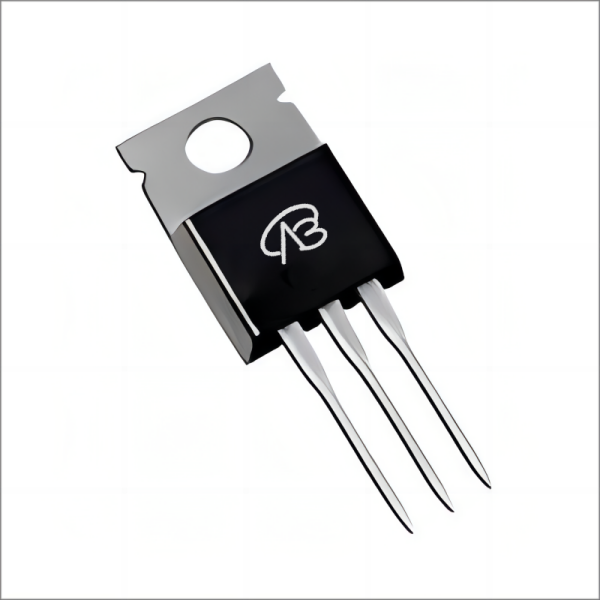
Comparative Analysis: IRFB7430PBF (Low-Voltage High-Current N-channel) vs. VBM1603
Analysis of the Original Model (IRFB7430PBF) Core:
This is a 40V N-channel MOSFET from Infineon in a standard TO-220AB package. Its design core is to deliver extremely high current capability with very low conduction loss in a cost-effective, widely-used package. The key advantages are: a massive continuous drain current rating of 195A and a very low on-resistance of 1.3mΩ (measured at 10V, 100A). This combination makes it a powerhouse for switching high currents with minimal power dissipation.
Compatibility and Differences of the Domestic Alternative (VBM1603):
VBsemi's VBM1603 offers a pin-to-pin compatible alternative in the same TO-220 package. The main differences lie in the electrical parameters: VBM1603 has a higher voltage rating (60V vs. 40V), providing a greater safety margin. Its on-resistance is slightly higher at 3mΩ (@10V) compared to the original's 1.3mΩ, but it still maintains an excellent high-current capability of 210A. The gate threshold voltage is compatible at 3V.
Key Application Areas:
Original Model IRFB7430PBF: Its ultra-low RDS(on) and very high current rating make it ideal for high-current, low-voltage switching applications.
High-Current DC-DC Converters: Synchronous rectification or main switches in server power supplies, telecom rectifiers.
Motor Drives & Controllers: For driving large brushed/BLDC motors in industrial equipment, e-bikes, or power tools.
Battery Protection/Management Systems (BMS): As a discharge switch in high-current lithium battery packs.
Alternative Model VBM1603: A suitable alternative for applications requiring a higher voltage margin (up to 60V) while still demanding very high current (210A) and low conduction loss. It is a robust choice for upgrades or new designs where supply chain diversification is needed.
Comparative Analysis: IPW60R160C6 (High-Voltage Super Junction N-channel) vs. VBP165R47S
This comparison shifts focus to high-voltage switching efficiency. The original model is part of Infineon's revolutionary CoolMOS C6 series, based on the Super Junction (SJ) principle.
Analysis of the Original Model (IPW60R160C6) Core:
Housed in a TO-247 package, this 650V MOSFET is engineered for high-efficiency switching. Its core advantages are:
Advanced Super Junction Technology: Enables fast switching with low switching and conduction losses, leading to cooler, more compact, and lighter power systems.
Balanced Performance: With an RDS(on) of 160mΩ (@10V) and a continuous current of 23.8A, it offers a good balance for medium-power off-line applications.
Compatibility and Differences of the Domestic Alternative (VBP165R47S):
VBsemi's VBP165R47S represents a significant "performance-enhanced" alternative in the same TO-247 footprint. It matches the 650V voltage rating but offers substantially improved key parameters:
Much Lower Conduction Loss: RDS(on) is drastically reduced to 50mΩ (@10V) compared to the original's 160mΩ.
Higher Current Handling: Continuous drain current is doubled to 47A versus 23.8A.
Similar Technology: It utilizes a Multi-EPI Super Junction structure, designed for fast switching and high efficiency.
Key Application Areas:
Original Model IPW60R160C6: An excellent choice for efficient, fast-switching applications in medium-power off-line systems.
Switched-Mode Power Supplies (SMPS): PFC stages, flyback/forward converters in industrial and computing power supplies.
Solar Inverters: For low to medium power photovoltaic applications.
Motor Drives: For inverter stages in appliance and industrial motor controls.
Alternative Model VBP165R47S: Ideal for upgraded or new designs where significantly lower conduction loss, higher current capability, and greater power density are required. It is perfectly suited for next-generation, higher-efficiency:
High-Performance Server/Telecom PSUs
High-Power Density Solar Microinverters
Efficient Industrial Motor Drives
Conclusion
In summary, this analysis reveals two distinct selection pathways based on voltage and performance needs:
For high-current, low-voltage (≤60V) applications, the original IRFB7430PBF sets a high standard with its 195A current and ultra-low 1.3mΩ RDS(on). The domestic alternative VBM1603 provides a viable, pin-compatible option with a higher voltage rating (60V) and even greater current capability (210A), making it a strong candidate for designs prioritizing current headroom and voltage margin.
For high-voltage (650V) switching applications, the original IPW60R160C6 offers proven Super Junction performance for efficient operation. However, the domestic alternative VBP165R47S delivers a remarkable performance leap, with its 50mΩ RDS(on) and 47A current rating enabling substantially lower losses and higher power throughput in the same package, opening doors to more efficient and compact high-voltage designs.
The core conclusion is: Selection is not about absolute superiority, but precise requirement matching. In an era of supply chain diversification, domestic alternatives like VBM1603 and VBP165R47S not only provide reliable backup options but also offer compelling performance advantages in key parameters. This gives engineers greater flexibility, resilience, and potential for performance uplift in their power design trade-offs and cost optimization strategies. Understanding the design philosophy and parameter implications of each device is essential to unlocking its full potential in your circuit.

Download PDF document
 Download now


