 中文
中文 English
MOSFET Selection for High-Power & High-Frequency Applications: IRFB4615PBF, BSC0805LS vs. China Alternatives VBM1154N, VBGQA1105
Number of views:9999
 Back to previous page
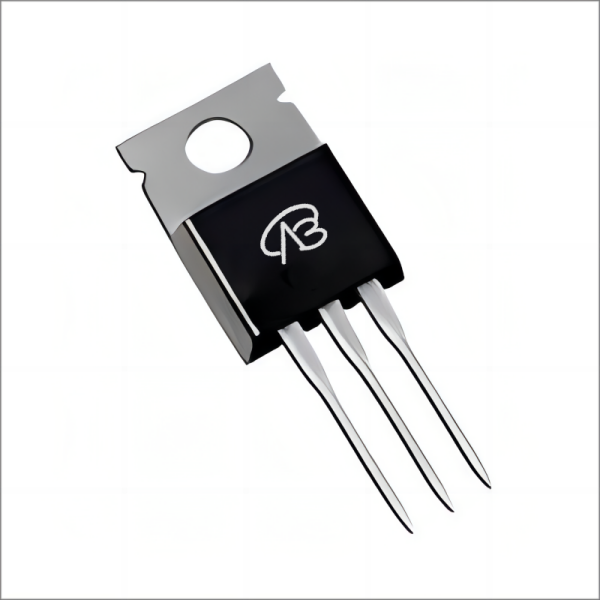
Comparative Analysis: IRFB4615PBF (TO-220 N-Channel) vs. VBM1154N
Analysis of the Original Model (IRFB4615PBF) Core:
This is a 150V N-channel MOSFET from Infineon in a standard TO-220AB package. Its design core focuses on high-voltage robustness and reliability in demanding applications. Key advantages include: a drain-source voltage (Vdss) of 150V, continuous drain current (Id) of 35A, and an on-resistance (RDS(on)) of 32mΩ at 10V gate drive. It features a high power dissipation (Pd) of 144W, supported by the TO-220 package's excellent thermal capability. Its enhanced characteristics include improved gate handling, avalanche ruggedness, dynamic dV/dt capability, and a fully characterized safe operating area (SOA).
Compatibility and Differences of the Domestic Alternative (VBM1154N):
VBsemi's VBM1154N is also offered in a TO-220 package and serves as a direct pin-to-pin compatible alternative. The key differences lie in electrical parameters: VBM1154N matches the 150V voltage rating but offers a significantly higher continuous current of 50A and a slightly lower on-resistance of 30mΩ at 10V. This indicates a potential performance upgrade in conduction loss and current handling within the same form factor.
Key Application Areas:
Original Model IRFB4615PBF: Its high voltage rating, ruggedness, and good power dissipation make it ideal for robust, high-power applications.
Efficient Synchronous Rectification in Switch-Mode Power Supplies (SMPS): Especially in units with higher voltage rails.
Uninterruptible Power Supplies (UPS): Where reliability and avalanche capability are crucial.
Industrial Power Controls: Applications requiring characterized SOA and durable operation.
Alternative Model VBM1154N: Suitable for applications requiring similar or higher current capability than the original, with potentially lower conduction loss. It is an excellent upgrade or direct replacement for designs using IRFB4615PBF, especially where efficiency or current margin is a priority.
Comparative Analysis: BSC0805LS (TDSON-8 N-Channel) vs. VBGQA1105
This comparison shifts focus to high-current, high-frequency applications where low on-resistance and compact packaging are paramount.
Analysis of the Original Model (BSC0805LS) Core:
This is a 100V N-channel MOSFET from Infineon in a thermally enhanced TDSON-8 (5x6) package. Its design is optimized for high-performance switching, particularly in synchronous rectification. Core advantages include:
High Current Density: Continuous drain current (Id) of 61A in a compact footprint.
Optimized for SMPS: 100% avalanche tested and features excellent thermal resistance for its size.
Logic Level: Compatible with lower drive voltages for easier gate driving.
Eco-Friendly: Halogen-free according to IEC61249-2-21 and RoHS compliant.
Compatibility and Differences of the Domestic Alternative (VBGQA1105):
VBsemi's VBGQA1105, in a DFN8(5x6) package, is a form-factor compatible alternative that delivers substantial performance enhancement. It matches the 100V voltage rating but dramatically increases the continuous current to 105A and reduces the on-resistance to an ultra-low 5.6mΩ at 10V gate drive. This represents a major leap in current capability and conduction efficiency.
Key Application Areas:
Original Model BSC0805LS: Its high current density and switching optimization make it a top choice for space-constrained, high-frequency power supplies.
Synchronous Rectification in High-Current SMPS: Such as server power supplies, telecom rectifiers.
High-Frequency DC-DC Converters: Where fast switching and good thermal performance in a small package are needed.
Alternative Model VBGQA1105: Is ideal for next-generation designs or upgrades demanding the highest possible current handling and lowest conduction loss in a similar package. It targets applications like:
Ultra-High-Censity DC-DC Converters: For computing, networking, and storage.
Motor Drives requiring Minimal Losses: In compact form factors.
Power Stages where Efficiency is Critical.
Conclusion
In summary, this analysis reveals two distinct selection and upgrade paths:
For high-voltage, high-power applications using the TO-220 package, the original IRFB4615PBF offers proven ruggedness and reliability at 150V/35A. Its domestic alternative, VBM1154N, provides a compelling upgrade path with higher current (50A) and lower on-resistance (30mΩ), making it an excellent choice for enhancing efficiency or current headroom in existing or new designs.
For high-current, high-frequency applications using a compact TDSON-8/DFN8 package, the original BSC0805LS sets a high standard with 100V/61A capability. The domestic alternative VBGQA1105 pushes the boundaries further, offering a dramatic performance boost to 105A continuous current and an ultra-low 5.6mΩ RDS(on), making it a superior choice for maximizing power density and minimizing losses in advanced SMPS and DC-DC designs.
The core takeaway is that selection is driven by precise application requirements. In the context of supply chain diversification, domestic alternatives like VBM1154N and VBGQA1105 not only provide reliable backup options but also offer significant performance enhancements in key parameters. This gives engineers greater flexibility, resilience, and potential for optimization in their design trade-offs and cost-control strategies. Understanding the design philosophy and parameter implications of each device is essential to unlocking its full value in the circuit.

Download PDF document
 Download now


