 中文
中文 English
MOSFET Selection for High-Power and High-Voltage Applications: IRFB4310PBF, BSP129H6327 vs. China Alternatives VBM1105, VBJ125N5K
Number of views:9999
 Back to previous page
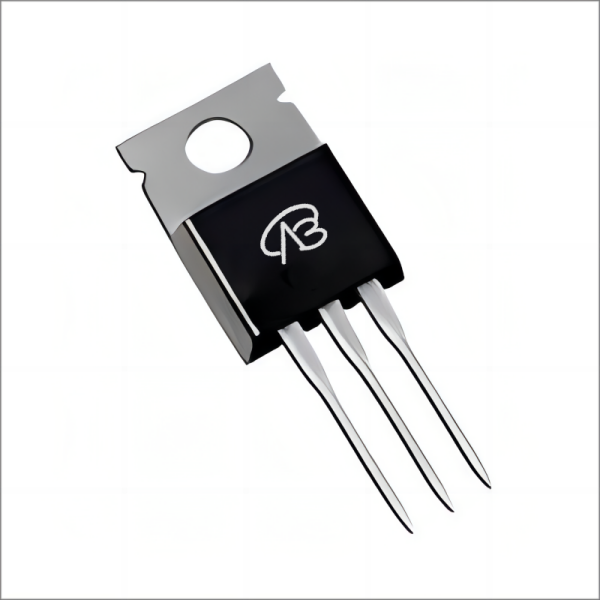
Comparative Analysis: IRFB4310PBF (High-Current N-channel) vs. VBM1105
Analysis of the Original Model (IRFB4310PBF) Core:
This is a 100V N-channel MOSFET from Infineon in a TO-220AB package. Its design core is to achieve high efficiency and high reliability in high-current switching applications. Key advantages include: a low on-resistance of 5.6mΩ at a 10V drive voltage (tested at 75A), and a high continuous drain current of 130A. It features enhanced ruggedness with improvements in gate handling, avalanche capability, and dynamic dV/dt tolerance. The device is fully characterized for capacitance and avalanche safe operating area (SOA), and boasts enhanced body diode dV/dt and di/dt capability.
Compatibility and Differences of the Domestic Alternative (VBM1105):
VBsemi's VBM1105 is offered in a TO-220 package and serves as a functional pin-compatible alternative. The key parameters show strong alignment: both are 100V, Single N-channel devices. VBM1105 specifies an on-resistance (RDS(on)) of 5mΩ at 10V and a continuous current (Id) of 120A, which is highly comparable to the original part's 5.6mΩ and 130A.
Key Application Areas:
Original Model IRFB4310PBF: Its characteristics make it exceptionally suitable for high-power, high-efficiency switching applications. Typical uses include:
High-efficiency synchronous rectification in switching power supplies.
Power stages in Uninterruptible Power Supplies (UPS).
Motor drives and inverter circuits requiring high current handling.
Alternative Model VBM1105: With its very similar electrical characteristics, it is well-suited as a direct replacement in the same high-current applications, such as synchronous rectification and UPS systems, offering a viable domestic alternative.
Comparative Analysis: BSP129H6327 (High-Voltage N-channel) vs. VBJ125N5K
This comparison shifts focus to high-voltage, low-current applications where space is often constrained, and voltage rating is paramount.
Analysis of the Original Model (BSP129H6327) Core:
This is a 240V N-channel MOSFET from Infineon in a compact SOT-223 package. Its design pursues high-voltage switching capability in a minimal footprint. Core specifications include a drain-source voltage (Vdss) of 240V, a continuous drain current (Id) of 350mA, and an on-resistance of 6Ω at 10V.
Compatibility and Differences of the Domestic Alternative (VBJ125N5K):
VBsemi's VBJ125N5K comes in an SOT-223 package, offering direct pin-to-pin compatibility. It provides a higher voltage rating of 250V compared to the original's 240V. Its specified continuous current is 0.3A (300mA), and the on-resistance is 1500mΩ (1.5Ω) at 10V. While the on-resistance is higher, the alternative offers a slightly higher voltage margin which may be beneficial in some designs.
Key Application Areas:
Original Model BSP129H6327: Ideal for compact circuits requiring high-voltage blocking capability at relatively low currents. Potential applications include:
Auxiliary power switches in offline power supplies.
Signal level switching or isolation in high-voltage sensing circuits.
Low-power motor control or relay driving in high-voltage environments.
Alternative Model VBJ125N5K: Suitable as a replacement in similar high-voltage, low-current applications where the SOT-223 footprint is required, and the specific parameters of 250V/0.3A/1.5Ω meet the circuit needs.
Conclusion
In summary, this analysis reveals two distinct selection paths based on application needs:
For high-current, high-power applications like synchronous rectification in SMPS or UPS systems, the original IRFB4310PBF, with its robust 130A current rating, low 5.6mΩ on-resistance, and enhanced ruggedness features, sets a high-performance benchmark. Its domestic alternative VBM1105 presents a compelling option with nearly identical key specs (120A, 5mΩ), offering a viable and potentially cost-effective alternative for these demanding circuits.
For high-voltage, low-current applications in space-constrained designs, the original BSP129H6327 provides a reliable 240V solution in a SOT-223 package. The domestic alternative VBJ125N5K offers a similar form factor with a slightly higher 250V rating, serving as a compatible replacement where its specific electrical characteristics align with the design requirements.
The core takeaway is that selection hinges on precise requirement matching. In the context of supply chain diversification, domestic alternatives like VBM1105 and VBJ125N5K not only provide feasible backup options but also demonstrate competitive or tailored specifications, granting engineers greater flexibility and resilience in design trade-offs and cost management. Understanding the design intent and parameter implications of each device is key to unlocking its full value within your circuit.

Download PDF document
 Download now


