 中文
中文 English
MOSFET Selection for Medium to High Power Applications: IRFB4020PBF, IRFS3206TRRPBF vs. China Alternatives VBM1208N, VBL1603
Number of views:9999
 Back to previous page
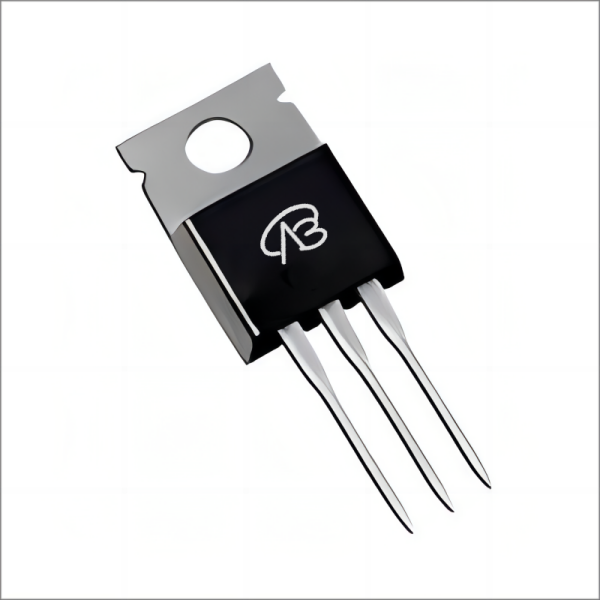
Comparative Analysis: IRFB4020PBF (N-channel) vs. VBM1208N
Analysis of the Original Model (IRFB4020PBF) Core:
This is a 200V N-channel MOSFET from Infineon in a standard TO-220AB package. Its design core is to provide robust performance and reliable power handling in medium-voltage applications. Key advantages include: a high drain-source voltage (Vdss) of 200V, a continuous drain current (Id) of 18A, and a low on-resistance (RDS(on)) of 80mΩ (typical @10V gate drive). Its classic TO-220 package offers good thermal dissipation for power applications.
Compatibility and Differences of the Domestic Alternative (VBM1208N):
VBsemi's VBM1208N is a pin-to-pin compatible alternative in the same TO-220 package. The main differences are in the electrical parameters: while both share the same 200V voltage rating, the VBM1208N offers significantly better performance. It features a much lower on-resistance of 58mΩ (@10V) and a higher continuous current rating of 35A compared to the original model.
Key Application Areas:
Original Model IRFB4020PBF: Its 200V rating and 18A current capability make it suitable for various medium-power switching applications, such as:
Power supplies and inverters.
Motor drives and controls.
Industrial switching circuits.
Alternative Model VBM1208N: With its superior 35A current rating and lower 58mΩ on-resistance, it is an excellent performance-enhanced drop-in replacement. It is better suited for applications requiring higher efficiency, lower conduction losses, or an upgrade path within the same 200V systems, potentially allowing for more compact designs or handling higher loads.
Comparative Analysis: IRFS3206TRRPBF (N-channel) vs. VBL1603
This comparison focuses on high-current, low-voltage switching applications where ultra-low on-resistance is paramount.
Analysis of the Original Model (IRFS3206TRRPBF) Core:
This Infineon MOSFET in a D2PAK package is engineered for high-efficiency, high-current switching. Its core advantages are:
Exceptional Current Handling: A very high continuous drain current rating of 210A.
Ultra-Low Conduction Loss: An extremely low on-resistance of 3mΩ (@10V gate drive).
Robust Design: Features like improved gate robustness, avalanche and dynamic dV/dt ruggedness, and an enhanced body diode make it reliable for demanding applications like synchronous rectification.
Compatibility and Differences of the Domestic Alternative (VBL1603):
VBsemi's VBL1603, also in a TO-263 (D2PAK compatible) package, presents itself as a direct and highly competitive alternative. It matches the original's key specs: a 60V voltage rating, a 210A continuous current rating, and a nearly identical ultra-low on-resistance of 3.2mΩ (@10V). It also offers a low RDS(on) of 12mΩ at a 4.5V gate drive, beneficial for lower voltage drive scenarios.
Key Application Areas:
Original Model IRFS3206TRRPBF: Its ultra-low RDS(on) and high current capability make it ideal for high-efficiency, high-power density applications:
Synchronous rectification in switch-mode power supplies (SMPS).
Uninterruptible Power Supplies (UPS).
High-current DC-DC converters and motor drives.
Alternative Model VBL1603: As a parameter-matched alternative, it is suitable for the same demanding high-current, low-loss applications. It provides a viable domestic source for designs requiring 60V, 200A+ switching with minimal conduction voltage drop.
Conclusion:
This analysis reveals two distinct selection narratives:
1. For 200V medium-power applications, the domestic alternative VBM1208N offers a compelling performance upgrade over the classic IRFB4020PBF, providing significantly lower on-resistance and higher current capability in the same package, enabling higher efficiency or power density.
2. For 60V ultra-high-current applications, the domestic alternative VBL1603 serves as a highly competitive, parameter-matched substitute for the IRFS3206TRRPBF, offering equivalent current handling and similarly ultra-low on-resistance for critical synchronous rectification and high-power switching roles.
The core takeaway is that selection is driven by precise requirement matching. In the context of supply chain diversification, these domestic alternatives not only provide reliable backup options but also demonstrate competitive or superior performance in key parameters. This gives engineers greater flexibility and resilience in design trade-offs, cost optimization, and sourcing strategies. A deep understanding of each device's specifications ensures its value is fully realized within the target circuit.

Download PDF document
 Download now


