 中文
中文 English
MOSFET Selection for High-Power Switching Applications: IRFB3207PBF, IPP032N06N3G vs. China Alternatives VBM1803, VBM1603
Number of views:9999
 Back to previous page
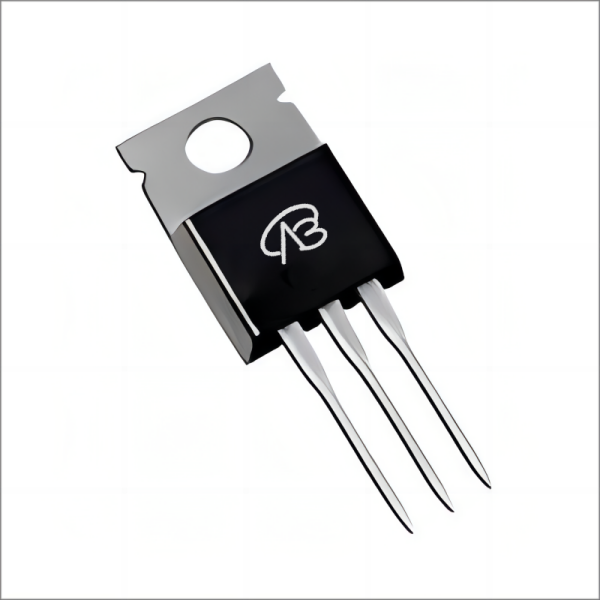
Comparative Analysis: IRFB3207PBF (N-channel) vs. VBM1803
Analysis of the Original Model (IRFB3207PBF) Core:
This is a 75V N-channel MOSFET from Infineon in a TO-220AB package. Its design core is to deliver high current capability with low conduction loss in standard power packages. Key advantages are: a high continuous drain current rating of 180A and a low on-resistance of 4.5mΩ at a 10V gate drive. This combination makes it suitable for applications requiring high power throughput.
Compatibility and Differences of the Domestic Alternative (VBM1803):
VBsemi's VBM1803 is a direct pin-to-pin compatible alternative in a TO-220 package. The key differences are in electrical parameters: VBM1803 offers a slightly higher voltage rating (80V vs. 75V) and a significantly higher continuous current rating of 195A. Crucially, its on-resistance is lower, at 3mΩ @10V (compared to 4.5mΩ), promising reduced conduction losses.
Key Application Areas:
Original Model IRFB3207PBF: Ideal for high-current switching applications up to 180A in 48V-75V systems, such as motor drives, uninterruptible power supplies (UPS), and high-power DC-DC converters where low RDS(on) is critical for efficiency.
Alternative Model VBM1803: Suited as a performance-enhanced replacement in applications requiring higher current capacity (up to 195A), lower conduction loss (3mΩ), and a slightly higher voltage margin. It's an excellent choice for upgrading existing designs or for new high-power motor controllers and power supplies.
Comparative Analysis: IPP032N06N3G (N-channel) vs. VBM1603
This comparison focuses on MOSFETs optimized for high-frequency switching and efficiency, particularly in DC-DC conversion.
Analysis of the Original Model (IPP032N06N3G) Core:
This 60V N-channel MOSFET from Infineon uses a TO-220-3 package and is engineered for high-frequency operation and synchronous rectification. Its core advantages are:
Excellent Switching Figure of Merit (FOM): Optimized for low gate charge and low on-resistance, minimizing switching and conduction losses.
Very Low On-Resistance: At 2.3mΩ @10V, it ensures minimal conduction loss.
High Current Capability: A continuous drain current of 120A supports substantial power handling.
Compatibility and Differences of the Domestic Alternative (VBM1603):
VBsemi's VBM1603 is a direct pin-to-pin compatible alternative. It presents a significant performance enhancement in key areas: it supports a much higher continuous current of 210A (vs. 120A) while maintaining a very low on-resistance of 3mΩ @10V. Its gate threshold voltage is compatible at 3V.
Key Application Areas:
Original Model IPP032N06N3G: An ideal "efficiency-first" choice for high-frequency switching applications like synchronous rectification in server/telecom power supplies, high-efficiency DC-DC converters (buck/boost), and motor drives where excellent FOM is crucial.
Alternative Model VBM1603: Suited for upgraded scenarios demanding dramatically higher current capability (210A) while maintaining low conduction loss. It is perfect for next-generation, high-power-density DC-DC converters, high-current motor drives, and applications where thermal performance and efficiency margins are paramount.
Conclusion
In summary, this analysis reveals two distinct selection paths for high-power applications:
For standard high-current switching needs, the original IRFB3207PBF offers a proven solution with 180A capability and 4.5mΩ RDS(on). Its domestic alternative VBM1803 provides a compelling upgrade with higher current (195A), lower resistance (3mΩ), and a higher voltage rating (80V), making it a superior choice for new designs or replacements seeking higher performance.
For high-frequency, high-efficiency applications, the original IPP032N06N3G excels with its optimized FOM, 120A current, and ultra-low 2.3mΩ RDS(on). The domestic alternative VBM1603 delivers a substantial performance boost, offering a remarkable 210A current rating with a still-very-low 3mΩ RDS(on), enabling more powerful and efficient designs.
The core conclusion is that selection hinges on precise requirement matching. In the context of supply chain diversification, these domestic alternatives (VBM1803, VBM1603) not only provide reliable, pin-compatible replacements but also offer significant performance enhancements in key parameters. This gives engineers greater flexibility and resilience in design trade-offs, cost control, and achieving higher power density.

Download PDF document
 Download now


