 中文
中文 English
MOSFET Selection for High-Power Switching: IRFB260NPBF, BSC520N15NS3G vs. China Alternatives VBM1204N and VBGQA1151N
Number of views:9999
 Back to previous page
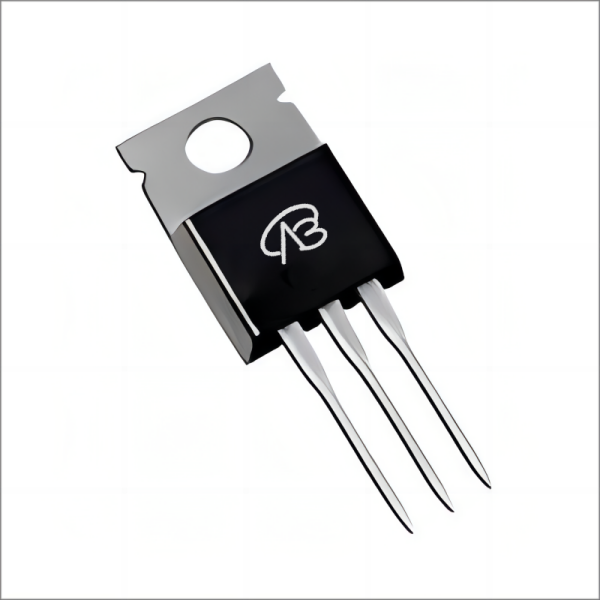
Comparative Analysis: IRFB260NPBF (N-channel) vs. VBM1204N
Analysis of the Original Model (IRFB260NPBF) Core:
This Infineon N-channel MOSFET in the TO-220AB package is a classic choice for high-current applications. Its design core is to deliver reliable power switching with a focus on high current capability and good thermal dissipation via the TO-220 package. Key advantages include a high continuous drain current rating of 56A, a drain-source voltage (Vdss) of 200V, and an on-resistance (RDS(on)) of 40mΩ at 10V gate drive. This combination makes it suitable for applications requiring substantial current handling in the 200V range.
Compatibility and Differences of the Domestic Alternative (VBM1204N):
VBsemi's VBM1204N is offered in the same TO-220 package, providing direct pin-to-pin and form-factor compatibility. The key electrical parameters are very similar: both are 200V, Single N-channel devices. The VBM1204N features a slightly higher RDS(on) of 46mΩ @10V and a rated continuous current of 50A, compared to the original's 40mΩ and 56A. This makes the VBM1204N a highly competitive alternative, offering nearly equivalent performance for most 200V applications with a marginal trade-off in conduction loss and peak current capacity.
Key Application Areas:
Original Model IRFB260NPBF: Ideal for high-current switching in 200V systems such as industrial motor drives, high-power DC-DC converters, UPS systems, and inverter circuits where its 56A rating and TO-220 thermal performance are key assets.
Alternative Model VBM1204N: Perfectly suited as a drop-in replacement for the IRFB260NPBF in the aforementioned 200V applications, especially where supply chain diversification, cost optimization, or local sourcing are priorities, with only a minor compromise on RDS(on) and current rating.
Comparative Analysis: BSC520N15NS3G (N-channel) vs. VBGQA1151N
This comparison shifts focus to a lower-voltage, high-efficiency N-channel MOSFET in a modern power package.
Analysis of the Original Model (BSC520N15NS3G) Core:
This Infineon MOSFET in the TDSON-8 (5x6) package is engineered for high efficiency and power density in medium-voltage applications. Its design pursues a balance of low conduction loss and good switching performance in a compact, thermally enhanced package. Core advantages include a Vdss of 150V, a continuous current (Id) of 21A, and an RDS(on) of 52mΩ at 10V gate drive.
Compatibility and Differences of the Domestic Alternative (VBGQA1151N):
VBsemi's VBGQA1151N, in a compatible DFN8(5x6) package, represents a significant performance-enhanced alternative. While both are 150V N-channel devices, the VBGQA1151N dramatically outperforms the original in key metrics: it boasts a much lower RDS(on) of 13.5mΩ @10V and a substantially higher continuous current rating of 70A. This indicates vastly superior conduction performance and current-handling capability.
Key Application Areas:
Original Model BSC520N15NS3G: Suitable for medium-power 150V applications like switch-mode power supplies (SMPS), motor control, and DC-DC conversion where its 21A rating and 52mΩ RDS(on) meet standard requirements.
Alternative Model VBGQA1151N: An excellent upgrade choice for applications demanding much higher efficiency and power density. Its ultra-low 13.5mΩ RDS(on) minimizes conduction losses, and its 70A current rating provides a large margin. It is ideal for next-generation high-efficiency 150V systems, including advanced SMPS, high-current motor drives, and high-density power converters.
Conclusion
This analysis reveals two distinct selection narratives:
For 200V, high-current applications using the TO-220 package, the original IRFB260NPBF offers proven performance with 56A capability. Its domestic alternative, the VBM1204N, serves as a highly viable, pin-compatible substitute with very similar specifications (50A, 46mΩ), making it a strong candidate for sourcing flexibility and cost-sensitive designs.
For 150V applications where efficiency and power density are paramount, the original BSC520N15NS3G provides a solid solution. However, its domestic alternative, the VBGQA1151N, emerges as a clear performance leader. With its drastically lower on-resistance (13.5mΩ vs. 52mΩ) and much higher current rating (70A vs. 21A), it enables significant efficiency gains, higher power throughput, and cooler operation in the same package footprint.
The core takeaway is that selection is driven by precise application needs. In the landscape of supply chain diversification, domestic alternatives like VBM1204N and VBGQA1151N not only provide reliable backup options but can also offer compelling performance advantages or cost benefits, granting engineers greater flexibility and resilience in their power design choices.

Download PDF document
 Download now


