 中文
中文 English
MOSFET Selection for Automotive and Power Systems: IRF8113TRPBF, IAUC64N08S5L075ATMA1 vs. China Alternatives VBA1303, VBQA1806
Number of views:9999
 Back to previous page
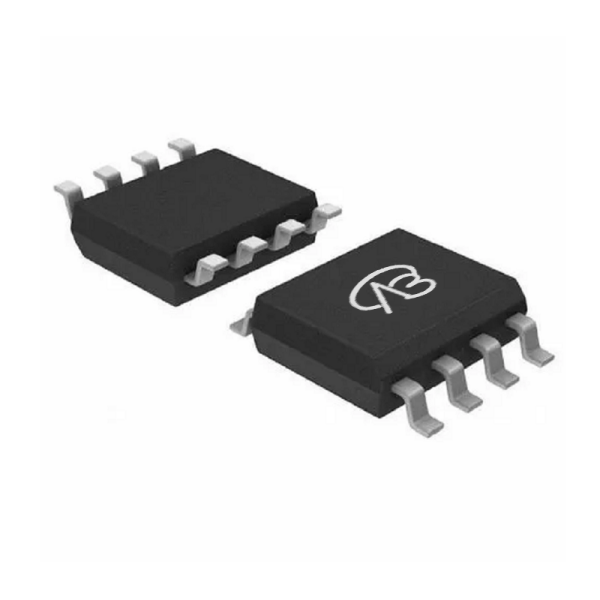
Comparative Analysis: IRF8113TRPBF (N-channel) vs. VBA1303
Analysis of the Original Model (IRF8113TRPBF) Core:
This is a 30V N-channel MOSFET from Infineon in a standard SO-8 package. Its design focuses on providing a robust balance of current handling and low on-resistance for general-purpose power switching. Key advantages include a continuous drain current (Id) of 17.2A and a low on-resistance of 5.6mΩ at a 10V gate drive. With an RDS(on) of 6.8mΩ at 4.5V/13.8A, it offers efficient performance for logic-level or standard drive applications.
Compatibility and Differences of the Domestic Alternative (VBA1303):
VBsemi's VBA1303 is offered in an SOP8 package and serves as a functional pin-to-pin compatible alternative. The key differences are in enhanced electrical parameters: VBA1303 features a lower on-resistance of 4mΩ at 10V and 5mΩ at 4.5V, outperforming the original part. It maintains the same 30V voltage rating and offers a comparable continuous current rating of 18A.
Key Application Areas:
Original Model IRF8113TRPBF: Well-suited for general-purpose DC-DC conversion, load switching, and motor control in 12V-24V systems where a standard SO-8 package and proven reliability are required. Common in power supplies, battery management, and industrial controls.
Alternative Model VBA1303: An excellent drop-in replacement offering lower conduction losses. Ideal for upgrading efficiency in existing designs or for new projects in similar applications—such as synchronous rectification in DC-DC converters or higher-efficiency load switches—where lower RDS(on) is beneficial.
Comparative Analysis: IAUC64N08S5L075ATMA1 (N-channel) vs. VBQA1806
This comparison shifts to automotive-grade, higher-power MOSFETs where robustness and high current capability are critical.
Analysis of the Original Model (IAUC64N08S5L075ATMA1) Core:
This is an 80V, AEC-Q101 qualified N-channel MOSFET from Infineon in a TDSON-8-33 package. Designed for demanding automotive applications, its core advantages include:
High Current Capability: A continuous drain current rating of 64A.
Low On-Resistance: 7.5mΩ at 10V gate drive, minimizing conduction losses.
Enhanced Robustness: Features include 100% avalanche testing, a wide operating temperature range up to 175°C, and logic-level drive capability.
Compatibility and Differences of the Domestic Alternative (VBQA1806):
VBsemi's VBQA1806, in a DFN8(5x6) package, presents a compelling performance-enhanced alternative. While the package differs, it targets similar high-power applications. Key parameter comparisons show VBQA1806 offers a lower on-resistance of 5mΩ at 10V and 7mΩ at 4.5V. It matches the 80V voltage rating and provides a high continuous current rating of 60A.
Key Application Areas:
Original Model IAUC64N08S5L075ATMA1: The definitive choice for automotive power systems requiring AEC-Q101 qualification. Typical applications include electric power steering (EPS), brake systems, engine management, and high-current DC-DC converters in 48V systems.
Alternative Model VBQA1806: A high-performance alternative suitable for applications demanding very low RDS(on) and high current in a compact DFN package. It is an excellent fit for high-efficiency power stages in industrial motor drives, server power supplies, or high-power DC-DC converters where automotive qualification is not mandatory but superior electrical performance is desired.
Conclusion
In summary, this analysis reveals two distinct selection pathways:
For standard 30V N-channel applications, the original IRF8113TRPBF offers a reliable, industry-standard solution in an SO-8 package. Its domestic alternative VBA1303 provides a direct-compatible option with measurably lower on-resistance, enabling efficiency improvements in upgrades or new designs without sacrificing footprint.
For high-power, 80V N-channel applications—particularly in automotive environments—the original IAUC64N08S5L075ATMA1 stands out with its AEC-Q101 qualification, high current rating, and proven robustness. The domestic alternative VBQA1806, while in a different package, offers superior on-resistance and high current capability, making it a powerful candidate for efficiency-critical industrial and power systems.
The core conclusion is that selection is not about absolute superiority but precise requirement matching. In an era of supply chain diversification, domestic alternatives like VBA1303 and VBQA1806 not only provide viable backup options but also deliver enhanced performance in key parameters. This gives engineers greater flexibility and resilience in design trade-offs and cost optimization. Understanding the design philosophy and parameter implications of each device is essential to unlocking its full potential within your circuit.

Download PDF document
 Download now


