 中文
中文 English
MOSFET Selection for Power Applications: IRF7854TRPBF, IPW65R110CFD7XKSA1 vs. China Alternatives VBA1806S, VBP165R20S
Number of views:9999
 Back to previous page
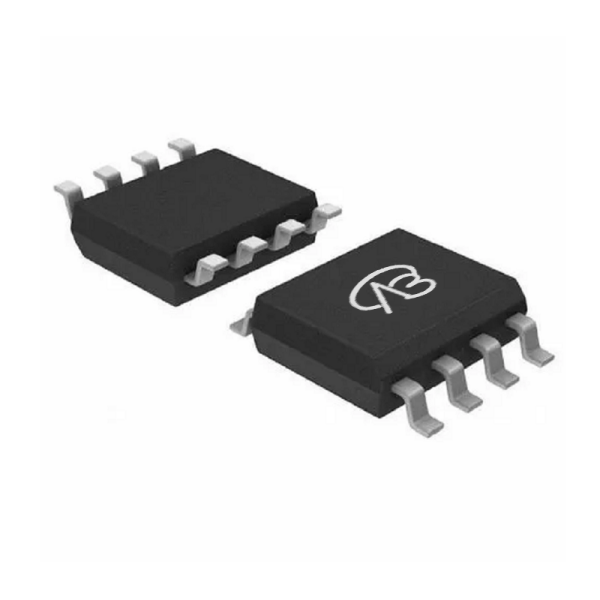
Comparative Analysis: IRF7854TRPBF (N-channel) vs. VBA1806S
Analysis of the Original Model (IRF7854TRPBF) Core:
This is an 80V N-channel MOSFET from Infineon in a standard SO-8 package. Its design core focuses on providing a reliable balance of voltage rating, current capability, and low conduction loss in a compact footprint. Key advantages include: a drain-source voltage (Vdss) of 80V, a continuous drain current (Id) of 10A, and a low on-resistance (RDS(on)) of 13.4mΩ at 10V gate drive. This combination makes it a robust choice for various medium-power switching applications.
Compatibility and Differences of the Domestic Alternative (VBA1806S):
VBsemi's VBA1806S is offered in a compatible SOP8 package and serves as a potential pin-to-pin alternative. The key differences are in the electrical parameters: VBA1806S matches the 80V voltage rating but offers significantly better performance in current handling and conduction resistance. It features a higher continuous drain current of 16A and a much lower RDS(on) of 5mΩ at 10V.
Key Application Areas:
Original Model IRF7854TRPBF: Its balanced 80V/10A profile with 13.4mΩ RDS(on) makes it suitable for a wide range of medium-power applications, such as:
DC-DC converters in 24V-48V systems.
Motor drives for small brushed DC or stepper motors.
Power management and load switches in industrial controls, automotive subsystems, and telecom boards.
Alternative Model VBA1806S: With its superior 16A current rating and ultra-low 5mΩ RDS(on), it is an excellent choice for applications requiring higher efficiency, lower power loss, and increased current capacity within the same 80V range. It is ideal for upgrading existing designs or for new designs where minimizing conduction loss is critical.
Comparative Analysis: IPW65R110CFD7XKSA1 (N-channel) vs. VBP165R20S
This comparison shifts to high-voltage applications, where the design pursuit is high-voltage blocking capability, switching efficiency, and thermal performance in demanding topologies.
Analysis of the Original Model (IPW65R110CFD7XKSA1) Core:
This 650V N-channel MOSFET from Infineon's latest CFD7 series, in a TO-247-3 package, is engineered for high-efficiency, high-power-density solutions. Its core advantages are:
High Voltage & Advanced Technology: A 650V rating makes it suitable for off-line applications. It succeeds the CFD2 series, offering improved switching performance and excellent thermal behavior.
Optimized for Resonant Topologies: It is specifically designed to provide the highest efficiency in resonant switch-mode power supplies (SMPS) like LLC and phase-shift full-bridge ZVS converters, thanks to its fast body diode and hard commutation robustness.
Good Conduction Performance: With a continuous current of 22A and an RDS(on) of 110mΩ at 10V, it offers solid performance for its voltage class.
Compatibility and Differences of the Domestic Alternative (VBP165R20S):
VBsemi's VBP165R20S, also in a TO-247 package, presents a direct form-factor alternative. The parameter comparison shows a trade-off:
Voltage & Current: It matches the high 650V rating but has a slightly lower continuous current rating of 20A compared to the original's 22A.
On-Resistance: Its RDS(on) is 160mΩ at 10V, which is higher than the original's 110mΩ.
Technology: It utilizes a Super Junction Multi-EPI process, targeting similar high-voltage switching applications.
Key Application Areas:
Original Model IPW65R110CFD7XKSA1: Its optimized design for fast switching and robust diode performance makes it the preferred choice for high-efficiency, high-power SMPS, particularly in:
Server and telecom power supplies (PSUs).
Industrial power systems.
High-power LED drivers.
Solar inverters and energy storage systems.
Alternative Model VBP165R20S: This model is a viable domestic alternative for 650V applications where the specific ultra-fast switching characteristics of the CFD7 series are not the absolute priority, but a reliable high-voltage switch is needed. It suits applications like:
Standard switch-mode power supplies.
Motor drives requiring 650V rating.
Designs seeking a cost-effective or more accessible alternative for high-voltage power stages.
Conclusion
This analysis reveals two distinct selection narratives:
1. For 80V Medium-Power Applications: The domestic alternative VBA1806S not only offers package compatibility with the IRF7854TRPBF but also provides a significant performance upgrade in terms of lower on-resistance (5mΩ vs. 13.4mΩ) and higher current handling (16A vs. 10A). This makes it an excellent choice for enhancing efficiency and power density in new designs or upgrades.
2. For 650V High-Power Applications: The original IPW65R110CFD7XKSA1 stands out with its advanced CFD7 technology, optimized for peak efficiency in resonant topologies, offering superior switching performance and a lower 110mΩ RDS(on). The domestic alternative VBP165R20S provides a compatible form-factor and the same 650V rating, serving as a practical alternative for applications where the highest switching performance is less critical than cost and supply chain diversification, albeit with a higher 160mΩ RDS(on) and slightly lower current rating.
The core takeaway is that selection hinges on precise requirement matching. In the landscape of supply chain diversification, domestic alternatives like VBA1806S and VBP165R20S offer engineers not just backup options but, in some cases, performance advantages or cost-effective pathways, adding flexibility and resilience to the design process. Understanding the specific design philosophy and parameter implications of each device is key to unlocking its full value in your circuit.

Download PDF document
 Download now


