 中文
中文 English
MOSFET Selection for Medium to High Power Switching: IRF530NSTRLPBF, BSZ096N10LS5 vs. China Alternatives VBL1101M, VBGQF1101N
Number of views:9999
 Back to previous page
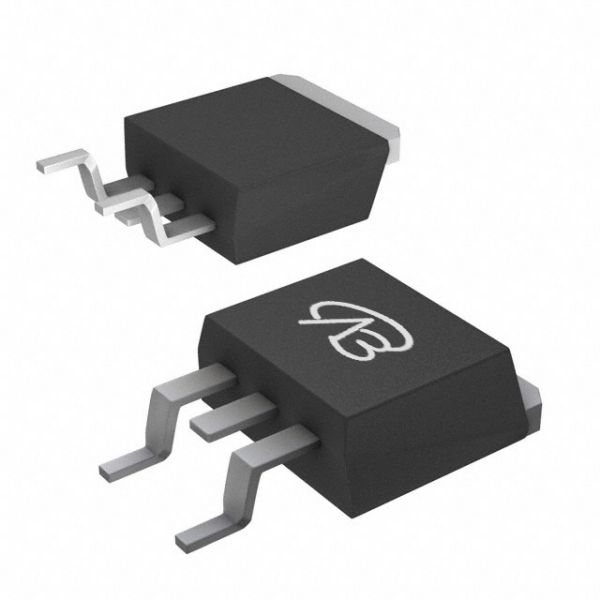
Comparative Analysis: IRF530NSTRLPBF (N-channel) vs. VBL1101M
Analysis of the Original Model (IRF530NSTRLPBF) Core:
This is a 100V N-channel MOSFET from Infineon in a D2PAK (TO-263) package. Its design core is to provide a reliable and cost-effective solution for standard medium-power switching. Key advantages include a robust 100V drain-source voltage rating and a continuous drain current of 17A. Its on-resistance is 90mΩ at 10V gate drive.
Compatibility and Differences of the Domestic Alternative (VBL1101M):
VBsemi's VBL1101M is offered in a TO-263 package, providing direct form-factor compatibility. The key electrical parameters show a comparable profile: the same 100V voltage rating and a similar continuous current rating of 20A. A notable difference is its specified on-resistance of 100mΩ at 10V, which is slightly higher than the original part.
Key Application Areas:
Original Model IRF530NSTRLPBF: Well-suited for general-purpose medium-power switching applications requiring a 100V rating, such as motor drives, relay replacements, and power supply switches where standard efficiency is acceptable.
Alternative Model VBL1101M: Serves as a viable pin-to-pin compatible alternative for the same application space, offering a similar voltage/current profile. It is suitable for designs where supply chain diversification or cost optimization is a priority, accepting a marginally higher conduction loss.
Comparative Analysis: BSZ096N10LS5 (N-channel) vs. VBGQF1101N
This comparison shifts focus to high-frequency, high-efficiency DC-DC conversion, where low loss and fast switching are paramount.
Analysis of the Original Model (BSZ096N10LS5) Core:
This Infineon MOSFET is a high-performance N-channel device in a compact TSDSON-8FL package. Its design is optimized for synchronous rectification in DC-DC converters. Core advantages are:
Excellent Conduction & Switching: Features a very low on-resistance of 9.6mΩ at 10V and a high continuous current of 62A. It is optimized for low gate charge, resulting in a superior Figure of Merit (FOM) for high-frequency operation.
Advanced Features: 100% avalanche tested, logic-level capable, and designed for target applications per JEDEC standards.
Compatibility and Differences of the Domestic Alternative (VBGQF1101N):
VBsemi's VBGQF1101N, in a DFN8(3x3) package, presents a compelling "performance-enhanced" alternative. While the package differs, it targets the same high-efficiency application space. It matches the 100V rating and offers a very competitive parameter set: a continuous current of 50A and an even lower on-resistance of 10.5mΩ at 10V (and 13.5mΩ at 4.5V, indicating good logic-level performance).
Key Application Areas:
Original Model BSZ096N10LS5: An ideal choice for high-current, high-frequency synchronous rectification in advanced DC-DC converters (e.g., for computing, telecom), server point-of-load (POL) converters, and high-efficiency motor drives where its optimized FOM minimizes switching losses.
Alternative Model VBGQF1101N: Highly suitable for upgrade or new designs demanding very low conduction loss and high current density. Its strong performance makes it fit for next-generation high-efficiency DC-DC converters, high-current motor controllers, and power stages where thermal performance and efficiency are critical.
Summary
This analysis reveals two distinct selection paradigms:
For standard 100V medium-power switching, the original IRF530NSTRLPBF offers proven reliability in a D2PAK package. Its domestic alternative VBL1101M provides a form-fit compatible option with comparable key ratings, suitable for cost-sensitive or supply-resilient designs.
For high-performance, high-frequency 100V applications, the original BSZ096N10LS5 sets a high bar with its ultra-low RDS(on) and optimized switching characteristics in a modern package. The domestic alternative VBGQF1101N emerges as a strong contender, offering potentially lower conduction loss and high current capability, making it an excellent choice for efficiency-driven upgrade paths or new designs.
The core conclusion is that selection hinges on precise requirement matching. Domestic alternatives not only provide viable second-source options but also demonstrate competitive or enhanced performance in specific parameters, offering engineers greater flexibility in design trade-offs and cost management.

Download PDF document
 Download now


