 中文
中文 English
MOSFET Selection for Industrial and Automotive Applications: IRF530NPBF, IPG20N06S2L-35 vs. China Alternatives VBM1101M, VBQA3638
Number of views:9999
 Back to previous page
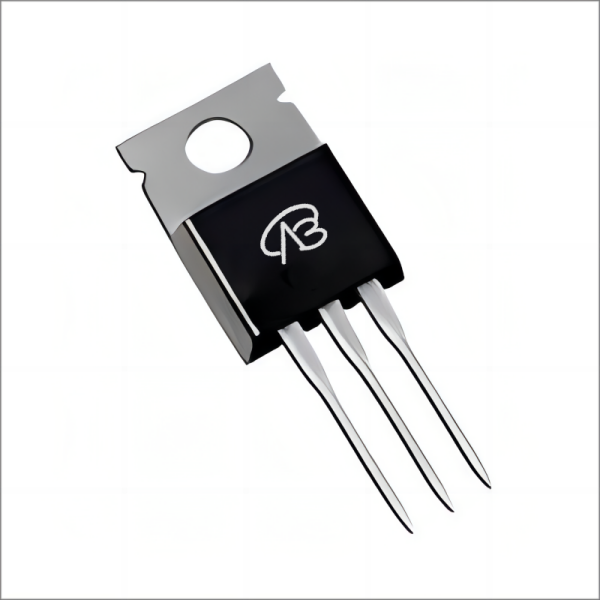
Comparative Analysis: IRF530NPBF (Single N-channel) vs. VBM1101M
Analysis of the Original Model (IRF530NPBF) Core:
This is a classic 100V single N-channel MOSFET from Infineon in a TO-220AB package. Its design core is to provide a robust and reliable high-voltage switching solution. Key advantages include a high drain-source voltage (Vdss) of 100V, a continuous drain current (Id) of 17A, and a moderate on-resistance (RDS(on)) of 90mΩ at 10V gate drive. The TO-220 package offers excellent thermal performance for power dissipation.
Compatibility and Differences of the Domestic Alternative (VBM1101M):
VBsemi's VBM1101M is a direct pin-to-pin compatible alternative in the TO-220 package. The main differences are in electrical parameters: while it matches the 100V voltage rating, its continuous current is slightly higher at 18A. However, its on-resistance is 127mΩ at 10V, which is higher than the original's 90mΩ, indicating potentially higher conduction losses.
Key Application Areas:
Original Model IRF530NPBF: Its 100V rating and 17A current capability make it suitable for various medium-power, high-voltage switching applications.
Industrial Motor Drives: For controlling brushed DC motors or as switches in inverter bridges for smaller AC drives.
Power Supplies: Used in SMPS (Switched-Mode Power Supplies) for 48V or similar bus systems.
Automotive Applications: Suitable for non-safety-critical loads like lighting or heating control.
Alternative Model VBM1101M: More suitable as a cost-effective alternative in applications where the slightly higher RDS(on) is acceptable within the thermal design, and the matched voltage/current ratings are sufficient.
Comparative Analysis: IPG20N06S2L-35 (Dual N-channel) vs. VBQA3638
This dual N-channel MOSFET is designed for space-constrained applications requiring efficient synchronous switching or independent channel control.
Analysis of the Original Model (IPG20N06S2L-35) Core:
This AEC-Q101 qualified dual N-channel MOSFET from Infineon uses a TDSON-8 package. Its design pursues a balance of logic-level drive, good current handling, and compact footprint. Core advantages include:
Dual Channel Integration: Two 55V, 20A N-channel MOSFETs in one package save significant board space.
Logic-Level Compatible: Low gate threshold voltage enables direct drive by microcontrollers or logic ICs.
Good Performance: Low on-resistance of 28mΩ at 10V per channel ensures low conduction loss.
High Reliability: 100% avalanche tested and rated for 175°C operation, making it suitable for automotive environments.
Compatibility and Differences of the Domestic Alternative (VBQA3638):
VBsemi's VBQA3638 offers a compelling alternative in a DFN8(5x6) package. While the package differs (requiring layout adjustment), it provides a dual N-channel solution. Key parameter comparisons:
Voltage/Current: VBQA3638 has a slightly higher Vdss (60V vs 55V) but a slightly lower continuous current per channel (17A vs 20A).
On-Resistance: VBQA3638 offers a very competitive RDS(on) of 32mΩ at 10V, close to the original's 28mΩ. Notably, it also specifies a low RDS(on) of 38mΩ at 4.5V, highlighting its efficiency at lower gate drives.
Key Application Areas:
Original Model IPG20N06S2L-35: Its automotive-grade qualification, dual-channel design, and robust performance make it ideal for:
Automotive Body Control Modules (BCM): Driving relays, lamps, or motors.
Compact DC-DC Converters: Serving as synchronous rectifiers or switches in high-frequency POL (Point-of-Load) converters.
Battery Management Systems (BMS): For cell balancing or protection circuit switches.
Alternative Model VBQA3638: Suitable for applications requiring a compact, dual N-channel solution with good efficiency at both logic-level and standard gate drives. It is an excellent alternative for industrial power systems, compact motor drives, or power tools where AEC-Q101 is not mandatory.
Conclusion
In summary, this analysis reveals two distinct selection pathways:
For high-voltage, single-channel applications where robustness and package thermal performance are key, the original IRF530NPBF, with its 100V rating and 90mΩ RDS(on), remains a strong candidate for industrial motor drives and power supplies. Its domestic alternative VBM1101M provides a viable, cost-effective option with compatible ratings, though with a trade-off in conduction loss.
For space-constrained, dual-channel applications demanding efficiency and reliability—especially in automotive contexts—the original IPG20N06S2L-35 stands out with its AEC-Q101 certification, 20A per channel capability, and low 28mΩ RDS(on). The domestic alternative VBQA3638 presents a performance-competitive option with a different package, offering excellent RDS(on) at both 4.5V and 10V gate drives, suitable for upgrade or alternative designs in industrial and consumer domains.
The core takeaway is that selection hinges on precise requirement matching. In an era of supply chain diversification, domestic alternatives like VBM1101M and VBQA3638 not only provide reliable backup options but also offer competitive or enhanced parameters in specific areas, giving engineers greater flexibility in design optimization and cost control. A deep understanding of each device's specifications and intended application is paramount to unlocking its full potential in your circuit.

Download PDF document
 Download now


